

Over the last five years, the Fjörður (Fjordur) archeological site in the eastern Icelandic town of Seyðisfjörður (Seydisfjord) has yielded a bewildering array of Viking Age artifacts that offer a fascinating glimpse of 10th-century life on the island.
As the excavation project finally draws to a close, The Viking Herald speaks to the site director, Ragnheiður Traustadóttir, about a dig that has been referred to as the Icelandic Pompeii.
Layers of history
"This was the fifth summer that we worked on the excavation," Ragnheiður tells us.
"We started excavating because they are building an avalanche wall to protect the town. We were only supposed to be here for two years, and we thought we might do some archeology on buildings from the 17th to the 19th century.
"In August 2021, however, we found a landslide that we initially thought was much newer, but it turned out to be from the 11th century. Under that, we found four graves."
"We continued excavations until October that year, before I decided – together with the cultural heritage association – to make more test trenches in the area, just to see if something was preserved there."
The team would go on to uncover a Viking longhouse with a weaving room, animal houses, and a farm midden.
"We didn't expect to find a longhouse. We did a test on the farmhouse above it, and there was material from 900 to 1900 CE, so we assumed the building had always been there."
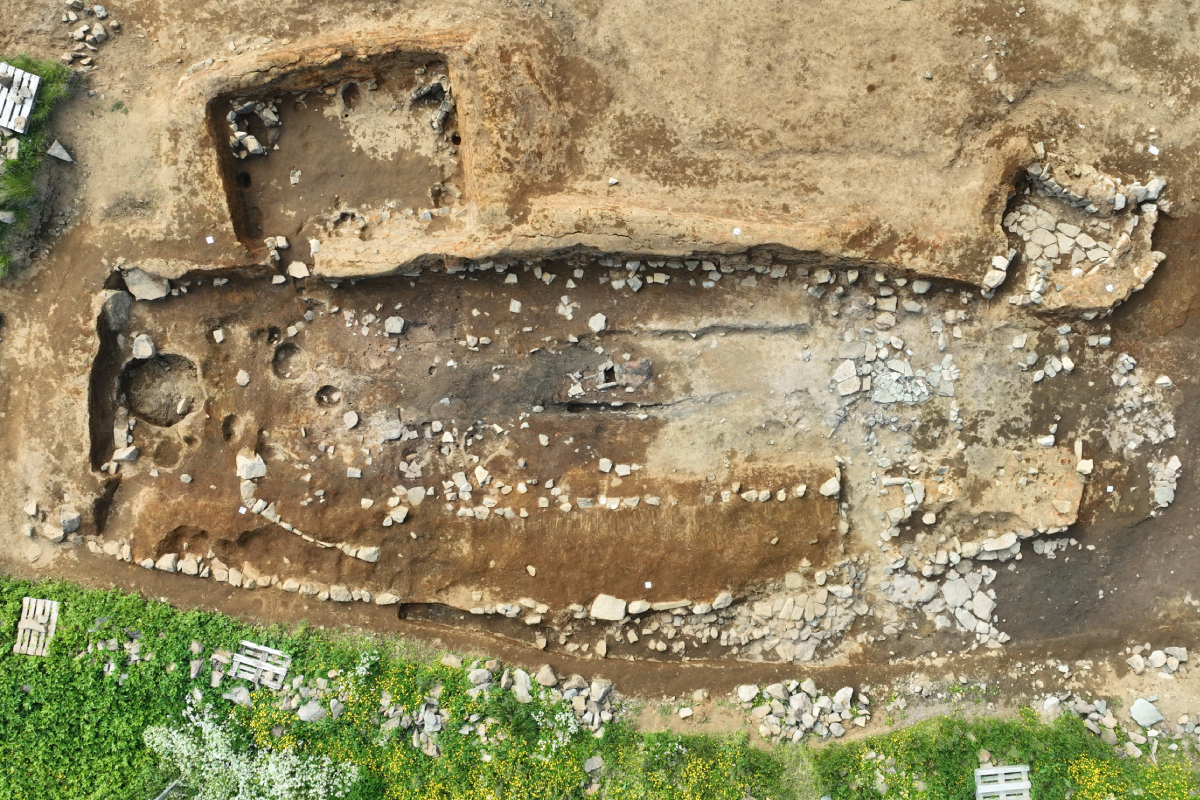
"But when we extended the excavation from 30 meters to 90 meters in length, we found more structures, and then below them was the longhouse. We have now spent the last two years excavating this building and the adjoining outhouses."
For the past two years, the team has been excavating a Viking longhouse and its outhouses, finding a wealth of artifacts. Photo: Seydisfjord Archaeological Research
Buried for a thousand years
A complex of buildings emerged that has all been dated to the Viking Age. "We have at least two longhouses – or two main phases," Ragnheiður tells us.
"The younger longhouse is 30 meters long, while the older one is around 22 meters. There is evidence of some construction between the two houses and attempts to fix the walls."
"We can tell that part of the northern end of the longhouse was destroyed by the landslide, but people were still able to live there, as they had repaired the house."
As Ragnheiður explains, the landslides come from the adjacent mountain of Bjólfur, which was named after the first settler who came to the area from Norway.
Legend has it that Bjólfur was buried at the mountain to protect the settlement from further landslides.
"We can see that people used the longhouse for at least 50 years after the landslide during the Viking era. They made a very bad wall to close off the northern end of the longhouse – it looks like a quick fix."
"Another one of the outhouses from the same period was totally destroyed – I think any animals there would all have died, unfortunately."
"We also think they never went back to the weaving room after the landslide – it was left completely intact. I think that's one of the reasons we are finding so many complete artifacts."
Fjörður’s finds, including pottery, beads, and spindle whorls, reveal its role as a significant Viking production site. Photo: Seydisfjord Archaeological Research
"A massive production site"
"That's what has been really amazing about the site – the preservation and all the finds," Ragnheiður admits.
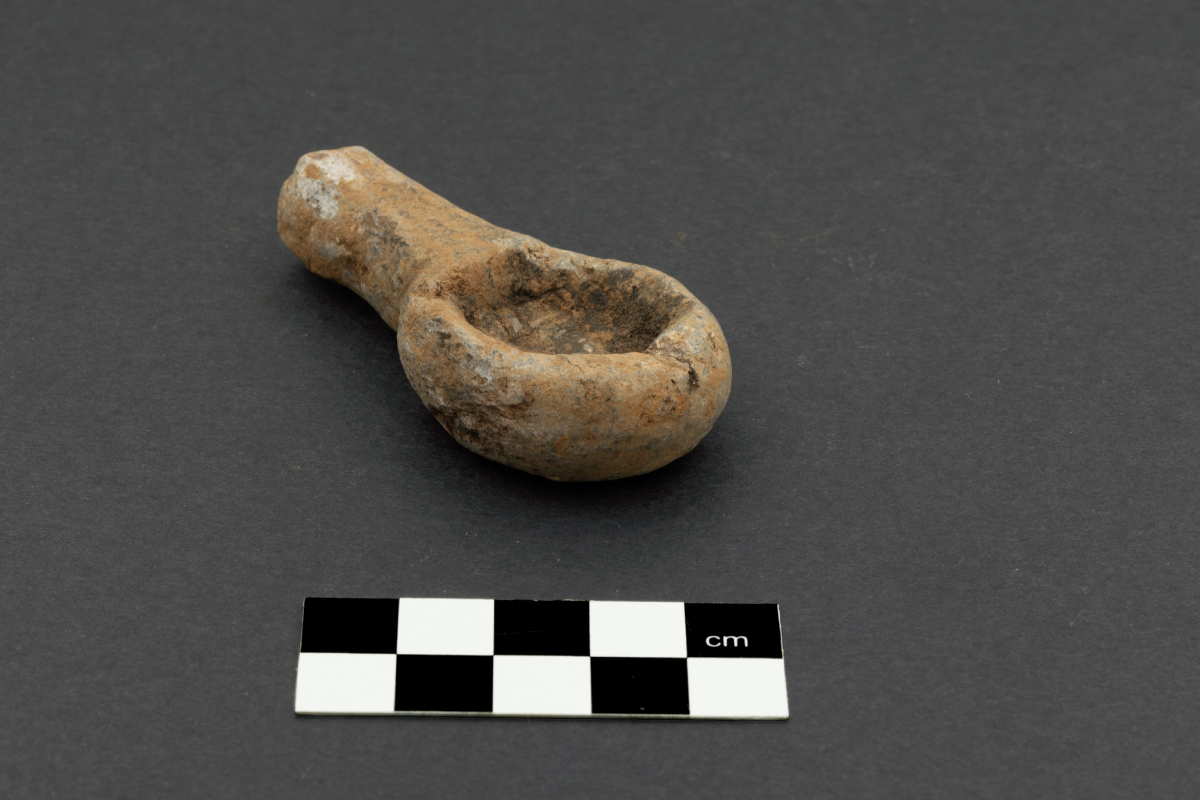
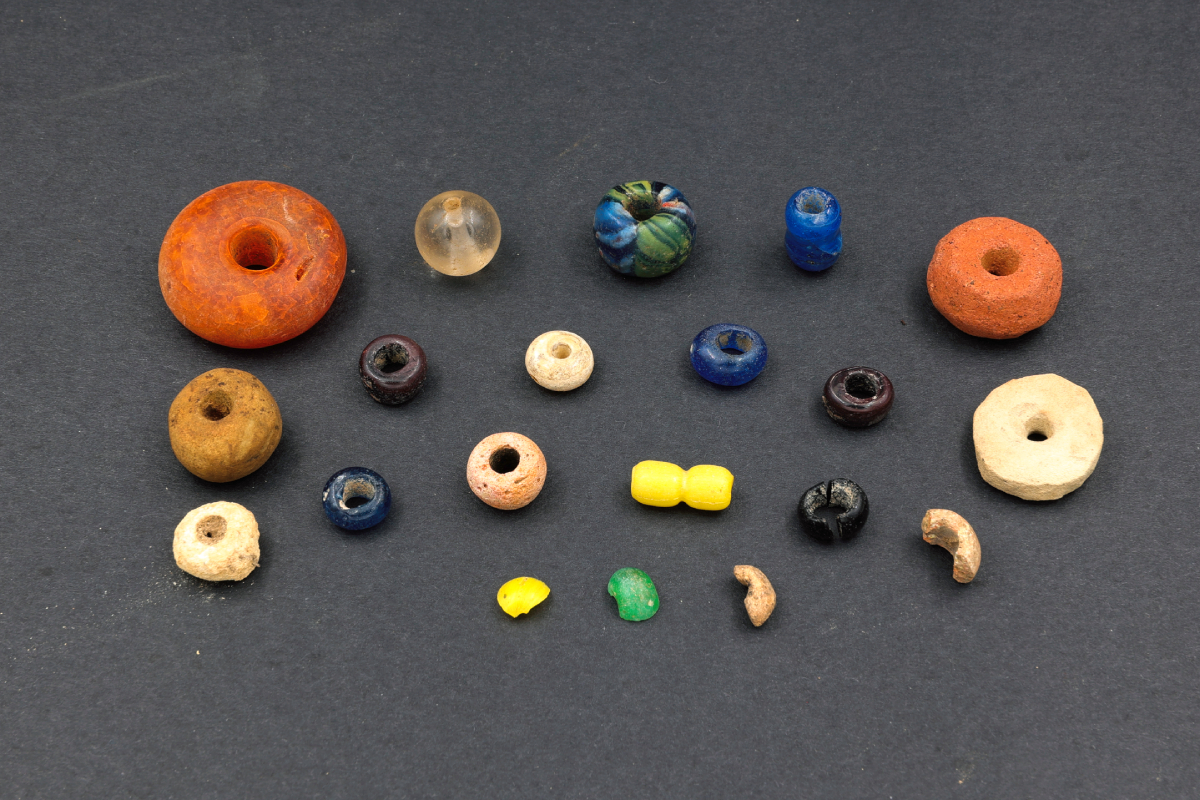
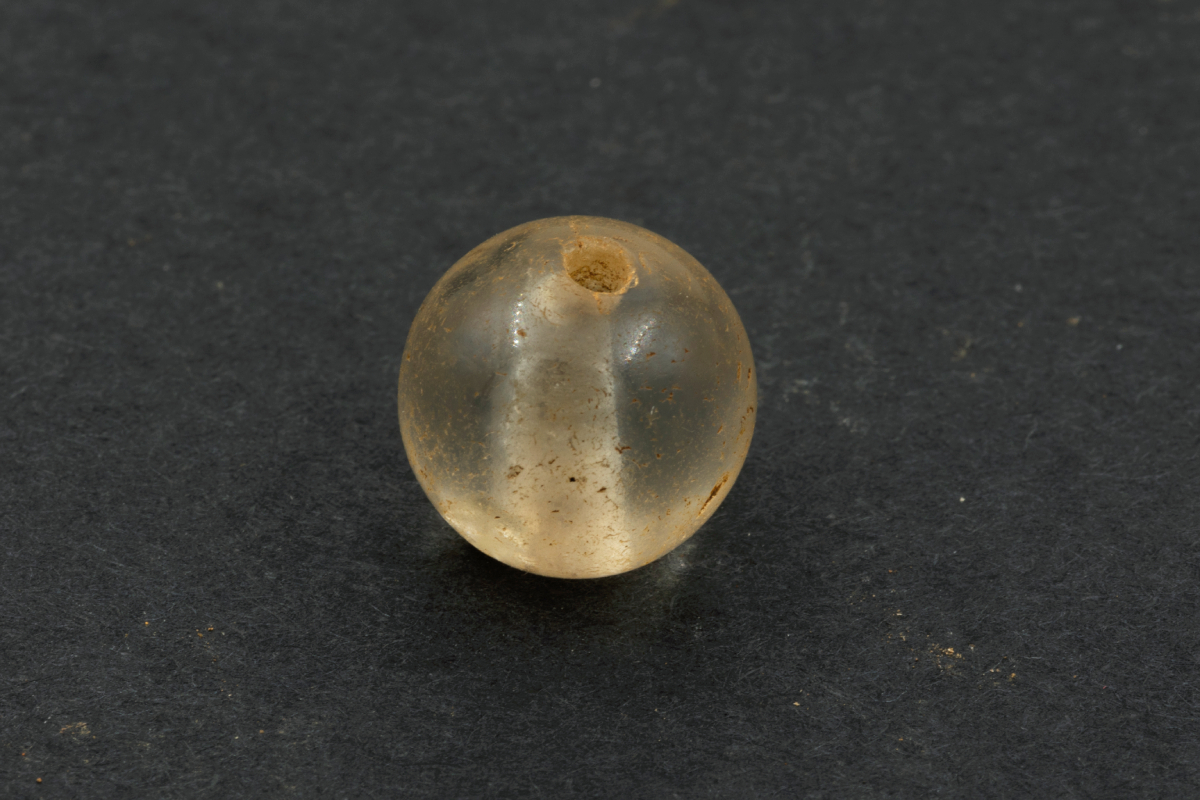
"There is so much of everything. We have up to 150 beads and as many as 60 spindle whorls. We can also see that they did a lot of fine smith work – there are lots of crucibles, bronze, and probably silver, though we have a lot of analysis still to do. There are also plenty of pottery fragments."
To Ragnheiður , it is clear that Fjörður was much more than just a simple family dwelling. "I think we have to ask what these artifacts are telling us – this is not a single household. It's a massive production site."
"I think they were very rich, with major wool production – we have found around 60 spindle whorls."
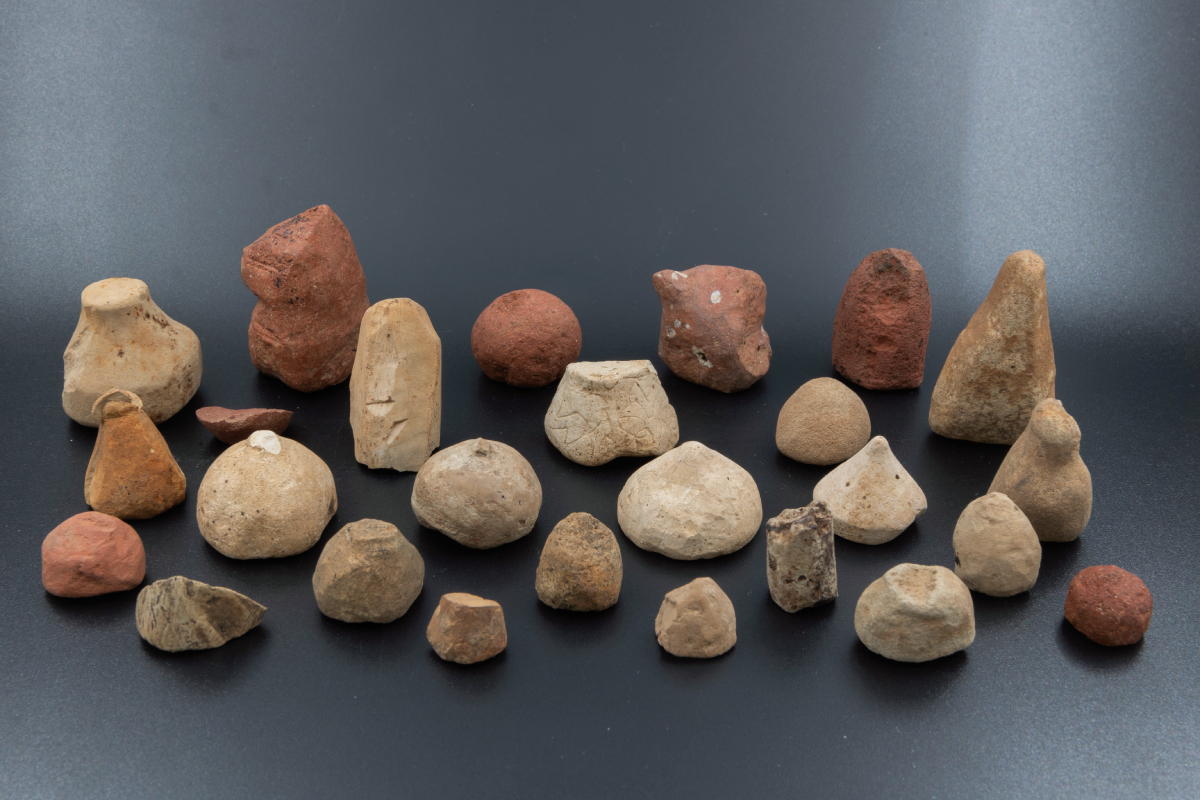
"Then there are all the gaming pieces, up to 80. I think they were making them here and perhaps also selling them. This is quite unique."
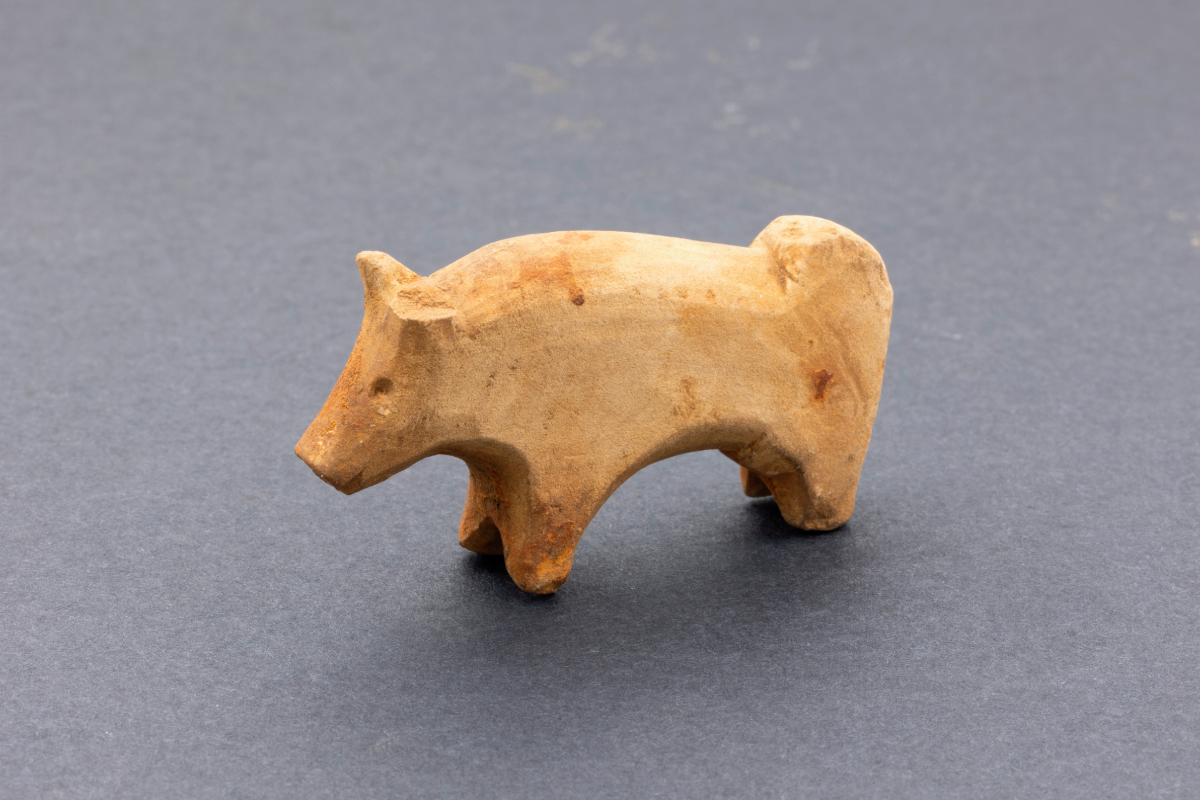
As previously reported by The Viking Herald, this year's finds include a Viking stone toy that resembles a pig or bear and has made headline news around the world.
"It's the same stone as the gaming pieces," Ragnheiður says. "We also found a silver coin this year, which is another remarkable find, as we have very little silver in Iceland."
Among a wealth of other artifacts, the site reveals evidence of textile production, including cloth and sails. Photo: Seydisfjord Archaeological Research
Tools for making clothing – and sails?
Ragnheiður is also excited about the insights the site could provide in terms of textile production in Viking Iceland.
"We found preserved textiles in a female grave, so we are going to be able to recreate how she was dressed. We have a big section of her coat with lots of color."
"She also had two brooches under the coat and a blouse. The textile experts think the coat had three main colors and was made with a very fine textile – this is another rare find."
"We are also going to be able to tell what kind of threads they were making – were they only making cloth or sails, too?" Ragnheiður speculates.
"In the settlement period, there were supposed to have been up to 400 ships that came to Iceland. Then, if you also think about all the ships that were attacking England at that time, it's a lot of sail."
"I think one of the reasons for the settlement here is to get the grazing land to produce wool. It's a short trip to Norway and the Faroe Islands, and the site could also have been used to produce something for use within Iceland itself."
- READ MORE: How did Vikings make sails?
With the excavation done, the next stage involves an on-site exhibition with 2D and 3D models of artifacts and structures. Photo: Seydisfjord Archaeological Research
The next stage
As Ragnheiður informs The Viking Herald, the archeological digs may have reached completion, but there is still plenty of work to do.
"There has already been a lot of attention: we have had guided tours every Friday, and people have also come from international cruise ships especially to visit the site."
"In the future, we are going to keep the form of the longhouse and the walls – we want to make an exhibition on the site, with turf walls, workbenches, and a fireplace," Ragnheiður continues.
"There will be information about everything. We have worked with the Norwegian Institute for Cultural Heritage Research (NIKU) to make 2D and 3D models of everything."
"We have up to 600 models from the Viking Age, and also a lot from the later phases, up to the 19th century."
Despite her long career in Viking archeology, Ragnheiður remains impressed by the scale of the project at Fjörður. "It's not my first longhouse excavation – usually, you might have up to 300 finds, but here we have 4,000 just from the Viking Age. That's huge!"
"I have loved seeing what people were doing at this time. It's quite amazing – there are so many things inside the house that tell you what they were doing."
"Like working with Icelandic stone – winter is long and dark, and they would have been sitting there making all these chess and gaming pieces."
"You see the work on the bench, and you can imagine the children playing around it. We are going to be able to tell a lot of good stories!"
We get to provide readers with original coverage thanks to our loyal supporters. Do you enjoy our work? You can become a PATRON here or via our Patreon page. You'll get access to exclusive content and early access.
Feel free to reach out to discuss potential stories that may be in the public interest. You can reach us via email at [email protected] with the understanding that the information you provide might be used in our reporting and stories.