

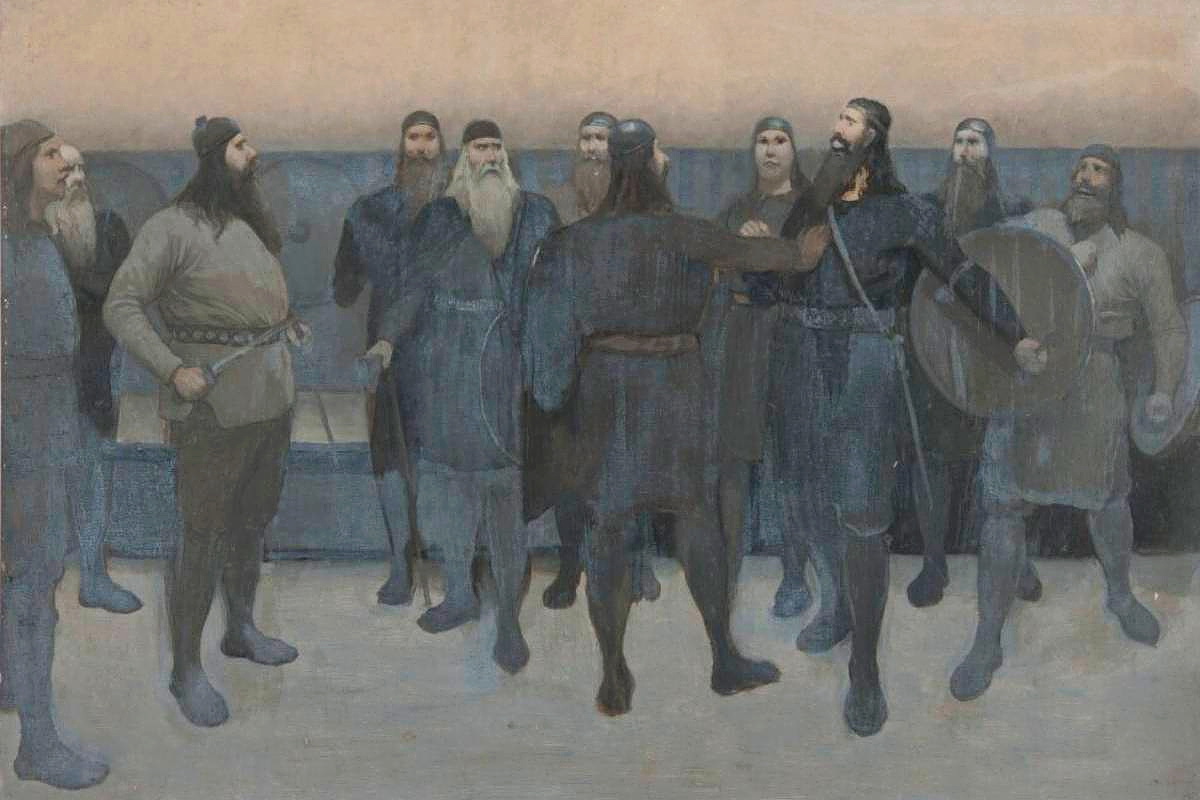
The Norse sagas are indeed the greatest cultural legacy that people from Viking societies have bequeathed us.
Yet the sagas that we know and love today were mostly transcribed centuries after they were originally told.
Whilst the sagas were once oral tales, it was during the later medieval period that scholars, like 13th-century Icelandic poet and politician Snorri Sturluson, helped transcribe and compile these sagas, putting quill to parchment, as it were.
Yes, the sagas that we know and love—though they may have their origins in the early medieval period, once created in Viking societies—were very much a later medieval creation.
The fact that it was later medieval scholars who were writing in Christian societies who transcribed these ancient tales should be remembered when reading them.
Though they often speak of ancient rituals and beliefs of Scandinavia's "pagan" past, this was done from the safety and comfort of the later medieval period, when Christianity reigned supreme.
As such, these scholars had a vested interest in portraying aspects of earlier Viking societies in as bad a light as possible.
If we look at Njáls saga, we find a depiction of the traumatic impact that blood feuds, which were outlawed by the later medieval period as very unchristian, had upon Viking societies.
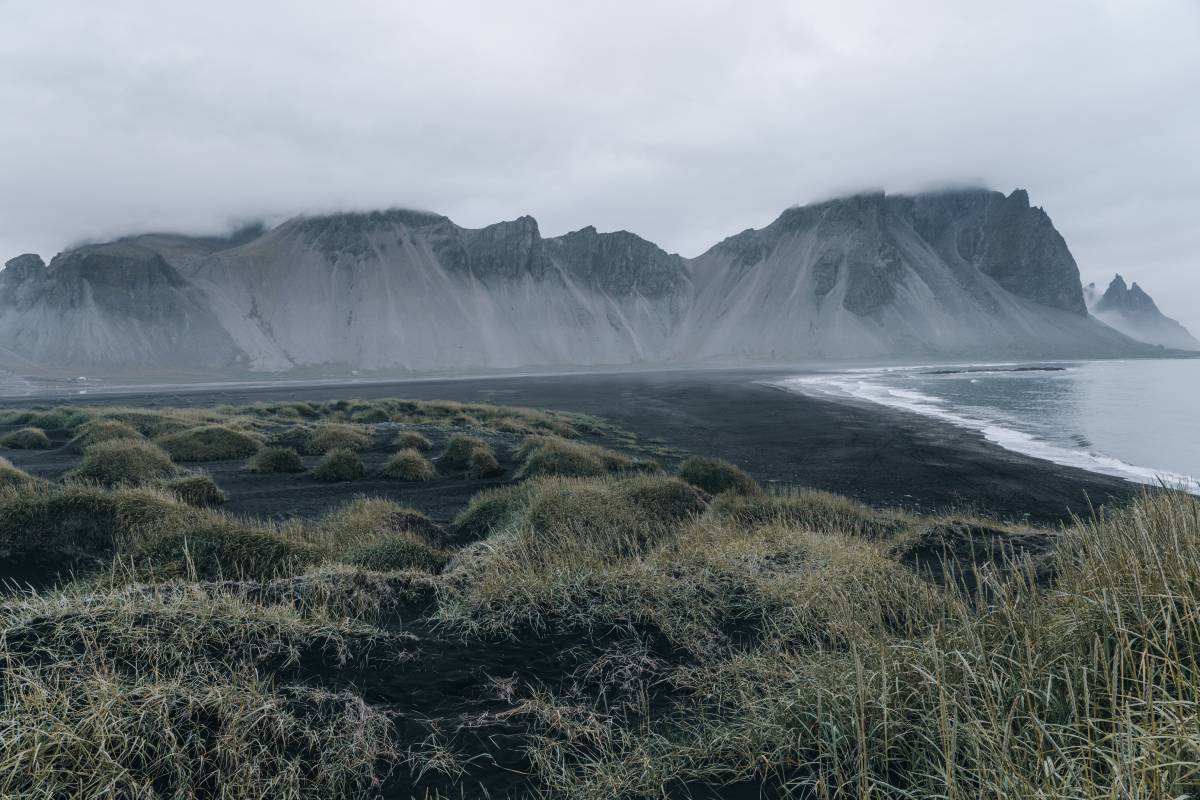
The events of Njáls saga unfold in a harsh and isolated Iceland, between 960 and 1020 CE. Photo: michael regeer / Shutterstock
Harking back to a glorious past
Whilst the stories regaled to us in the Norse sagas are timeless, their authors are, alas, unknown.
Njáls saga, sometimes translated into English as The Story of Burnt Njáll or The Saga of Njáll the Burner, is believed to have been first transcribed sometime in the late 13th century in Iceland.
What is interesting is that during this period of Icelandic history, when locals had seen their independence snuffed out by the Norwegian crown, scholars were looking back to a glorious past, when people from Viking societies had sailed westward to settle this island nation.
In the ancient oral stories, they had the perfect tonic to this subjugation, regaling each other with the glorious deeds of their ancestors.
Now, whilst Iceland at this stage was a part of the Kingdom of Norway, the events that take place in Njáls saga hark back to the time when this land of fire and ice was independent, known as the Icelandic Commonwealth.
Whilst we do not know who wrote this saga, and it is believed to have been based upon earlier ancient oral tales, we do know that the events of this saga were said to have occurred over a few generations, between 960 and 1020 CE.
Whoever this unknown author was, they were able to, as Lars Lönnroth talks about in his 1976 book Njáls saga: A Critical Introduction, "tie in other... highly important events that occurred in Denmark, Norway, [and] Iceland..."
Unknown they may be, but uninformed they certainly were not!
- READ MORE: The Viking history of Iceland – A primer
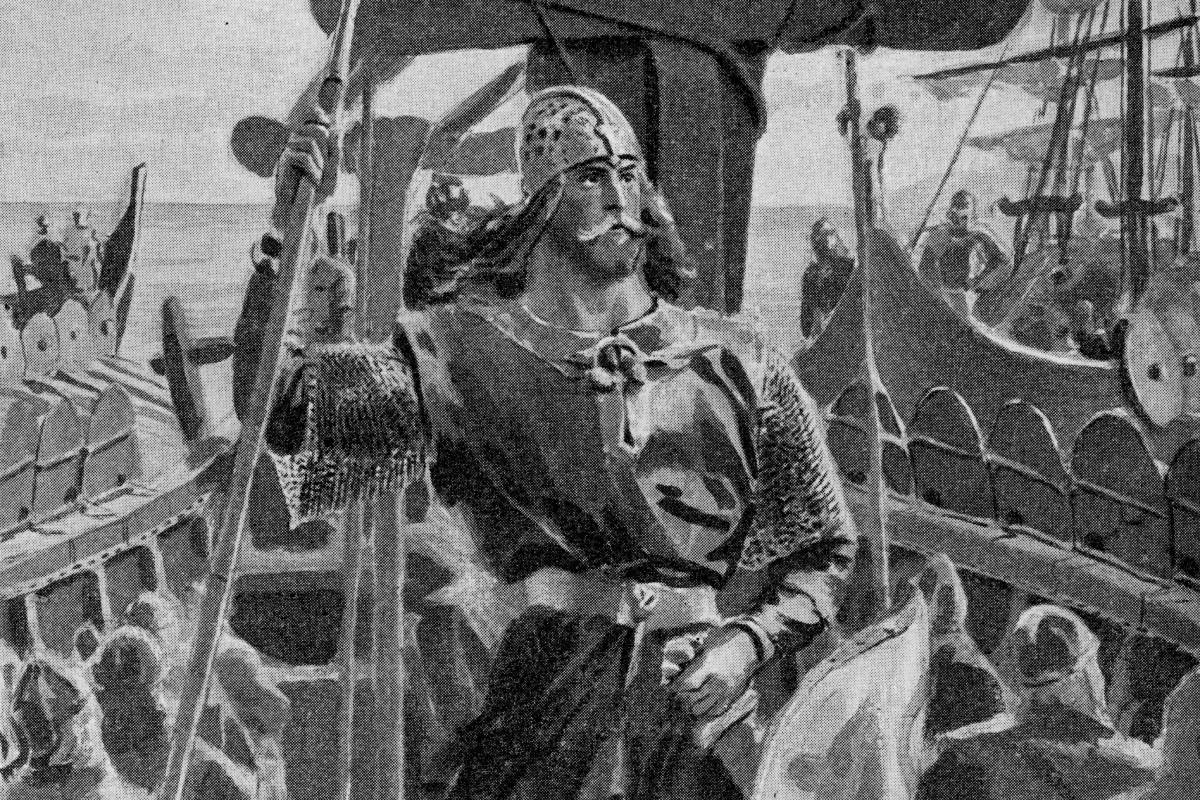
This 1898 illustration shows Kári Sölmundarson, one of the saga’s fiercest fighters, coming to the aid of Njáll’s sons. Illustration: Andreas Bloch (1860–1917)
Some famous faces and familial sorrow
Many modern Icelanders would only begrudgingly admit today that their history—like Njáls saga—begins in Norway.
Using an online version of the 1861 English translation by George W. DaSent, we find that the beginning of the saga takes place,
"At that time Harold Grayfell reigned in Norway; he was the son of Eric Bloodaxe, who was the son of Harold Fairhair; his mother's name was Gunnhillda,..."
So, we know the time the saga was set, as it begins with the reign of Harald Greycloak, who reigned in Norway from about 960 CE. However, from this rather neat introduction, things get a lot messier.
The saga itself is complex, in parts (in the opinion of this author) rather long-winded, and has a cast of characters that would put Tolstoy’s War and Peace to shame.
As William Ian Miller writes in his 2014 book Why Is Your Axe Bloody?, "...the saga names 649 people," with over "170 of those having speaking parts."
The early part of the saga mainly deals with events in and around Norway. Indeed, we even have some rather famous historical characters, including Gunnhilda, who has been labeled the "Mother of Kings" in both a spiritual and quite literal sense.
Yet what permeates this saga is violence and feuding. Within the first five chapters, we see our first instance of violence.
A dramatic naval battle takes place in Øresund, the stretch of water that nowadays separates Denmark from Sweden. We see a father, Atli, a Jarl of East Gotland, defiantly cutting his way through a swathe of warriors sent by Gunnhilda.
Fighting off these Vikings, he eventually succumbs to their superior numbers and is cut down:
"Hrut caught up the sword and cut his foot from under him. After that, he dealt him his death blow."
What makes this more horrific is that his son is alongside him.
Managing to flee the violent scene, he wants to head "West, to England." Yet we see that his escape plan is thwarted by the long arm of Gunnhilda.
His pursuers eventually catch him and hang him. We are left with the gruesome image of him dangling whilst his family's earthly possessions are later divvied up by the victors.
This violent episode foreshadows much of the rest of the saga, whereby violence, manhood, honor, and revenge are all intertwined in a deadly mix. The action now, however, heads westward to Iceland.
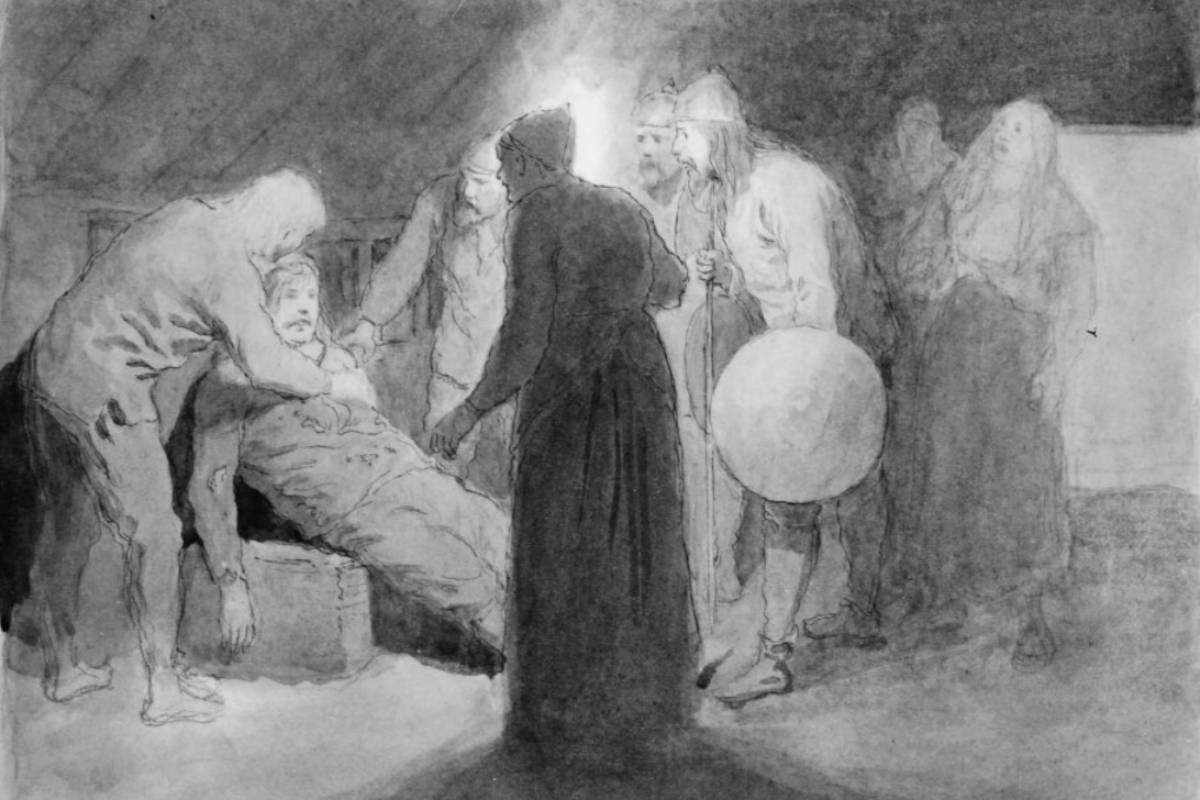
What begins as mutual respect between two men ends in a brutal feud that exposes the limits of Viking-era justice. Illustration: August Malmström (1829–1901)
The feud to end all feuds
During the period that this saga was set—the late 10th and early 11th centuries CE—the history of the human settlement of Iceland was little more than a century old.
Now, we turn to two of the major characters in this epic tale. Njáll Þorgeirsson is a wise and respected chieftain, a legal and political force. His friend in this tale is Gunnar Hámundarson, who is equally respected in his community but as a warrior.
We don’t like to kiss and tell here at The Viking Herald, so we won’t delve into much more of the bloody and sordid events of the rest of the saga.
Nevertheless, these two friends, both respected members of their community, descend into a bloody feud (themes of fatalism and predetermination echo throughout the saga—not least this particular feud) that ensnares victims from both families.
This plunges the community into a bitter divide, seeing families torn apart by violent and unjust deaths, seeking to settle a blood feud.
The fact that two respected members of the community and friends could spiral into a toxic cycle of violence and death speaks to the bitter nature of blood feuds that were often features of Viking societies.
We see firsthand the very personal impact of vendettas, and these are juxtaposed with many scenes involving the judicial and legal institutions of the time, including meetings at the Althing and community discussions.
Such moments reveal the two sides of Viking-era justice—the deadly violent and the more mundane.
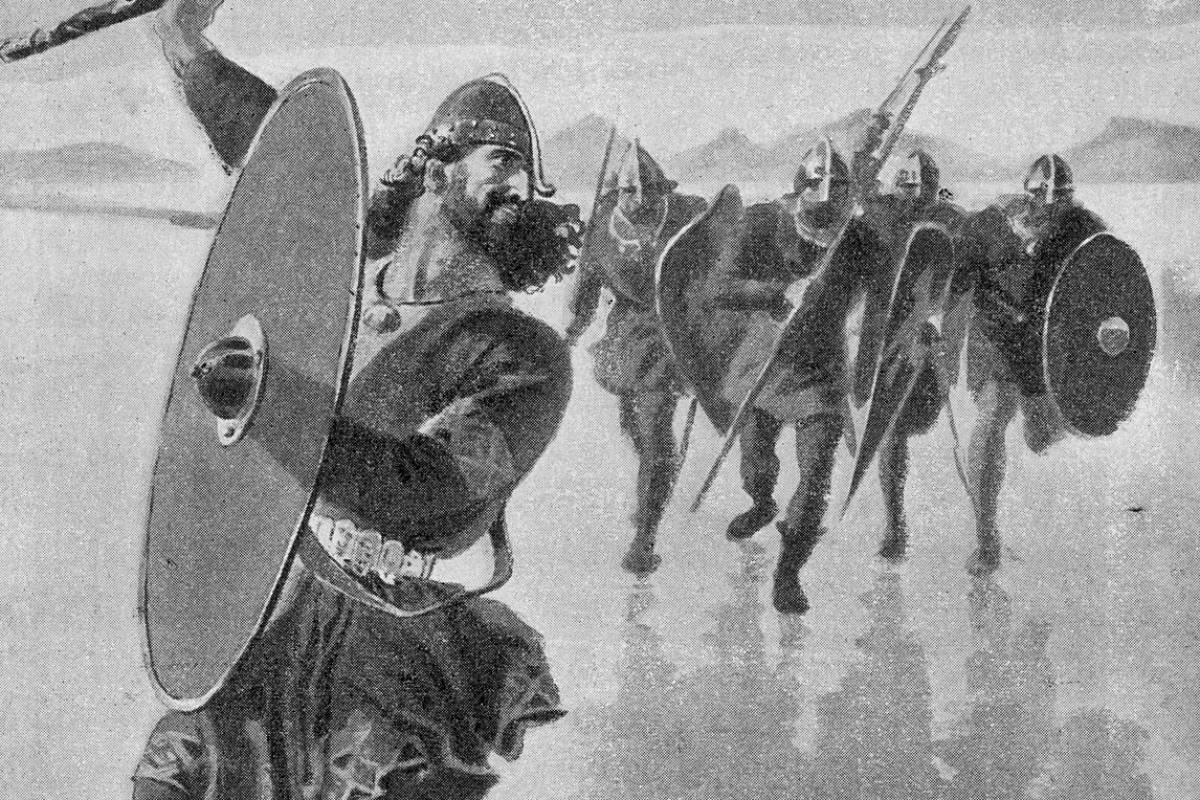
One of the saga’s most recognized scenes shows Skarphéðinn killing Þráinn Sigfússon on the frozen river. Illustration: Andreas Bloch (1860–1917)
An epic tale of bloodshed and law
As one of the more epic sagas, Njáls saga is certainly not a light read.
Dripping with violence and death on every page, we see the ramifications of how feuding and slights to personal honor can descend into community-wide acts of rampant violence.
Whilst this saga is set in the region’s pagan past, at the turn of the 11th century CE, we can see how later medieval notions of the rule of law and the superiority of Christianity over paganism are subtly intermixed with the (often) bloody exploration of the human condition.
Thankfully for those wanting to visit Iceland today, blood feuds are indeed a thing of the past.
However, for those wanting to wind back the clock a millennium or so and (safely) plunge themselves back into a time when bloodshed, justice, and law were often interchangeable, Njáls saga is a must-read.
For more information on how best to use the sagas to explore Iceland, visit Lonely Planet here.
We get to provide readers with original coverage thanks to our loyal supporters. Do you enjoy our work? You can become a PATRON here or via our Patreon page. You'll get access to exclusive content and early access.
Feel free to reach out to discuss potential stories that may be in the public interest. You can reach us via email at [email protected] with the understanding that the information you provide might be used in our reporting and stories.