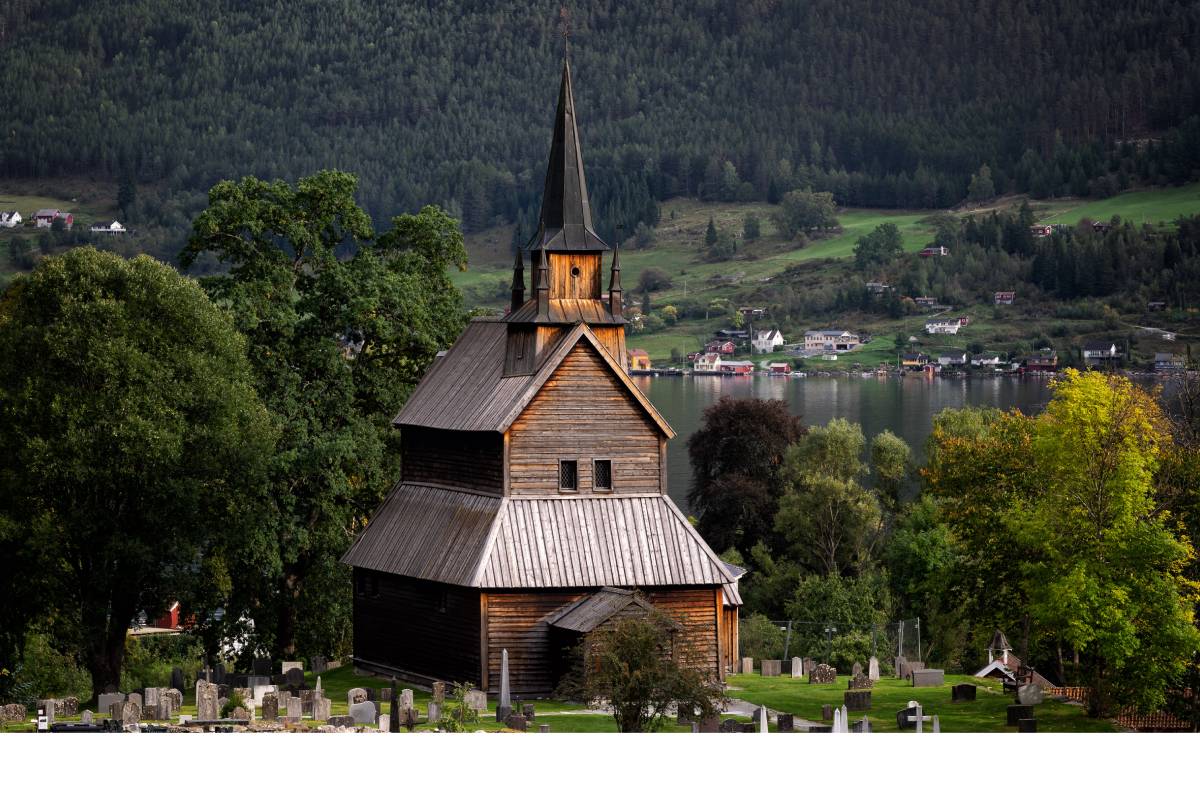


The Norwegian municipality of Laerdal, located on the south side of the immensely beautiful Sognefjord, surely takes the cake (or should that be bolle) for one of the most charming towns in Norway.
Nestled amongst mountains and a fjord, it also lies on the old Kongevegen – the King's Road – little more than a muddy trail, which was, for centuries, the main artery that connected Norway's west with its east.
Situated towards the western end of the Kongevegen, Laerdal is small for most of the year.
However, it balloons in numbers throughout the warmer months, with many coming to take in the mountain air, witness the awesome majesty of Sognefjord, and hike the many walking trails over the mountains.
Yet, the biggest drawcard for this area is the sometimes sleepy town of Borgund, where visitors flock to see a wooden building that dates back to the late 12th century.
The church was constructed in that historical estuary, connecting Norway's Viking Age with its later medieval period.
The Borgund Stave Church, which historians believe was constructed around 1180-1250, is one of the oldest, most recognized, and most beloved structures still standing in this mountainous Scandinavian country.
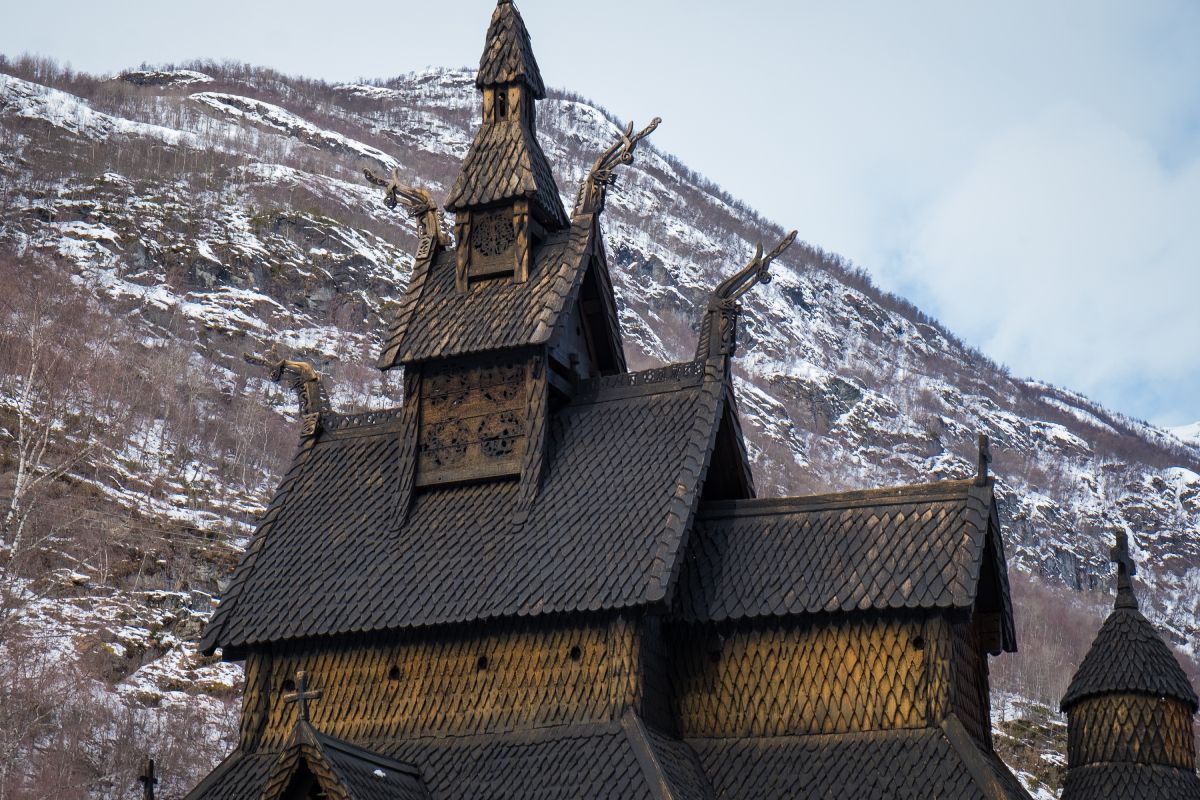
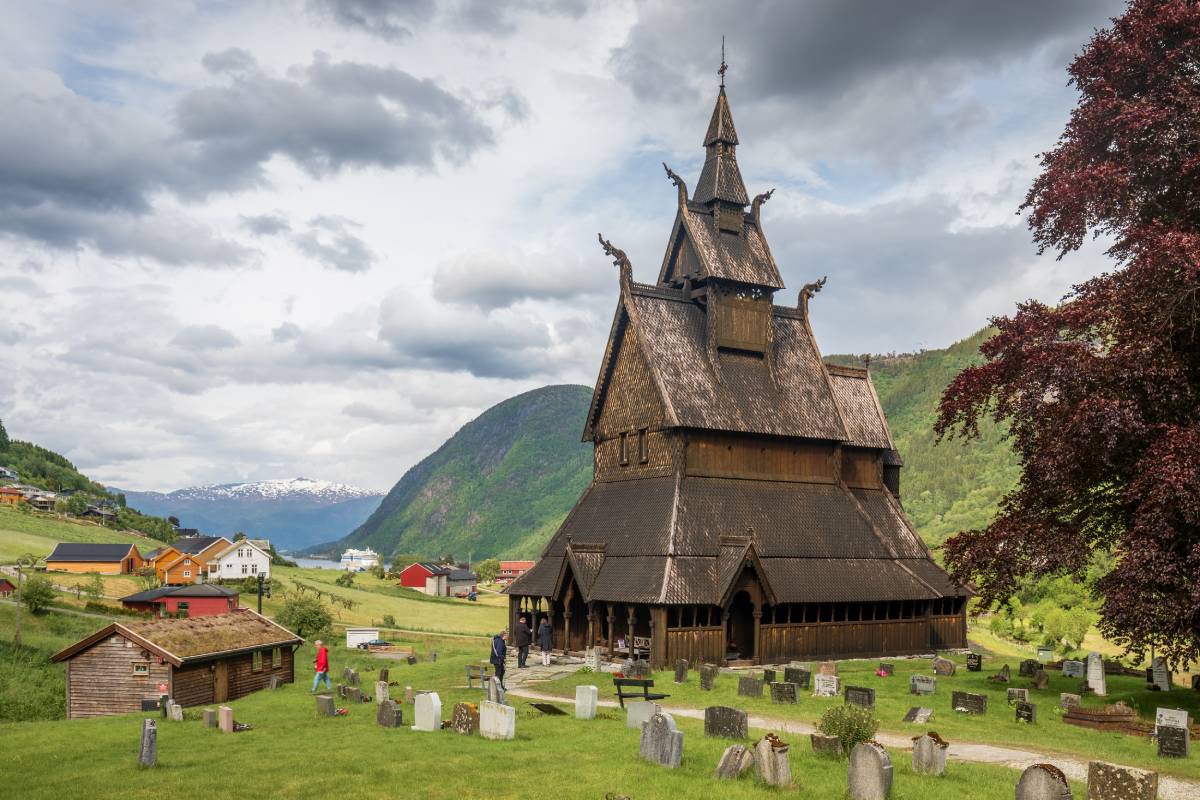
The Borgund Stave Church features a distinctive multi-tiered roof design, with steeply pitched roofs that help to shed heavy snow, characteristic of stave church architecture. Photo: Cloudy Design / Shutterstock
Once a common sight, now a unique construction method
Switch on any streaming service nowadays, and you'll see a million documentaries dealing with great modern architectural projects, from China's colossal Three Gorges Dam to the Burj Khalifa in Dubai.
Yet, wind the clock back to the late 12th century, to an era where buildings were constructed in a rudimentary fashion.
It was in this era, too, after centuries of struggle, that Christianity finally won the hearts and minds of many living throughout Norway, making the church a focal point for religious and communal worship.
So, when the villagers of Borgund decided to construct a church in the late 12th century, they used what was then a commonplace construction and design method to build a stave church.
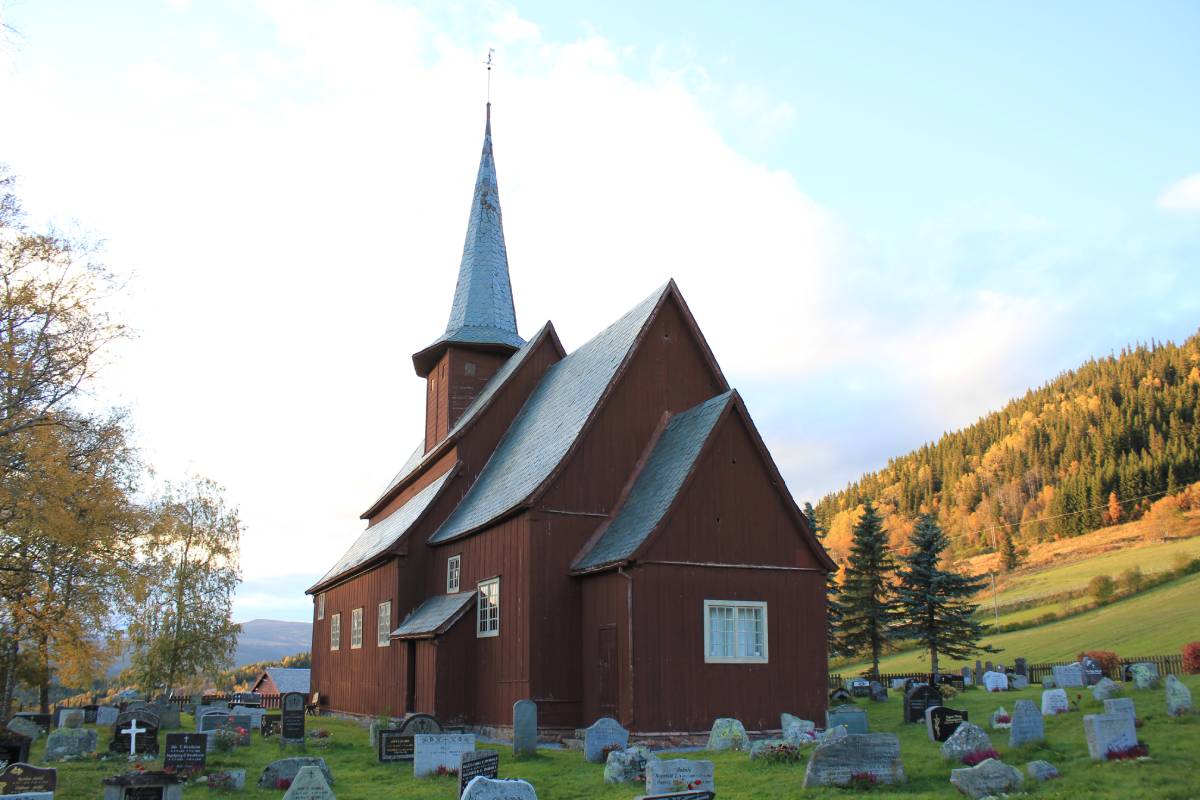
A stave church, once a common sight in Norway and parts of Northern Europe during the medieval period, was characterized by a unique construction technique in which wooden vertical posts, or staves, were driven into the ground to support the structure.
They were known for their steep, multi-tiered roofs with intricate wooden carvings, often blending pagan and Christian motifs.
Inside, the churches have a central nave with a high ceiling, giving the worshipper the impression of being inside a deep and dark Nordic forest.
Hundreds were said to have been constructed during the medieval period; however, only 28 in Norway still survive. The Borgund Stave Church is undoubtedly the most brilliant of them all.
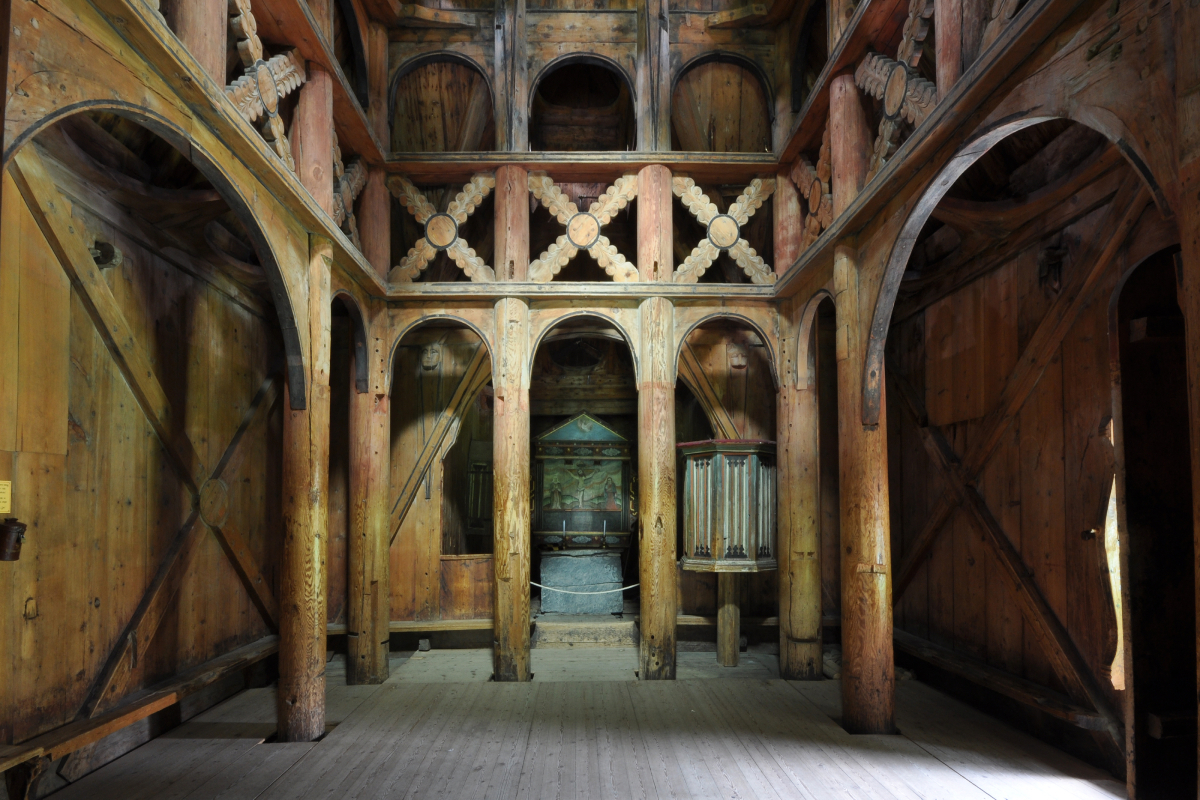
The church features a central nave with a lofty ceiling, creating a spacious and awe-inspiring ambiance reminiscent of a dense, towering forest. This design was intended to inspire reverence and contemplation among worshippers. Photo: Micha L. Rieser
Masterfully built nod to Viking heritage
Aside from its advanced age, pushing somewhere around eight centuries old, the Borgund Stave Church is rightly seen as one of Norway's architectural gems.
How the church was constructed, using staves, showcases the mastery of medieval Norwegian woodworkers. Wooden pegs and staves were used instead of nails, which prevented rust and thus reduced structural wear and damage.
All wooden surfaces were then coated with tar, which darkened the wood and also helped to preserve it against the harsh Norwegian elements, protecting it from decay and insects.
It was this combination of natural elements that has ensured the church's survival to this day – one wonders whether some of the buildings constructed today would last half as long as the Borgund Stave Church has!
Part of the architectural wizardry of the church was its layout. With its cruciform shape and central nave, it helped to provide an intimate and reflective space for worship, as referenced by Borgen in Stave Church Architecture as Sacred Memory (2021).
The wooden staves and high ceilings would have left worshippers in a state of awe and reverence, enhancing the somber and mystical spiritual atmosphere.
What is also interesting is the mixture of Christian and pagan motifs that have been intricately carved throughout the church.
The exterior walls and the roof are adorned with detailed carvings that reflect the church's construction during a period of great transition in Norwegian history, between the nation's old pagan past and its medieval Christian future.
Some of the more memorable carvings include several dragon heads, serpents, and vines, which were all said to represent the struggle between good and evil, between paganism and Christianity, as referenced by Aune, Sack, and Selberg in The Stave Churches of Norway (1983).
The central tower houses one of the most elaborately carved dragon heads, reminiscent of the stern of a Viking ship, where such decorations were said to ward off evil spirits.
The church also houses the country's only bell tower in a standing stave church. The original bells have long since fallen silent, but one is still nearby, on display at the nearby modern church.
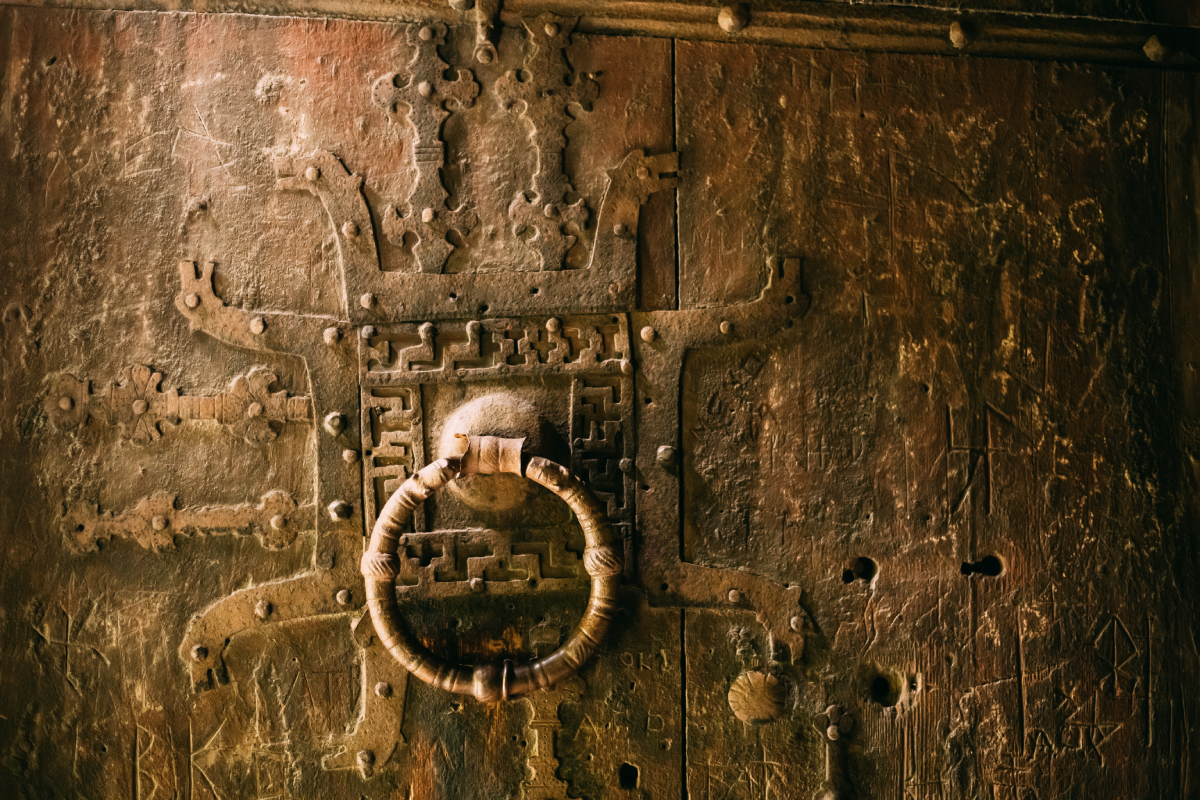
Among the intricate carvings on the church's exterior are dragon heads, serpents, and vines, symbolizing the struggle between good and evil, as well as the merging of pagan and Christian beliefs. Photo: George Trumpeter / Shutterstock
Centre of worship and village life for centuries
The church, completed in the first half of the 13th century, was dedicated to the Apostle St. Andrew.
Along with the intricately carved dragon heads and vines, the church features his symbol, the St. Andrew's cross, emblazoned throughout.
During the church's construction and first few centuries of life, the dominant religious authority in Norway was the Catholic Church, with the Borgund Stave Church becoming the local parish church.
Around the time of the church's construction, the Catholic Church became the official state church of the medieval Kingdom of Norway.
It would remain so until the Lutheran Reformation saw Norway break its ties with the Holy See in 1536 and convert to Lutheranism.
The church then became part of the Church of Norway in the Diocese of Bjorgvin.
It remained the center of cultural, religious, and spiritual life in Borgund for centuries until 1868 when it was officially deconsecrated as a church due to the area's declining population.
This was partly a result of a large-scale emigration of Norwegians to the United States after years of economic decline and discontent in the country.
A new church was constructed in 1868, with the religious duties transferred from the centuries-old stave church.
Following its deconsecration, the Borgund Stave Church was renovated and restored. This triple nave structure was then turned into a museum operated by the Society for the Preservation of Ancient Norwegian Monuments (Fortidsminneforeningen).
We get to provide readers with original coverage thanks to our loyal supporters. Do you enjoy our work? You can become a PATRON here or via our Patreon page. You'll get access to exclusive content and early access.
Feel free to reach out to discuss potential stories that may be in the public interest. You can reach us via email at [email protected] with the understanding that the information you provide might be used in our reporting and stories.