

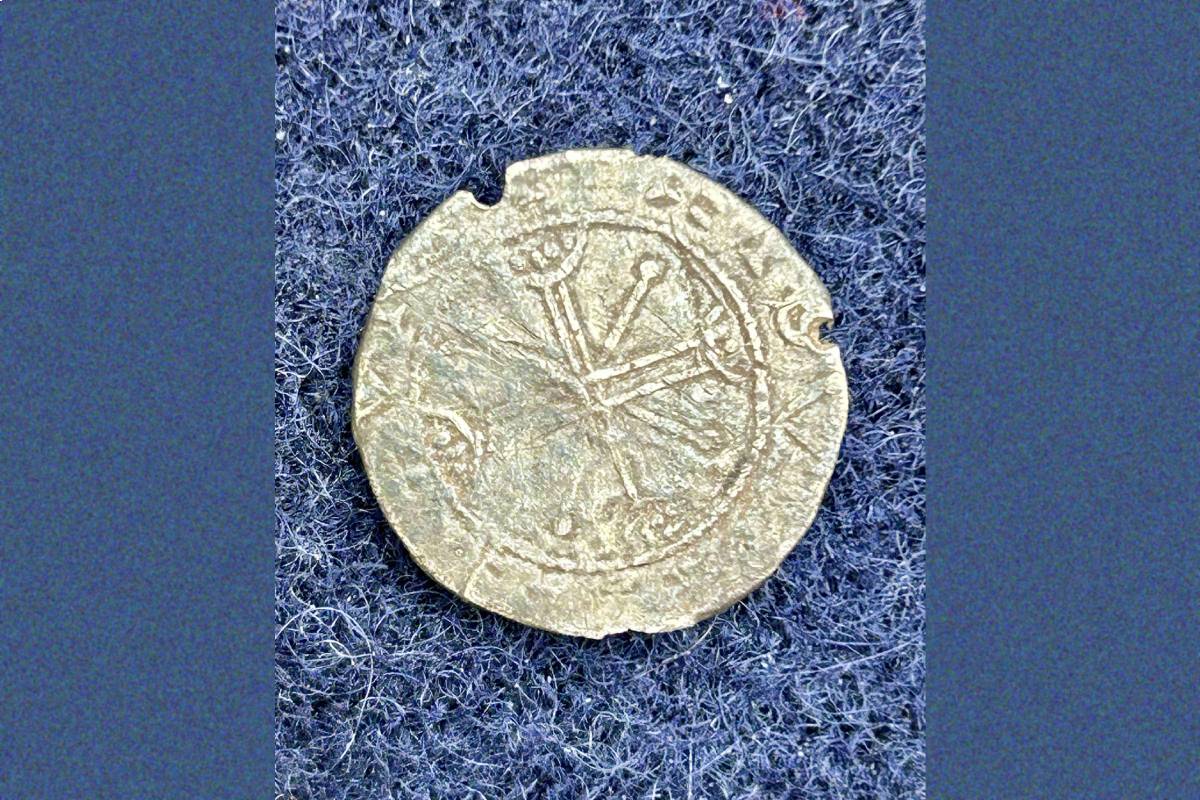
A rare coin has been unearthed from the reign of Magnus Barefoot, often referred to as the last Viking king.
The coin, which was found by an amateur metal detectorist in Norway, has recently been examined at the University of Stavanger. The Viking Herald speaks to archeologist Linn Lillian Eikje Ramberg, who carried out the analysis.
From uncertainty to great excitement
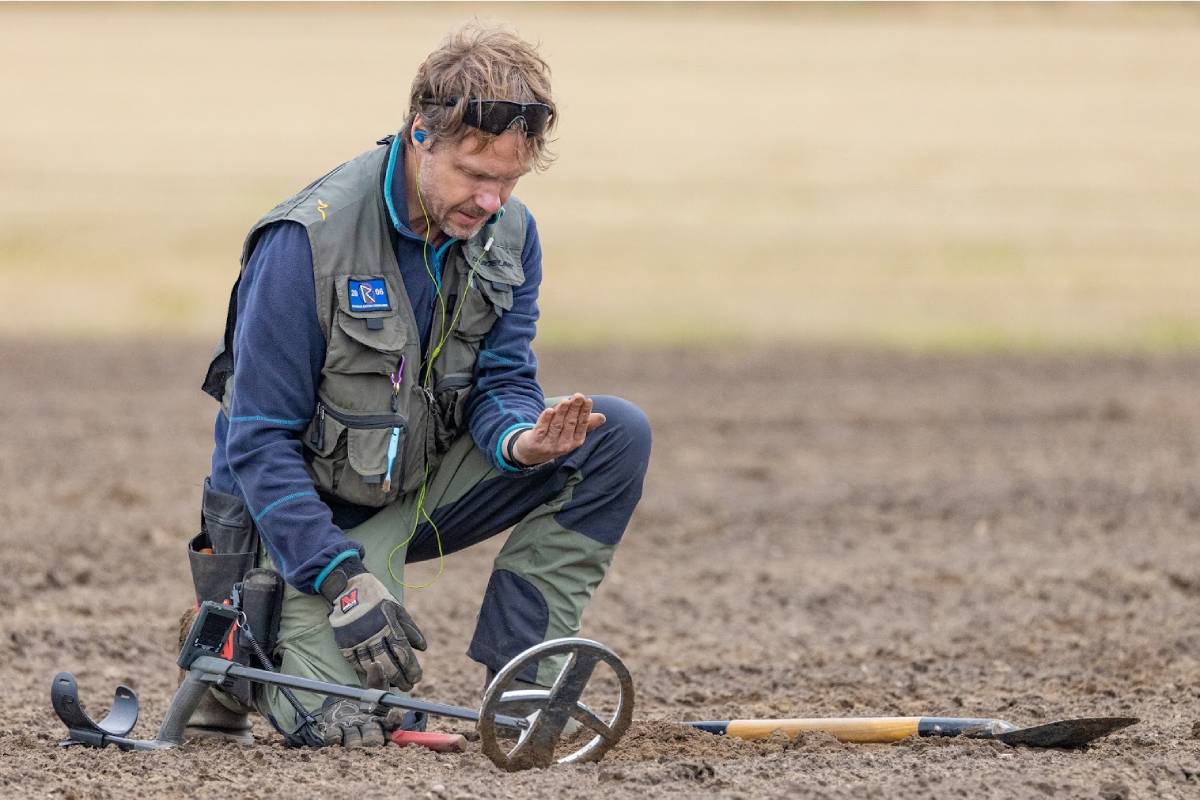
"The coin was found by a metal detectorist, Morten Eek, in a field at Utstein Abbey in April," Linn informs The Viking Herald.
"At first, Morten thought it looked like a coin on one side. But then it seemed it might be a button because of the copper blank fastened on the back."
Morten felt that the object was almost certainly worthless but could not be 100% sure, so he placed it in a bucket at his home with other objects of uncertain origin.
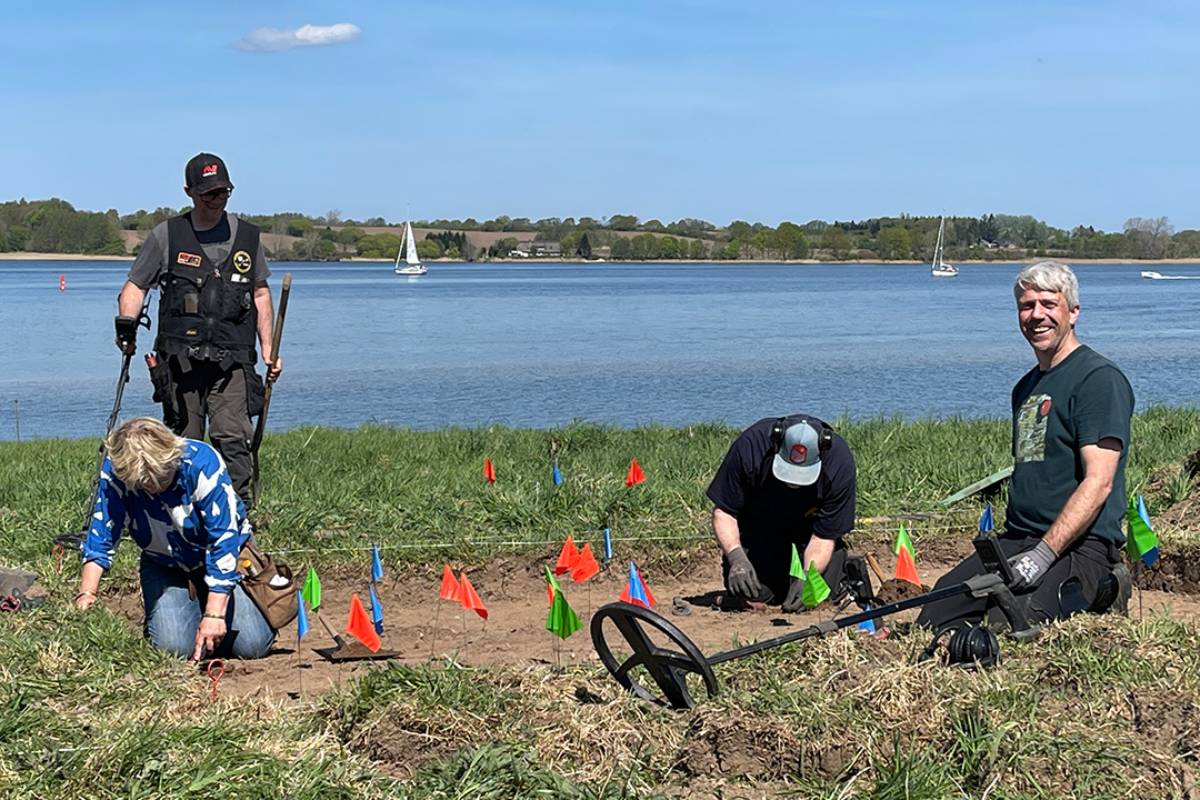
"Then, a few weeks ago, he and some detectorist friends went through the dodgier stuff they had brought in," Linn continues. "Together, they soon realized this was a rare coin from around 1100. They posted a photo of the coin on the Instagram account of the Rygene detector club."
"Fortunately, a journalist picked it up and contacted me, as I wrote my PhD on coins from this period in Norway," Linn adds.
Excited, Linn immediately got in touch with the finder to see if she could view the artifact up close. "Morten delivered the coin to me at the Museum of Archaeology at the University of Stavanger."

Amateur metal detectorist Morten Eek uncovered the coin during a search near Utstein Abbey in Norway. Photo: Morten Eek
Analyzing the artifact
It was soon clear that this was not a button but a medieval coin.
"The coin itself is of good silver and did not need much cleaning or preservation," Linn informs The Viking Herald.
"The reverse side was in very good condition and easy to recognize and decode. It showed a double cross with semicircles at the ends of the arms, overlaying a simple cross with pellets at the arm endings."
"The confusion about the coin came from a secondary treatment that had been applied to it," Linn explains. "At some point in time, a copper blank was fastened to the coin by folding the coin’s edges around the edge of the copper."
"There are also two pierced holes in the edge for some kind of attachment. Fortunately, because the copper blank is only on one side of the coin, the reverse side was still visible."
"However, this type of reverse pattern has been found on both one-sided and two-sided coins. This meant we needed to find out whether the coin had a motif on the other side or not."
"The only way this could be done without destroying the object was by X-ray photography. This was the main investigation carried out."
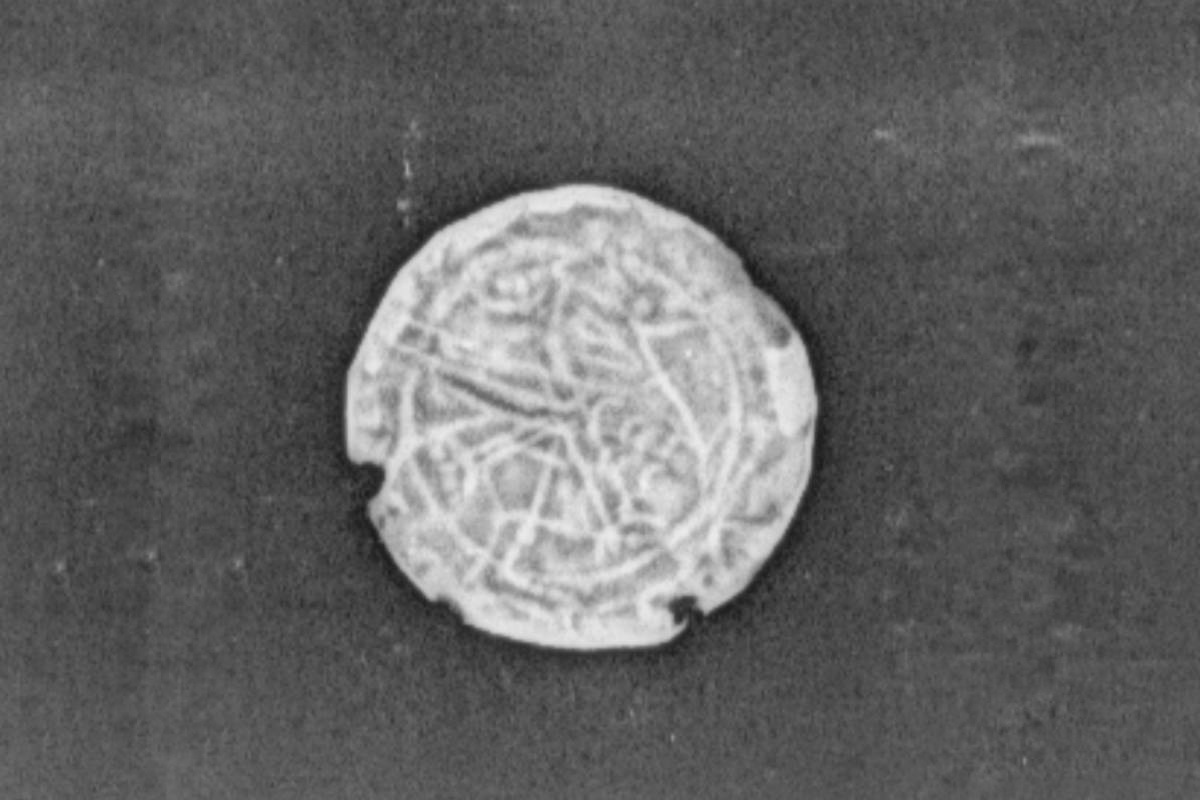
X-ray scans confirmed that the coin carried a griffin motif associated with Magnus Barefoot. Photo: Archeological Museum / University of Stavanger
Truly unusual
"The X-ray successfully revealed a griffin on the reverse side," Linn continues. "This confirmed that the coin was issued by Magnus Berrføtt."
Magnus Berrføtt, known in English as Magnus Barefoot, was the son of Olaf III (Olaf Kyrre) Haraldsson and grandson of Harald Hardrada, and reigned as king of Norway from 1093 to 1103.
He was notorious for his aggressive military campaigns in Britain and Ireland and is often referred to as the last Viking king of Norway. The link to Barefoot made the coin a special discovery.
"The coin is rare for several reasons," Linn explains. "First, the coin type itself is rare—there are only four coins of this type with a known cultural context."
"One was found at Sandø in the Faroe Islands, while the other three are from a hoard found at Lundby Krat, near Aalborg in Denmark. This means it is the first time such a coin has been found on the mainland of present-day Norway."
"It is also rare to find coins from this time using a metal detector because the coins are very small (normally around 0.4 grams)," Linn continues.
"I think the copper blank is the reason why this small and quite fragile coin has been preserved until now, and also the reason why it was found using a metal detector. Finally, the secondary treatment of making the coin into a piece of jewelry gives the object yet another story to tell."
- READ MORE: A Viking history of Norway – Part 1
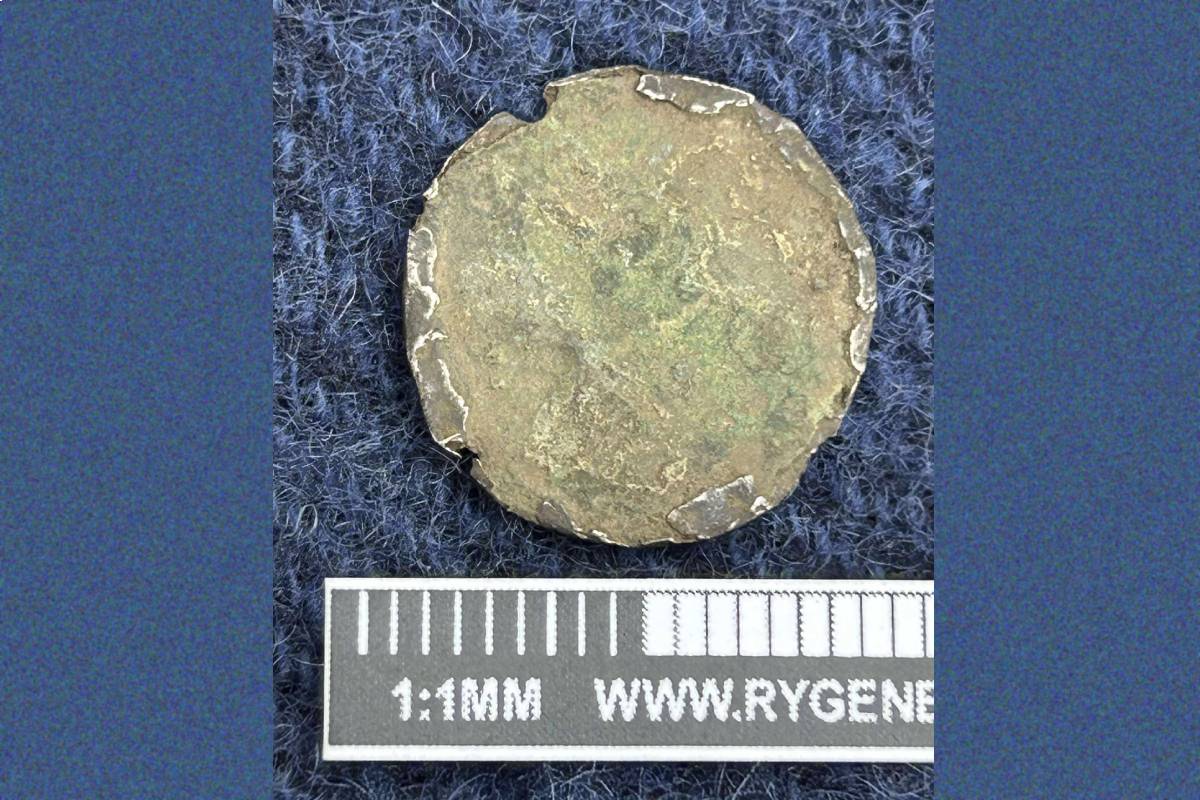
This image shows the side of the coin concealed beneath a copper plate, with folded edges around the rim. Photo: Morten Eek
Looking for more insight
As Linn points out to The Viking Herald, very few coins from the reign of Magnus Barefoot have been discovered.
"There are only around 100," Linn confirms. "That means that every new coin and every new context will provide new opportunities for research and new knowledge."
In other words, it is possible that further analysis of Morten Eek's discovery could provide us with important insights into this period of Norwegian history.
"I am really looking forward to studying this coin further to reveal what it can tell about its history and also the reign of Magnus Berrføtt," Linn adds.
"We will also display the coin in the museum exhibition for a few months so the public can come and see it," Linn tells The Viking Herald. She also adds that Morten Eek was especially fortunate to find such an artifact.
"The last time a coin was found from the reign of Magnus Berrføtt was at an archeological excavation in Trondheim in 1998/99," Linn points out. "In other words, I don't expect to see any similar finds in the near future. At the same time, it would be fantastic if we did!"
We get to provide readers with original coverage thanks to our loyal supporters. Do you enjoy our work? You can become a PATRON here or via our Patreon page. You'll get access to exclusive content and early access.
Feel free to reach out to discuss potential stories that may be in the public interest. You can reach us via email at [email protected] with the understanding that the information you provide might be used in our reporting and stories.