

The Secrets of the Ice team is getting ready for another season of archeological digs in the frozen north. In a recent Facebook post, the team began the countdown as they prepare to uncover more historical artifacts in the glacial mountains of Norway.
Unique finds in a special setting
The Secrets of the Ice team consists of archeologists who were tasked with exploring the high mountains of Innlandet County in central Norway in 2006.
The decision to investigate the area was made after a period of significant snow and ice melting, and hundreds of finds were discovered in the same year.
Since that time, the melting ice has revealed a host of archeological treasures, and the Secrets of the Ice website and social media platforms have soared in popularity.
Thanks to the almost magical properties of the ice, many of the objects found are incredibly well-preserved. The finds have also proved to be remarkably wide-ranging in terms of dates and materials.
Some of the highlights over the last 18 years include arrows from the early Neolithic period (4000-3700 BCE), a 1,300-year-old ski, and a pinewood box containing beeswax dating to around the 16th century CE.
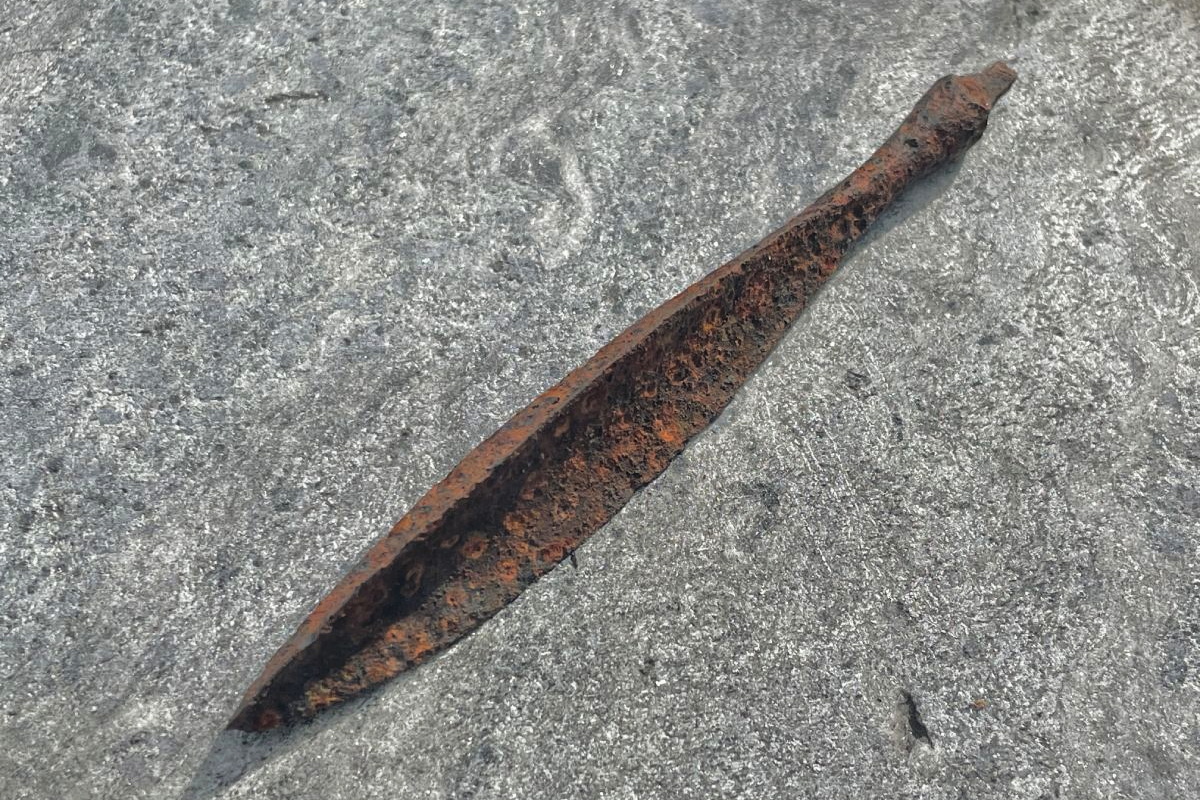
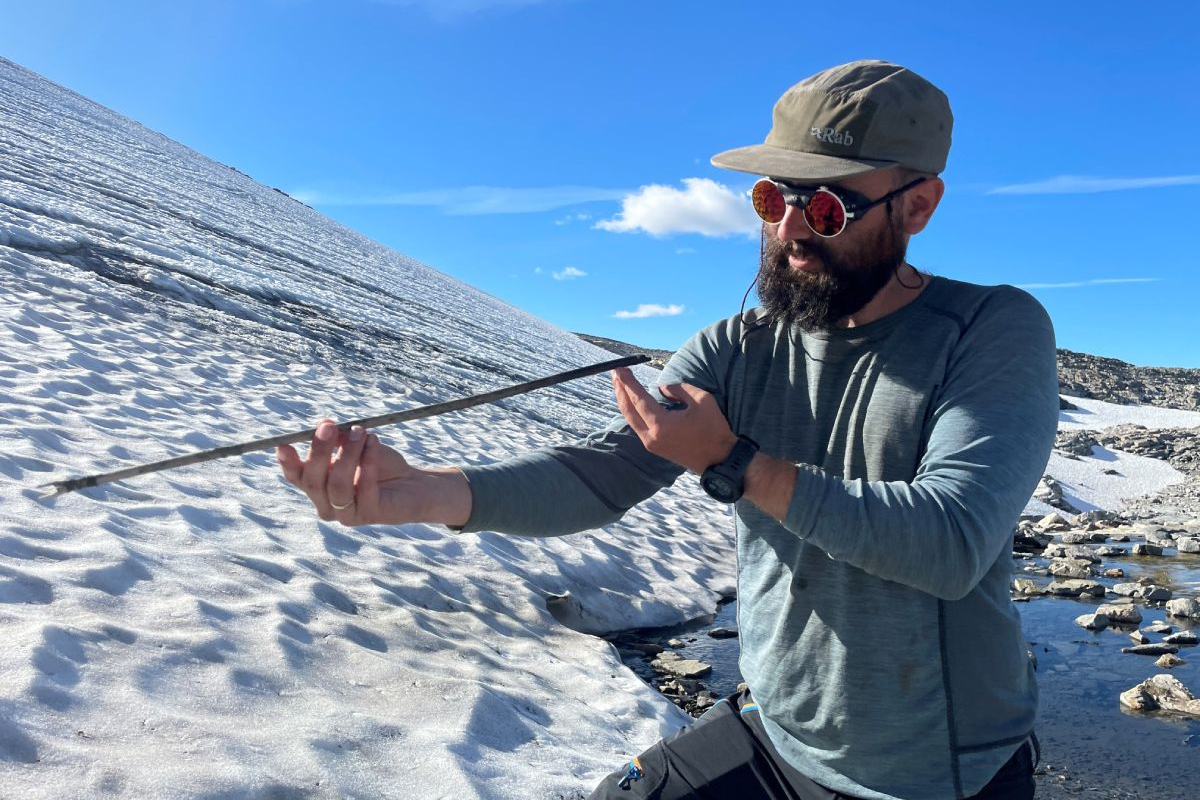
In 2022, archeologists discovered a three-bladed arrowhead from the Viking Age in the Jotunheimen Mountains. Photo: Secrets of the Ice
The wonders of Lendbreen
Perhaps the team’s most significant finds, however, have related to the Viking Age. In the Jotunheimen Mountains, for example, the archeologists were able to uncover a three-bladed Viking Age arrowhead in 2022.
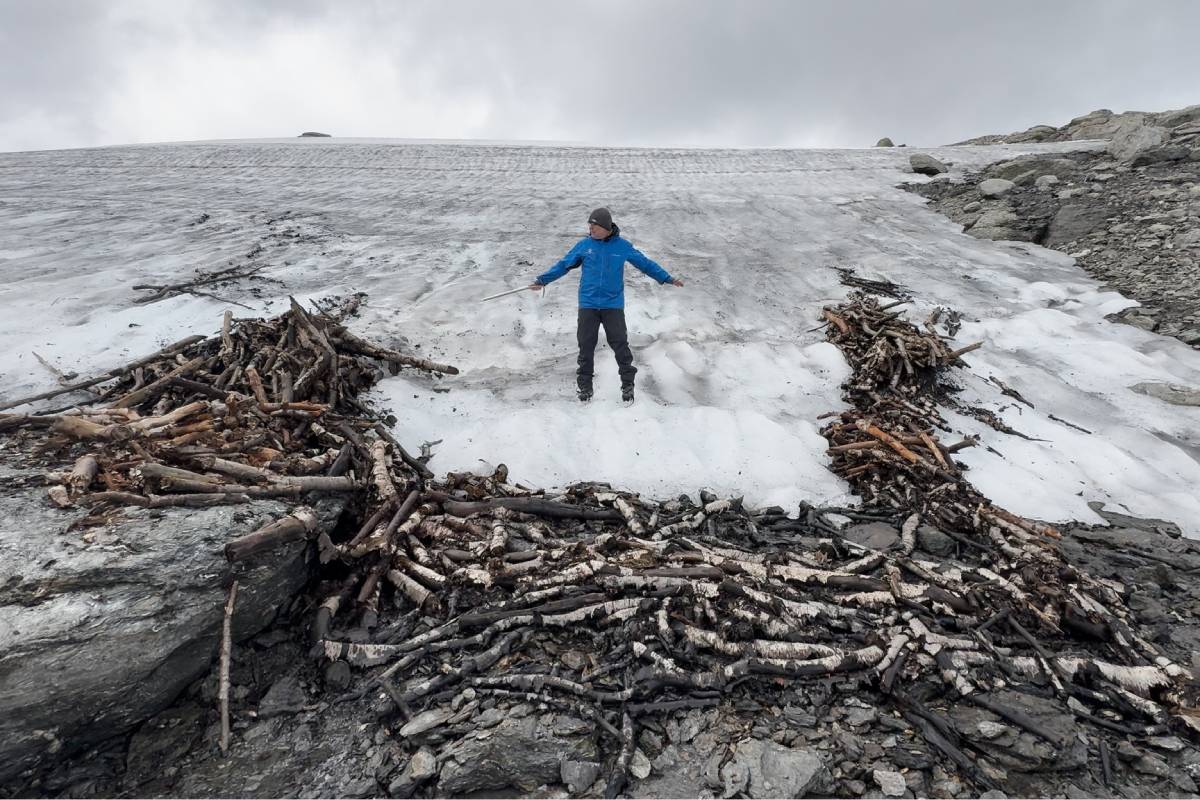
Most spectacular of all is the site at the Lendbreen mountain pass, which stretches from the Juvtinden to the Kvitskarvbreen mountains. This pass alone has yielded more than 1,000 artifacts and was most frequently used in the Viking Age.
Again, thanks to the extreme cold in which they were kept, at Lendbreen the team has been able to uncover objects that no archeologist could ever have expected to find, including a 1,700-year-old tunic and a Viking Age mitten.
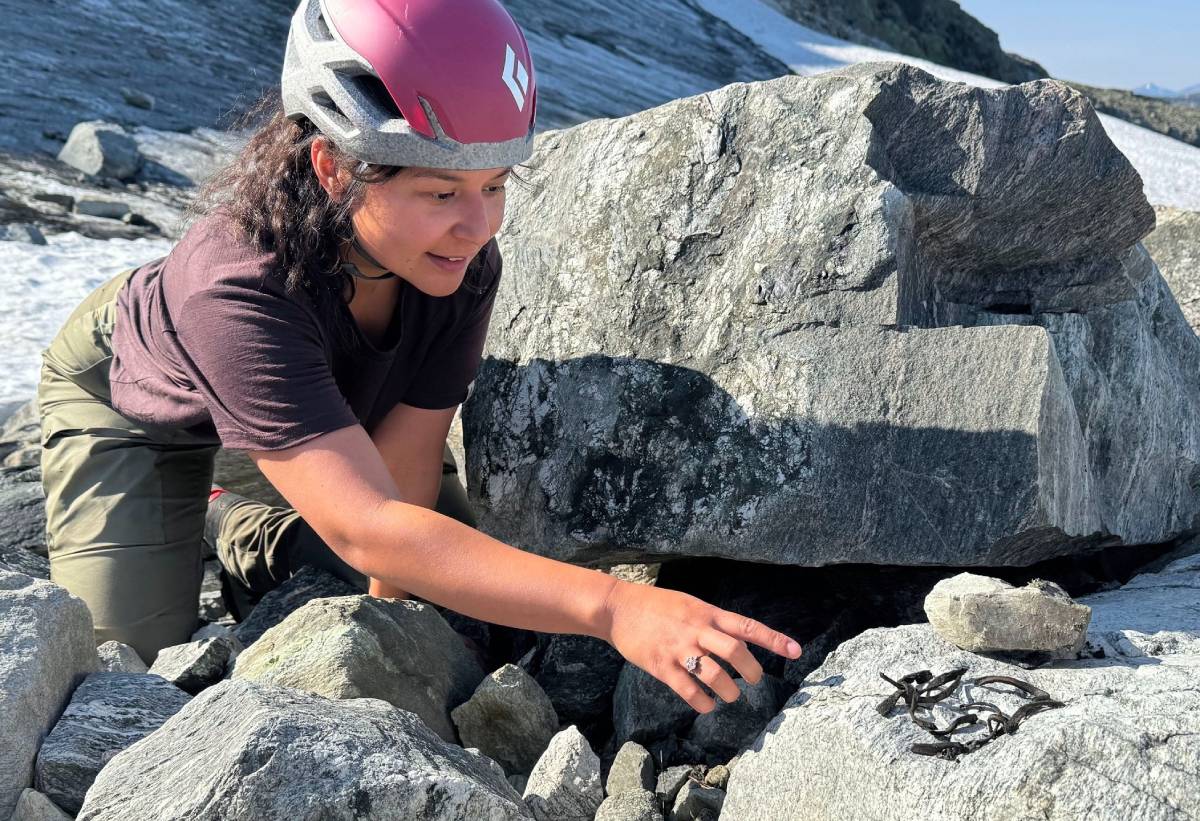
The digs at Lendbreen have also revealed the remains of pack horses and a series of other weapons and everyday items.
One of the most remarkable finds of all, however, actually predates the work of the Secrets of the Ice team.
In September 1974, a young student, Per Dagsgard, was hiking across the Lendbreen ice patch when he came across a complete Viking Age spear. This stunning artifact has since been dated to approximately 825-950 CE.

The team can only conduct fieldwork during the brief summer thaw, with the new season starting in early August. Photo: Secrets of the Ice
A mixed blessing
It should be noted, however, that the delight shared by the archeologists and the general public, thanks to these wondrous finds, is always tinged with a degree of sadness at the reason for the emergence of the artifacts: climate change.
After all, without the rising temperatures caused by climate change, it is unlikely that so many discoveries would have been made.
For this reason, in addition to sharing their discoveries, the members of Secrets of the Ice have also worked to educate and inform people about the science behind the changing conditions that make much of glacial archeology possible.
Naturally, for most of the year, the team is unable to operate due to the freezing conditions.
The new season for the team is scheduled to begin at the start of August, as the full heat of the summer causes a thaw in the mountains.
As the fieldwork unfolds, the Secrets of the Ice team will surely be hoping to uncover even more spectacular finds.
We get to provide readers with original coverage thanks to our loyal supporters. Do you enjoy our work? You can become a PATRON here or via our Patreon page. You'll get access to exclusive content and early access.
Feel free to reach out to discuss potential stories that may be in the public interest. You can reach us via email at [email protected] with the understanding that the information you provide might be used in our reporting and stories.