

The good ship Viking, which currently resides in Geneva, Illinois, has a long, illustrious, and at times unfortunate history.
Built in 1893, Viking completed possibly the most remarkable seafaring journey of the 19th century before languishing for decades in a Chicago park.
With the help of David Nordin, a founding member and vice president of Friends of the Viking Ship and board member Mette Bowen, The Viking Herald explores the ship's remarkable story and the efforts being made to preserve it for future generations.
Made in Norway
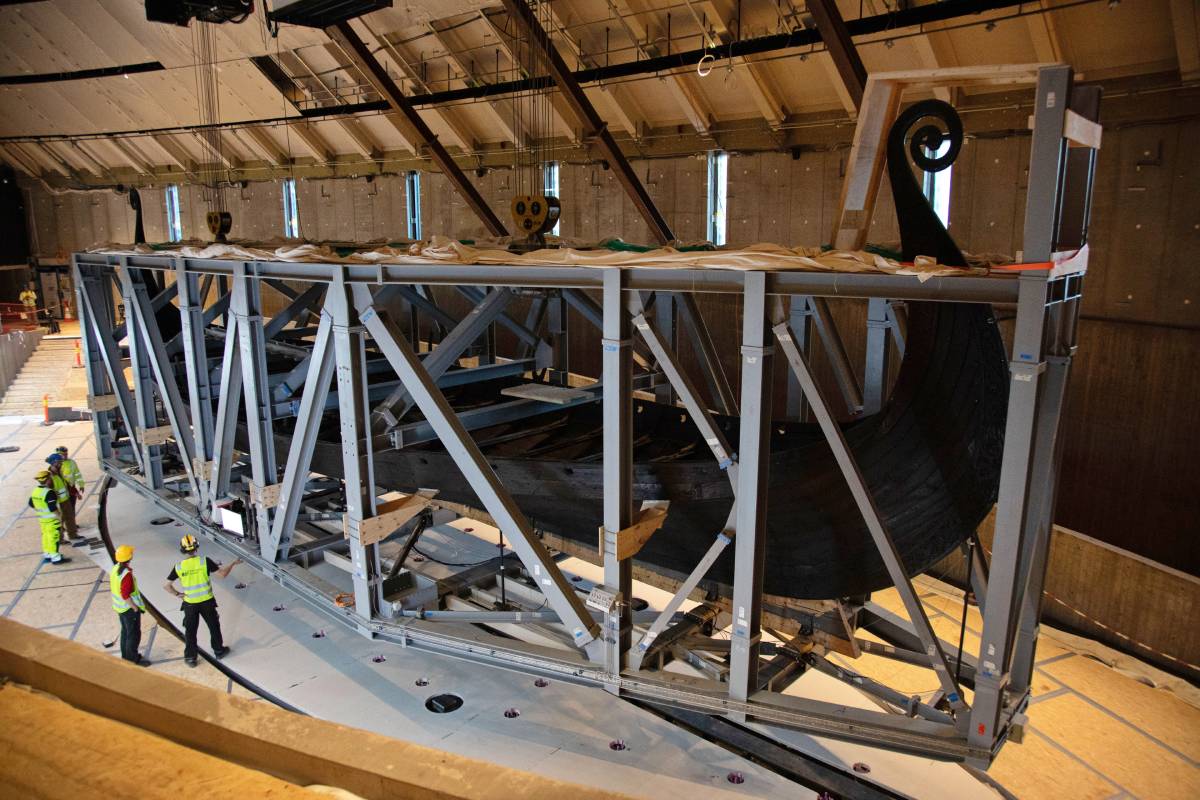
As The Viking Herald has recounted, the Gokstad ship was unearthed in 1880 at a site in Vestfold, Norway, and still today remains the country's largest preserved Viking ship.
Just three years after Gokstad's discovery, the very first replica of the vessel was completed: Viking.
Also known as 1893 Viking, the vessel was constructed at the Framnes Shipyard in Sandefjord, Norway, with the aim of sailing it to America for the Chicago World's Fair.
"The Gokstad ship was found not long before the exposition in Chicago," confirms Mette, who was born in Oslo, Norway, but emigrated to the U.S. in the 1960s.
"Some people asked if the original Gokstad ship could be brought to Chicago, but of course that was not possible. Instead, they decided to build a replica."
"The ship was built of Norwegian black oak, with a pine dragon head and tail carvings, mast, yard, and oars," adds David, who also volunteers as a docent for the Friends of the Viking Ship.
"The keel alone was constructed with imported oak from Canada, as in Norway in 1893 they couldn't find an oak tree tall and straight enough."
"Norwegian iron was used for the thousands of rivets needed to clinch together the overlapping strakes that make up the sides of Viking-style ships," he tells The Viking Herald.
"Remarkably, the ship was built entirely with privately donated funds, including from Norwegian schoolchildren."
- READ MORE: All you need to know about Viking ships
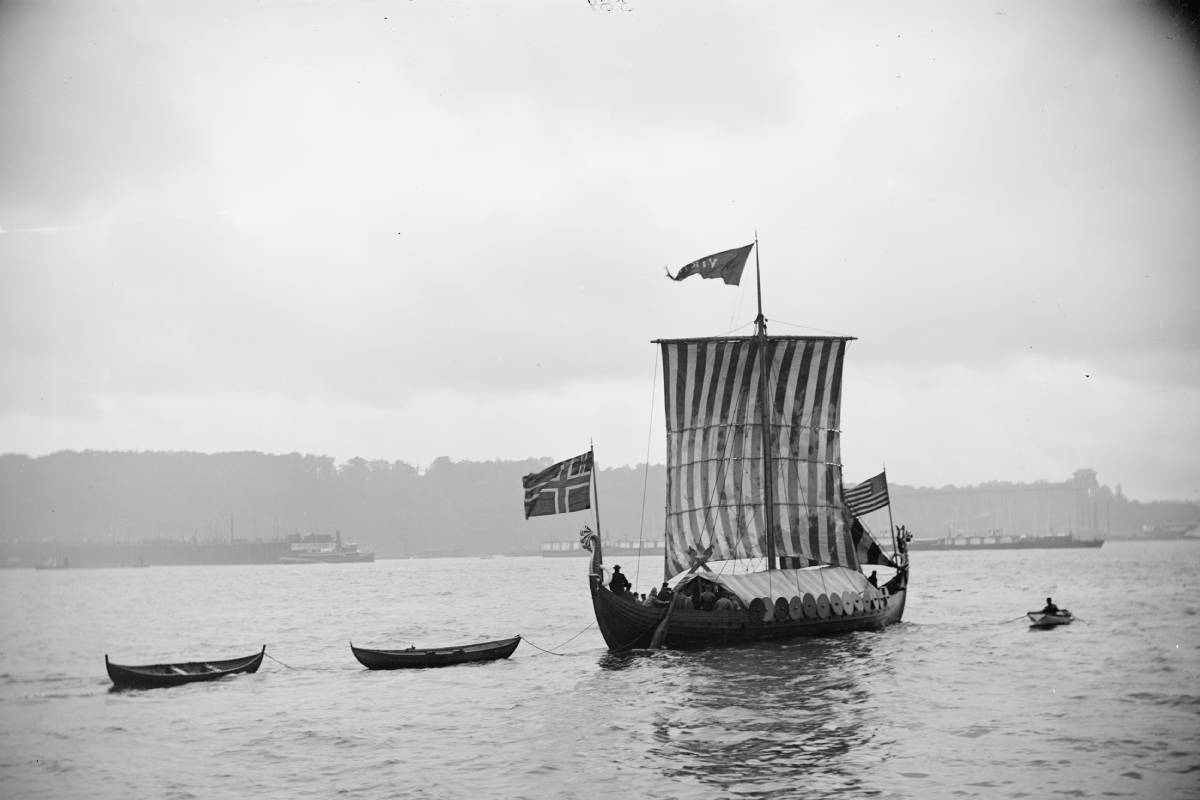
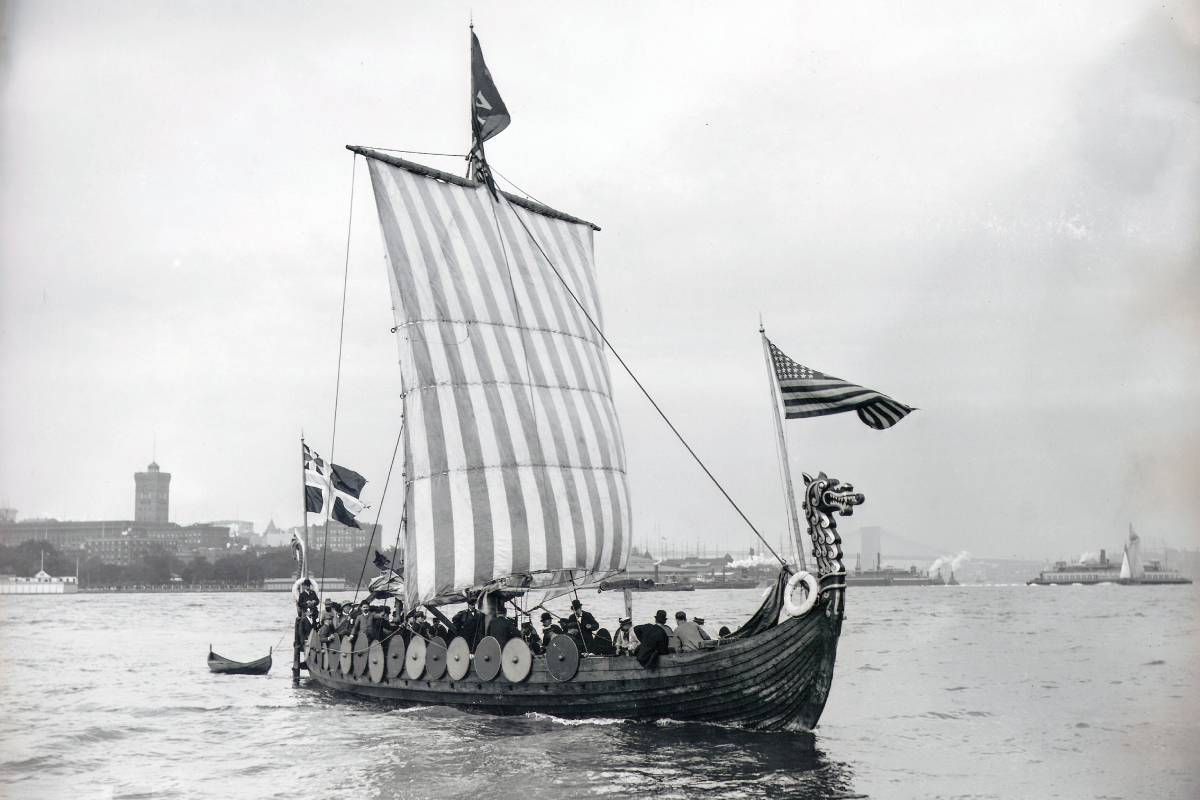
In 1893, a 12-man crew sailed Viking across the Atlantic without support, facing storms and near disaster. Source: Edward H. Hart
The journey of a lifetime
With the ship complete, the next challenge was to transport it to America. Instead of hitching a ride with a larger modern vessel, the Norwegians devised a remarkably bold plan: to sail it there themselves.
So it was that on April 30, 1893, a 12-person crew of experienced seamen departed from a harbor just outside the city of Bergen and set out for the shores of North America.
"The voyage was well documented by the ship's captain, Magnus Andersen, who published his book on the expedition," David tells us.
"A crew member, Rasmus Rasmussen, also wrote a book about the voyage. In the main, it went well, but the crew did experience heavy gale-force winds and high seas at night."
"When the pump failed, the waves nearly swamped the vessel, and the crew had to bail water out of the ship by bucket for several desperate hours."
Unlike similar trips carried out today, the seamen completed their voyage with almost no external assistance.
"The ship traveled for 16 continuous days on the North Atlantic without seeing another vessel," David points out.
"After a voyage of 28 days, the ship arrived at St. John's, Newfoundland, thus completing a non-stop crossing of the entire North Atlantic Ocean."
"It should be noted that Leif Erikson had only sailed from Greenland to the northeast corner of Newfoundland, a much shorter distance."
"This means that Viking's 1893 journey was the longest known non-stop voyage by a Viking ship in history."
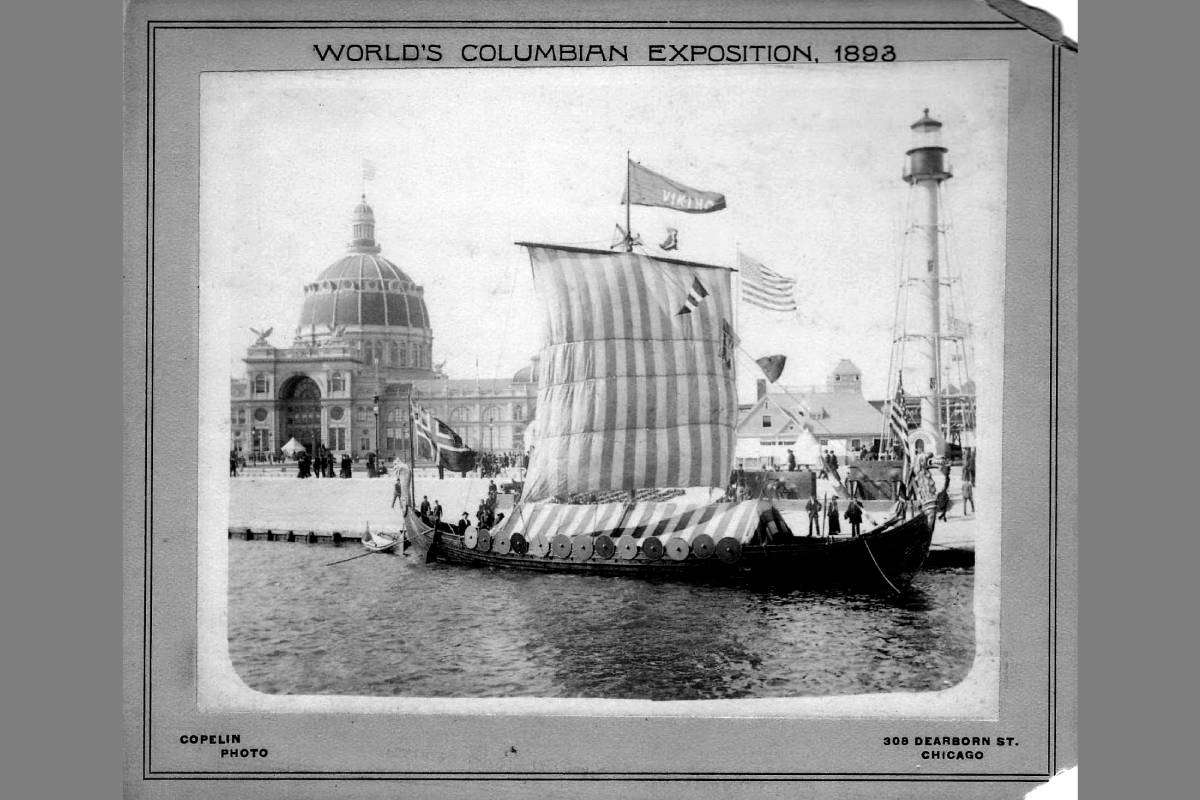
Viking's transatlantic journey gave new weight to Norse sagas, proving their ships were ocean-worthy. Source: Friends of the Viking Ship
An emerging icon
Next, of course, the ship made its way to Chicago for the World's Fair, otherwise known as the World's Columbian Exposition, held to celebrate the 400th anniversary of Christopher Columbus's journey to the Americas.
The 1893 Viking ship was one of the star attractions at the six-month fair, which brought in some 27 million visitors from across America and around the world.
As David informs The Viking Herald, the presentation of the vessel would have been a formative educational experience for many onlookers.
"It was the first Viking ship built since the ancient Viking era. It is a very close copy of an actual excavated historical ship, not merely a generic interpretation of a Viking-style vessel."
It is thought that the transatlantic journey and subsequent presentation of the ship helped alter perceptions of the Vikings in both North America and Europe.
"The voyage of our Viking ship literally changed the written history of the New World," David explains.
"It proved the seaworthiness of a Viking ship for a very long and dangerous ocean voyage 500 years before Columbus. It added credibility to the sagas of New World exploration as reliable history, not merely ancient folklore."
"The successful voyage of Viking also inspired the 1960s archeological exploration of Newfoundland," he continues.
"This resulted in the discovery of what is now believed to be the Norse settlement and exploration base at L'Anse aux Meadows."
"An estimated 22 million people saw the ship at the fair, and it fed the worldwide fascination with the Vikings, which has only grown exponentially ever since."
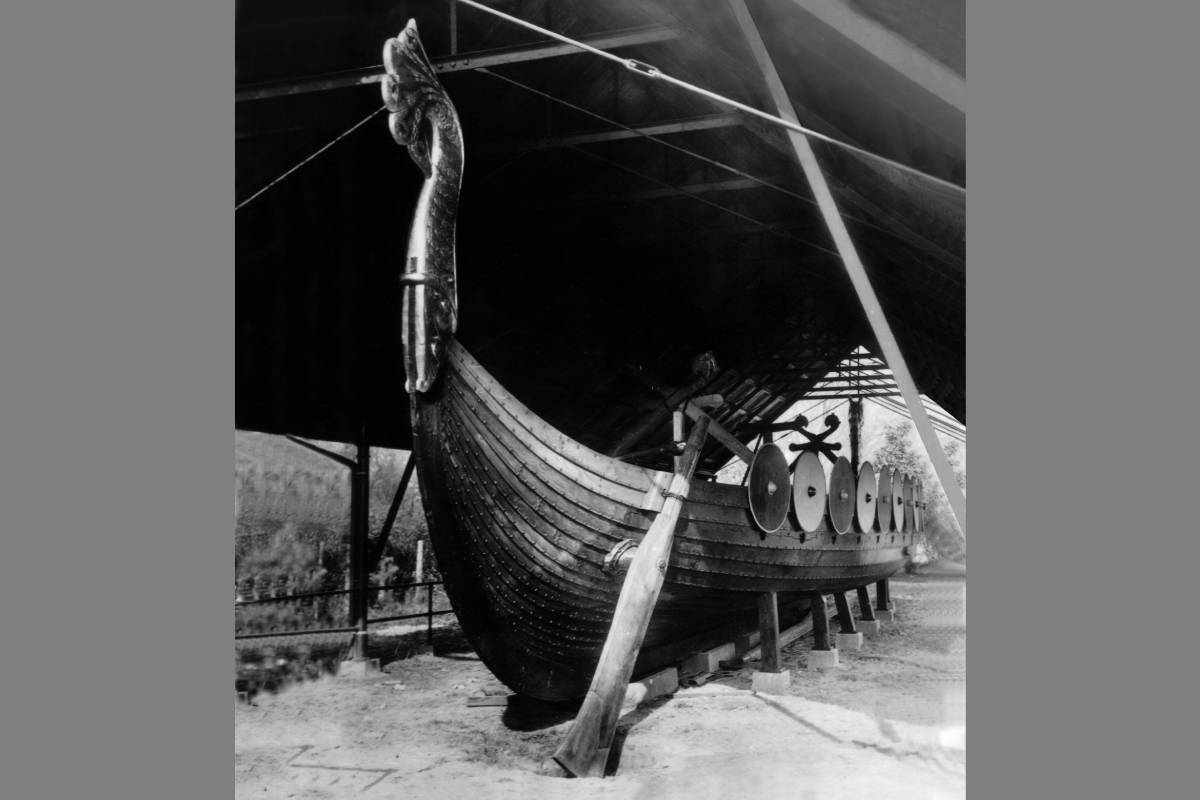
From 1894 to 1919, Viking sat forgotten by a lagoon before being moved to Lincoln Park with little protection. Source: Friends of the Viking Ship
The park years
Despite its success, however, there were unfortunately no concrete plans for what to do with the ship after the exposition.
Between 1894 and 1919, it lay virtually forgotten next to a nearby lagoon and sustained substantial damage from neglect. Yet even when the ship was moved to Lincoln Park in 1920, it was afforded little protection.
"It sat in the park for many years," Mette tells us. "It was owned by the City of Chicago and left outside with only a roof to protect it and no external walls."
"There were even birds nesting in it. Groups, including the presidential candidate Walter Mondale, have been trying to get the ship out of the park for many years. But they weren't successful."
In fact, several parts of the ship were moved to museums and have since disappeared, though the head and tail have been retrieved.
"There were no public funds budgeted for its care or interpretation," David adds. "Little maintenance was done besides occasional repainting of its head and tail carvings, and it sustained further rot and theft damage."
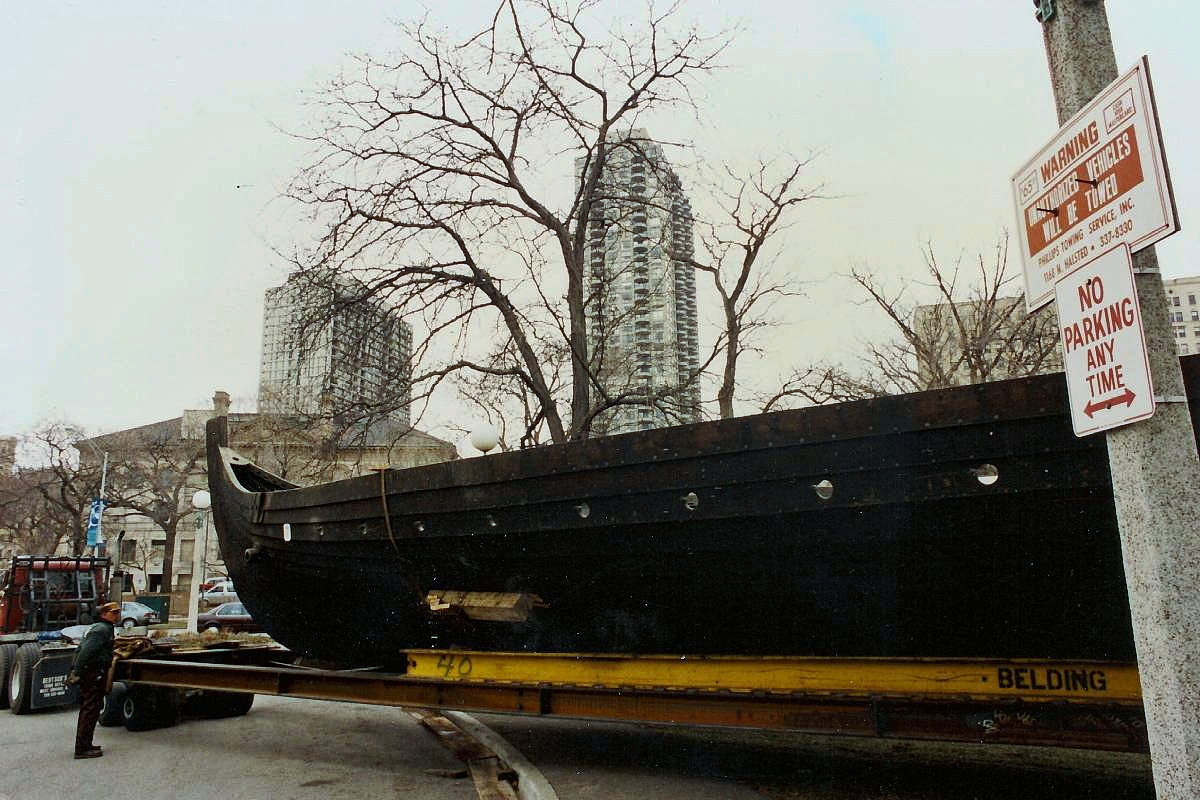
In 1994, Viking was moved from Chicago to Geneva, Illinois, where it found a temporary home in Good Templar Park. Source: Friends of the Viking Ship
An American-Scandinavian rescue
After deciding to remove the ship to make way for the expansion of the Lincoln Park Zoo, the Chicago Park District finally sold the vessel to the American Scandinavian Council in 1994.
"It was taken out of Chicago and eventually brought to Good Templar Park in Geneva," Mette explains.
"A group of Swedish Americans had built a cabin community on the site. They weren't using the tennis courts, so they said it could be brought there."
As Mette tells us, the Midwest has a sizable Scandinavian population. "At one point, there were 40 Norwegian-language churches in the Chicago area."
"Geneva, Illinois, was more of a Swedish settlement, but still, we are happy to work with our Scandinavian brethren," she laughs. "We consider a Viking ship a gift to the Scandinavian and Nordic communities as a whole."
Yet even now, the ship is not entirely shielded from the elements. It is currently housed in a temporary structure that offers only limited protection from Illinois's extreme wind and cold.
Nevertheless, the ship is finally receiving some of the attention and care it so dearly requires.
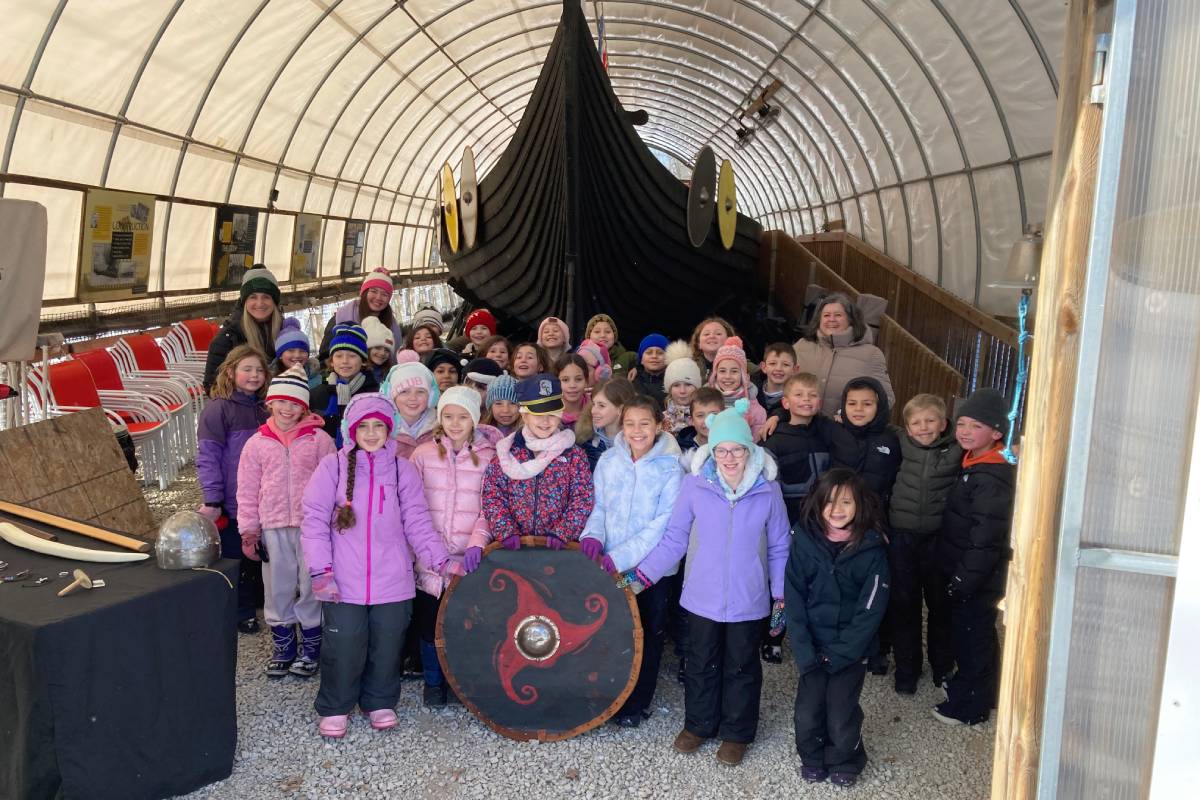
While Viking can never sail again due to weakened timbers, ongoing preservation efforts aim to protect it for future generations. Source: Friends of the Viking Ship
Preserving a part of history
"The Friends of the Viking Ship is dedicated to the care and preservation of the ship," David informs The Viking Herald.
"Since our formation in 2008, we have added 32 external support enhancements to support and completely cradle the ship safely. We have twice treated the entire ship with a protective mix of linseed oil, pine tar, and turpentine."
"We have also had its head and tail professionally restored to their 1893 appearance. This year, we were able to locate one of its færing boats and arrange for its restoration."
"The ship has many cracked strakes and age-weakened timbers, which would prevent it from ever floating again," David admits.
"There are no plans for – and no benefit to – the massive work and expense needed to make it seaworthy again. But the current condition of its aged timbers is no barrier to the future enjoyment of the ship and appreciation of its inspiring story."
Today, the team is hoping to secure new land to house the ship on a permanent basis and also showcase its fascinating past.
"We have raised substantial funds for its permanent, climate-controlled museum location," David adds.
He is keen to stress the importance of a historical replica that has become part of our history. "The ship's successful voyage vastly increased worldwide public awareness of and respect for Scandinavians, especially in America," he concludes.
"Viking also remains a valuable reference and research source for historians, authors, and other builders of replica Viking ships."
We get to provide readers with original coverage thanks to our loyal supporters. Do you enjoy our work? You can become a PATRON here or via our Patreon page. You'll get access to exclusive content and early access.
Feel free to reach out to discuss potential stories that may be in the public interest. You can reach us via email at [email protected] with the understanding that the information you provide might be used in our reporting and stories.