

Evidence of Sámi activity during the Viking Age has been uncovered in central Norway. The research has provided rare physical evidence of the presence of the Sámi people in this region and could have major implications in both historical and political terms.
Archeologist Harald B. Midthjell, who has been working on the project, talks to The Viking Herald about the finds.
A race against time
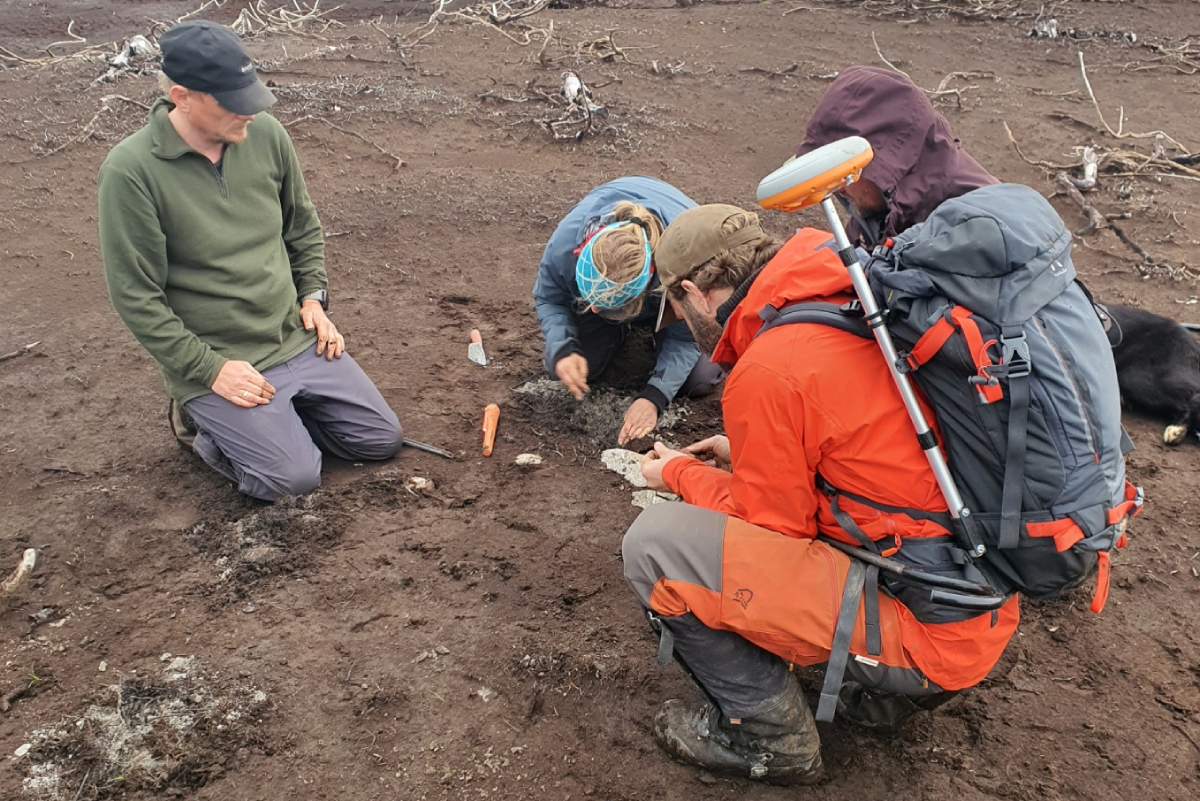
The main research was carried out by a team of archeologists working on a site adjacent to the River Nea in the Norwegian county of Trøndelag.
The group received permission to investigate the area during the rehabilitation of a large hydro-electric plant close to the river.
"The Nea Valley was flooded by this dam project in the 1970s," Harald tells us. "At that time, only three days of archeological surveying were done in advance, and certainly not with any focus on Sámi archeology."
"I had been working on cultural heritage for the Sámi parliament, and we knew it was an area where the Sámi had lived and herded reindeer for many centuries."
The team received permission to complete a survey on foot and with the help of a LiDAR drone in the summer of last year.
"The whole dam needed to be emptied, which meant the lakebed was accessible for the first time since construction," Harald explains.
"We knew this would be our only chance to survey the valley before re-flooding; we literally worked with the water level rising at our heels."
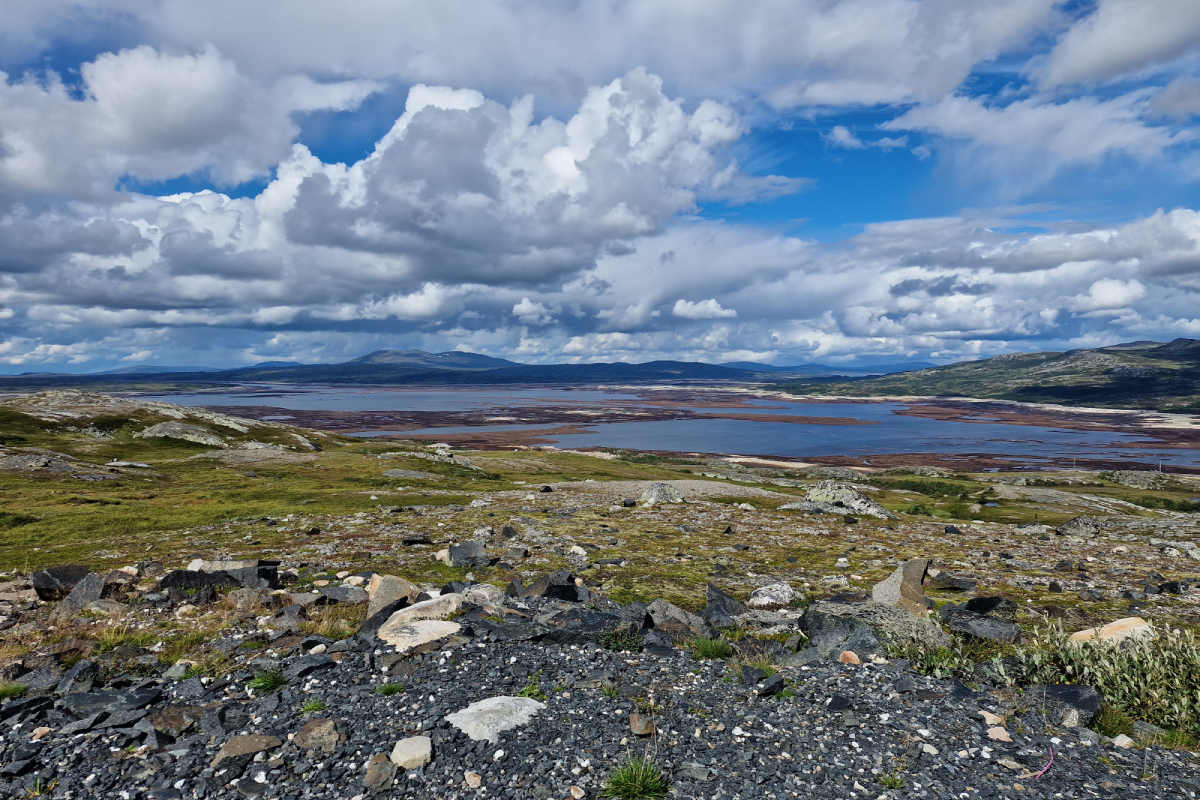
Archeologists conducted their main research near the River Nea in Norway's Trøndelag County. Photo: Harald Midthjell
A wide spread of Sámi sites
During the 2023 field season, the team was able to map around 60 different sites of interest.
The group, which also included David Berg Tuddenham, Mattis Danielsen, and Nicklas Danielsen, found a total of 40 hearths, many of which appeared to be of Sámi origin.
"When compared to other contemporary and modern Sámi sites in terms of placement in the landscape and physical characteristics, the majority of the hearths were interpreted as Sámi dwelling sites," Harald tells us.
The Sámi people are the traditionally Sámi-speaking Indigenous peoples inhabiting the region of Sápmi, a region that today includes large northern parts of Norway, Sweden, Finland, as well as the Kola Peninsula in Russia.
Due to their nomadic nature in centuries past, the Sámi people's historical presence in a particular area can often only be pinpointed by identifying their hearths, i.e., the place where they built fires, cooked food, and congregated as a community.
"The hearths themselves are most often rectangular, built from flat, lying stones and measuring about 80 x 100 cm," Harald informs us.
"The hearths we found were indistinguishable from known Sámi constructions, which are called 'gåetie' in Southern Sámi, or 'gamme' in Norwegian."
"There is agreement amongst scholars that structures like these should be considered Sámi sites. As one of the main experts in this field and this area, I am absolutely convinced that they are Sámi."
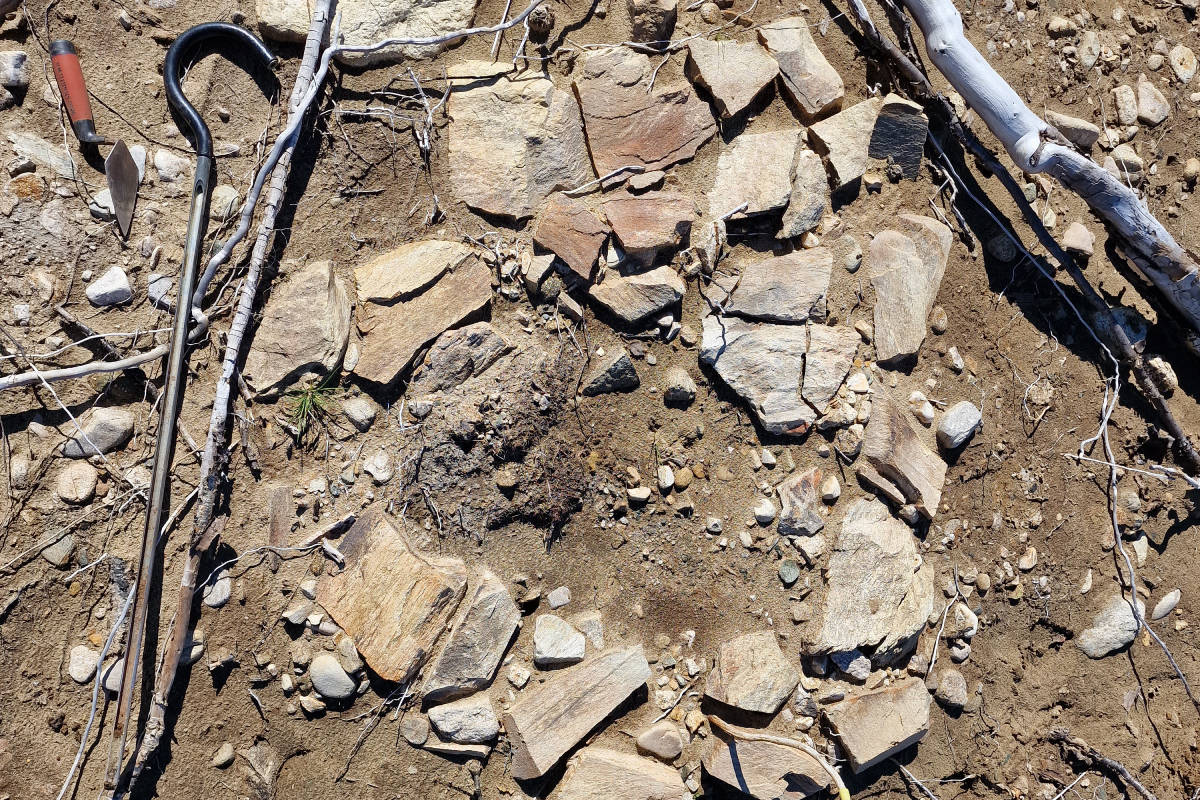
The team uncovered numerous Sámi hearths in the Nea Valley, identifiable by their unique stone arrangements and charcoal layers. Photo: Harald Midthjell
Changing perception
The next step was to pinpoint when these hearths were produced.
"Between the stones, we find a layer of soot and very fragmented charcoal that can be used for carbon dating," Harald explains.
Harald had already identified other possible Sámi sites in the area that dated to either the Viking Age or the period of the Iron Age that just preceded it.
This meant that if the team was able to find more at Nea, it could potentially help resolve a long-held debate.
Although some experts believe that the collaboration between the Norse and Sámi people in Norway was strong during this period, others have long argued that the Sámi remained in the far north and only ventured south at a much later date.
In other words, the two cultures lived in separate regions, with only sporadic contact for trading purposes. The findings of Harald and his team at Nea, however, appear to put paid to this idea.
"In addition to lots of hearths from the 15th and 16th centuries, we were also able to date three more sites to around the 8th century CE," Harald tells us.
"This gives us a total of ten sites spread evenly across middle Norway, in addition to many neighboring sites on the Swedish side of the border."
"Now, we can be certain that there was a large and permanent Sámi presence in the whole area at this time."
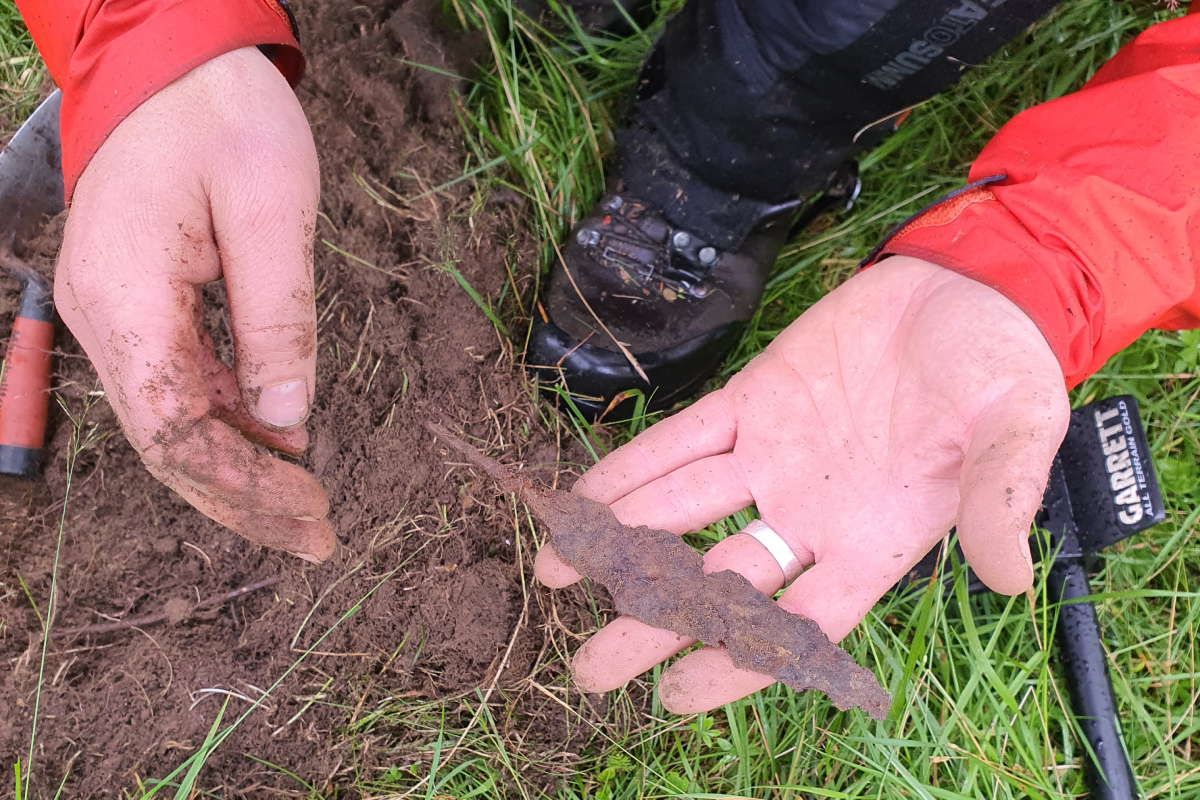
A Viking Age arrowhead was unearthed by Lake Nea, adding to the physical evidence of Norse activities in areas associated with the Sámi. Photo: David Berg Tuddenham
An integral part of Viking history
While the sagas and some historical texts have hinted at the presence of the Sámi in this area of Norway during this period, Harald believes that the uncovering of such notable physical evidence marks a significant step.
"The ramifications of this are difficult to overstate," he asserts. "It means that we have evidence of two distinct cultures living in central Norway in the early Viking Age, prior to the events related in the sagas."
"The sagas themselves do occasionally mention the Sámi (referring to them as 'Finns') but give few clues about their society and organization."
"The Finns are even mentioned in some written sources dating as far back as the first centuries of the new millennium. We now have the archeological evidence to support this."
"This is no big surprise for Sámi archeologists, but until now, we have had insufficient physical evidence to prove a permanent Sámi population in middle Norway during the Iron Age."
Plenty more to discover
It is important to note that until now, despite the huge popularity of the Viking Age, there has been relatively little research into the role played by the Sámi in the development of Scandinavia in this era.
For this reason, Harald believes that there is plenty more to discover.
"With an established Sámi presence, we can now begin to see other sites in a new light."
"These include mountain graves – the Sámi have historically been associated with mountain life and reindeer herding, and in the mountains, we have numerous graves and grave cairns dating to the Iron Age. One of these even contains a sword with recognizable Sámi ornamentation."
"Many activities such as dwelling, hunting, iron production, coal and tar production, mining, or even transport may have been performed by Sámi people," Harald informs us.
"Combat weapons in Sámi graves even suggest that Sámi individuals participated in Viking Age warfare and raiding."
There was also economic power associated with the Sámi, given their ability to source animal pelts, reindeer, and fish.
"Their presence supports the notion that trading with the Sámi was a huge factor in the concentration of the wealth and power that we see in the fjord areas of Norway during the Iron Age," Harald points out.
"Written sources also mention this trade. This suggests that the presence of the Sámi may have been important in creating the chieftain societies we see in Viking Age Norway."
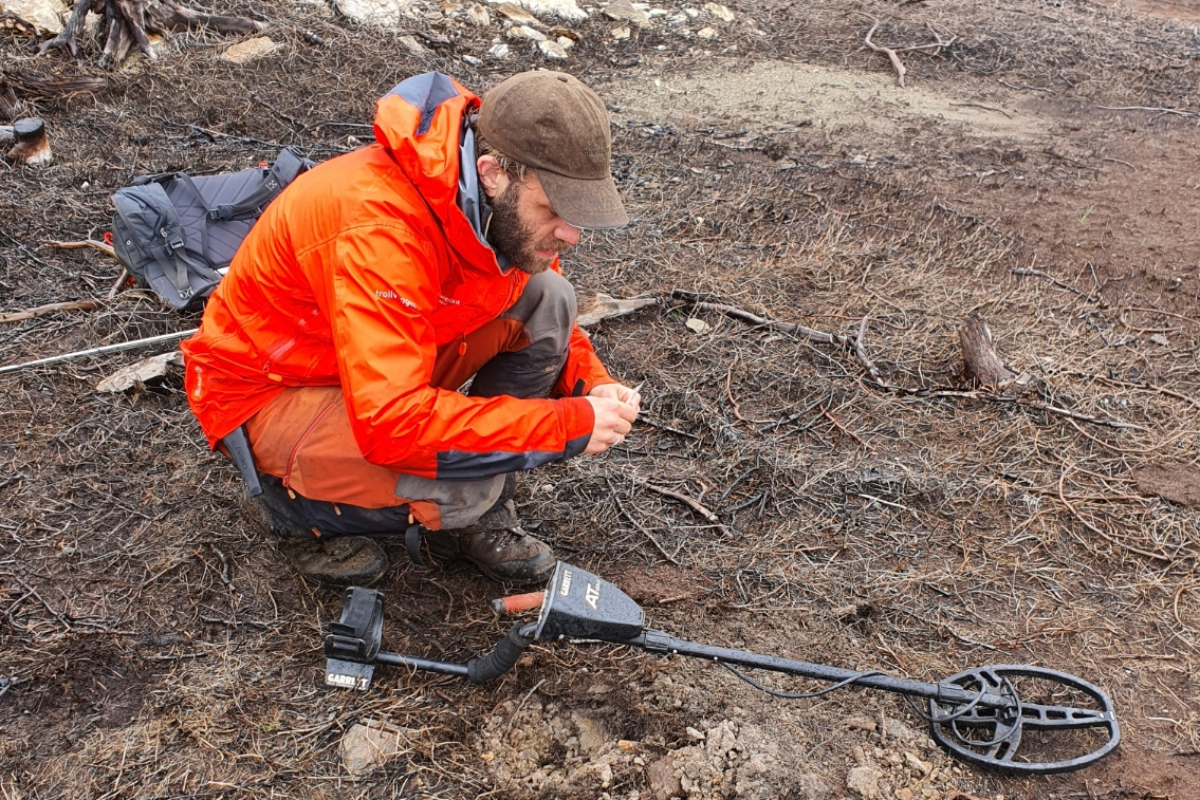
Harald mentions that they have just started to map Sámi dwelling sites and intends to continue this work in Norway and Sweden. Photo: David B. Tuddenham
"New evidence for the place of the Sámi in Norway's history"
Though the area at Nea has now been refilled with water and can no longer be accessed, Harald believes there is still much work to be done elsewhere.
"We have only begun to skim the surface in mapping Sámi dwelling sites from this period and area," Harald says.
"I have further plans in the years to come for mapping and dating more sites in Norway and Sweden (the counties of Trøndelag and Jämtland) to gain a better and broader picture of how and when the Sámi used and populated central Scandinavia."
"Lastly, the most important aspect for me is to provide the Sámi people with new evidence for their place in Norway's history," Harald continues.
"We can finally bury the racist theories proposed by Norwegian scholars during the 1800s where they 'proved' that Sámi only came this far south during the 16th or 17th century."
"There has been a constant struggle for land and pasture rights since then. This even goes on in full strength in the present day, with the industrialization of mountain pastures. The Sámi are an integral part of Norway today and have been for at least a thousand years."
We get to provide readers with original coverage thanks to our loyal supporters. Do you enjoy our work? You can become a PATRON here or via our Patreon page. You'll get access to exclusive content and early access.
Feel free to reach out to discuss potential stories that may be in the public interest. You can reach us via email at [email protected] with the understanding that the information you provide might be used in our reporting and stories.