

His enlightened rule ushered in a "Golden Age" of medieval Norway, and he led over 5,000 men on a crusade to the Holy Land. For his religious zeal and crusading spirit, he was offered a Christian relic that was holier than holy.
The last true Viking?
Poor old Harald Hardrada. He may well have been the early medieval period's most famous, skillful, and fierce warrior that ever strode on a battlefield, from Sicily to Stamford Bridge and everywhere in between.
However, he is most remembered for launching an unsuccessful invasion of England in 1066 CE, trying to prize the crown (to add to his Norwegian one) from the last crowned Anglo-Saxon King of England, Harold Godwinson.
Cut down on a battlefield, his death meant a failed invasion. Harold had won the battle but not the war as just a few weeks later, a new invasion force, this time from across the English Channel and led by a Duke with Viking ancestry, William, would spell the end of an era.
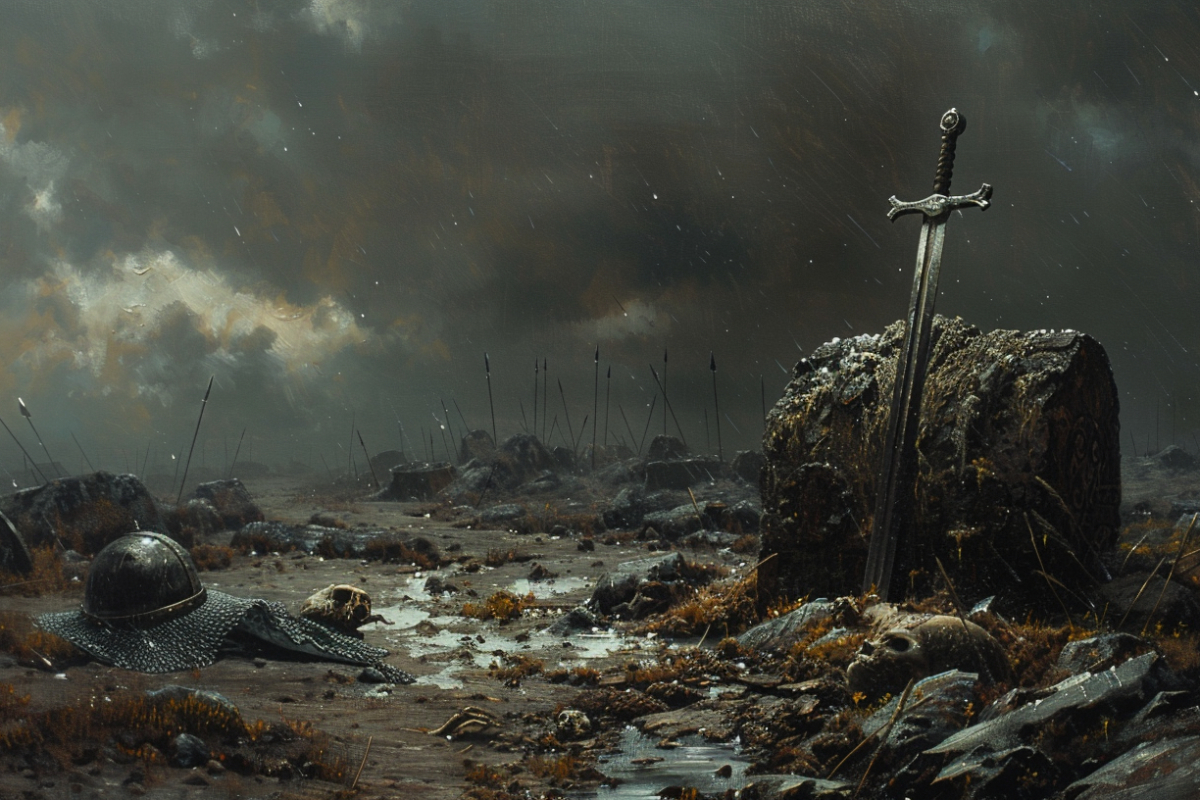
The traditional view is that the Viking era (c. 793 - 1066 CE) died on that battlefield in northern England. Drawing such an arbitrary line, to mark the end of a historical period, is problematic.
Yes, in some ways, this was the end of an era. There were more Viking invasions of England – the last recorded "Viking" attack was on the island of Iona in 1210 CE - but none had the vision, purpose, or strength that Hardrada's invasion possessed.
However, this Viking spirit did not die along with Hardrada on the battlefield. Whilst Harald Hardrada has often been called "the last Viking," there is another candidate whose birth was a mere generation after events unfolded at Stamford Bridge.
His name was Sigurd, and he spent four years fighting his way from the north to the Holy Land. He was crowned Sigurd I of Norway, but posterity knows him as Sigurd the Crusader.
Sigurd on a Crusade
The First Crusade saw mostly Western European Catholic forces travel half a world to the "Holy Land on a zealous military mission to seize control of Jerusalem from Muslim forces.
Catholicism – seen by the Crusaders as the only proper Christian rite since the Great Schism in 1054 CE - had won back Jerusalem for the faith after more than five centuries of Muslim rule.
Whilst the story of the First Crusade is one of the most remarkable historical, social, religious, cultural, economic, and downright unbelievable events to have ever occurred, it did not end with the capture of Jerusalem.
For many of us, when we think of the Crusades, we think of the medieval Kings of France and England, for some more learned, perhaps a Holy Roman or Byzantine Emperor, but only true history fans will know that warriors from what had only recently been regarded as the backyard of the Vikings (the Nordic region) ended up on crusading too.
The most famous example of this was Sigurd and the "Norwegian Crusade."
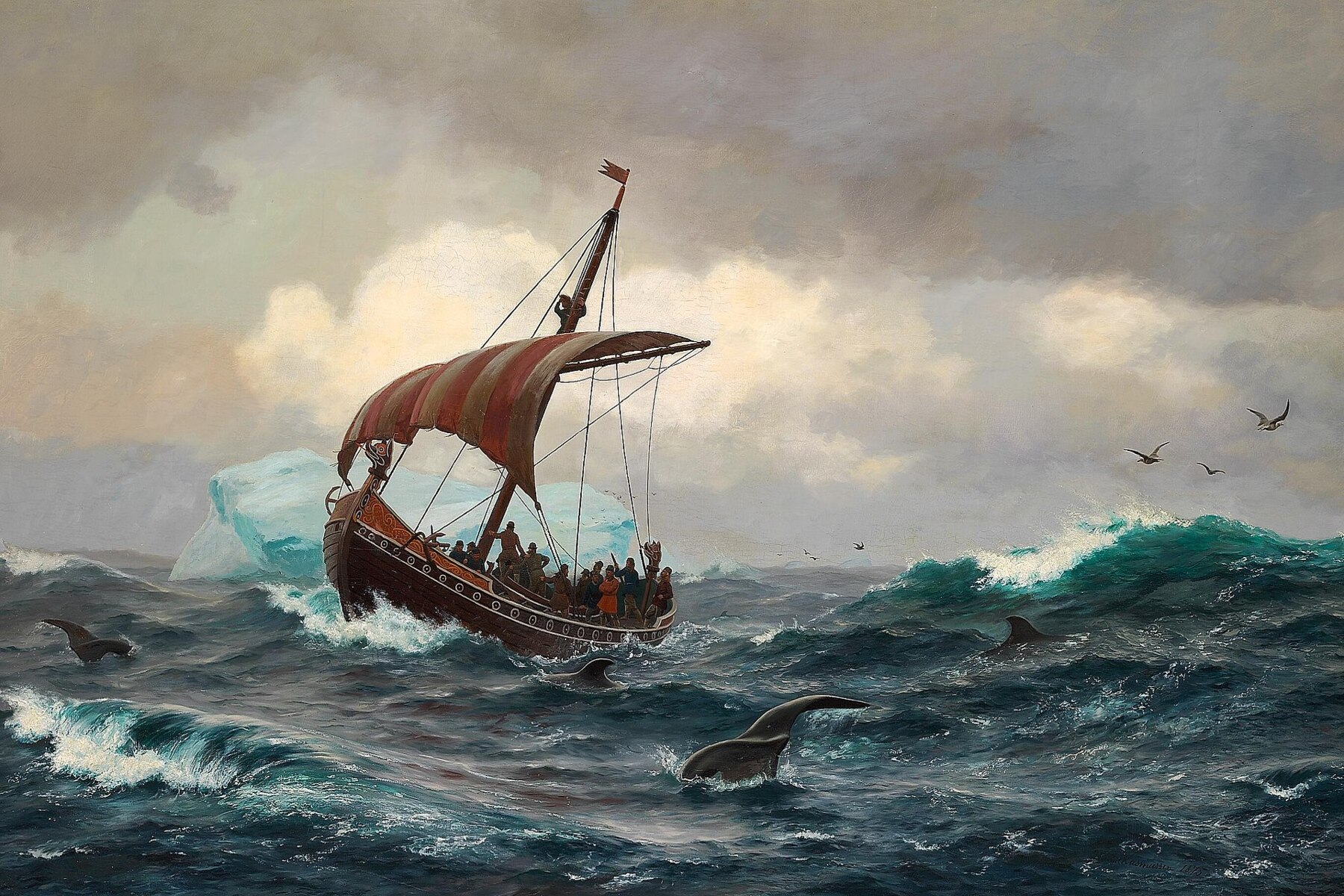
Having set off from Norway in 1107 CE - with over 5,000 warriors packed into 60 ships – King Sigurd, who had only ascended to the throne of Norway four years earlier, set about one of early medieval Europe's most boisterous road trips.
Sigurd's travels to the Holy Land included more than three years of battling what he saw as Muslim infidels everywhere from the Iberian peninsula to the Balearic Islands and Sicily.
On the way, he stayed at the courts of a medieval who's who of royalty, including Henry III (England) and Roger II (Sicily), and would eventually be greeted, upon his arrival in the Holy Land, by the King of Jerusalem, King Balwin I.
According to contemporary chronicles, the two kings appeared to get on well and even rode together to the river Jordan where Jesus was said to have been baptized by John the Baptist.
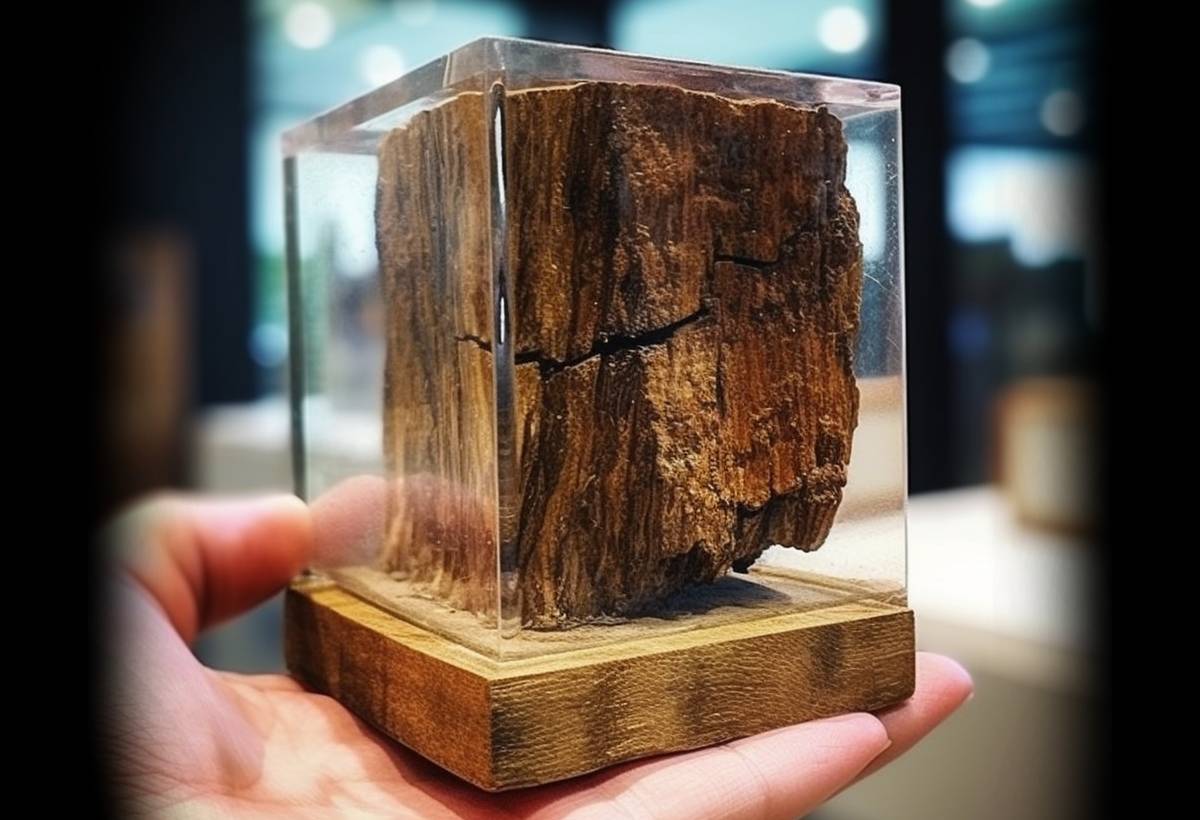
After this, Baldwin personally escorted Sigurd to the Holy City and bestowed many precious gifts upon the Norwegian king. Perhaps the most precious, though, was a splinter from the cross that Jesus was crucified on.
Baldwin handed this over on the condition that Sigurd would continue to promote Christianity throughout his kingdom. Christianity only established itself within the Viking elite from about the 10th century onwards, with many peasants still adhering to the Old Norse religion.
Although very much a dominant religion in Norway, there was no guarantee it would have the later monopoly on the nation's soul as it had from the late 12th century CE onwards.
Along with what some historians have rather cheekily dubbed the "Holy Splinter," Sigurd received other relics, and all were to be displayed at the burial site of Norway's most famous Christian saint, Olaf, at Nidaros Cathedral.
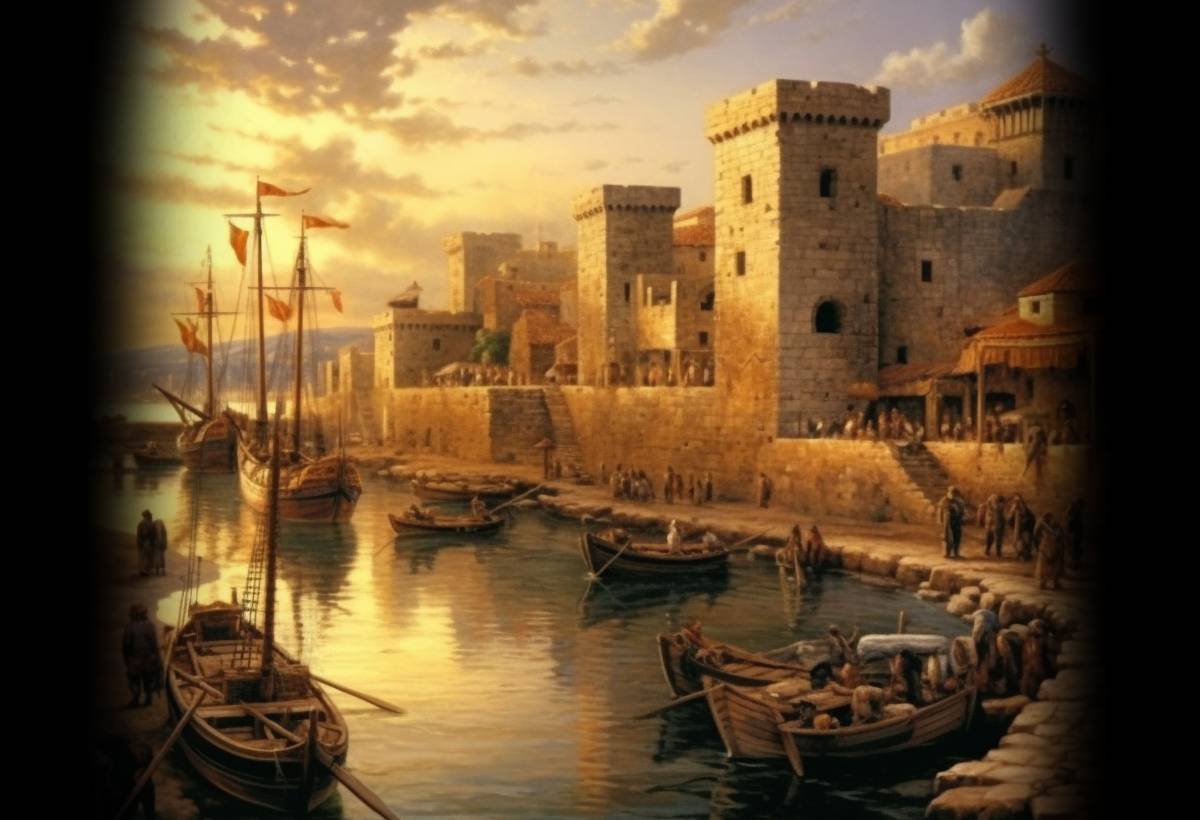
Sidon was the gateway to the Mediterranean Sea and an important commercial trading port. Illustration: The Viking Herald
The Siege of Sidon
Despite all the illustrious gift-giving and bromance, these were two early medieval kings who had a fiery religious zealotry. Sigurd's arrival was warmly welcomed as, despite ruling Jerusalem, Baldwin's grip on the Holy Land was tentative at best.
The "Kingdom of Jerusalem" was an isolated Crusader entity surrounded by hostile Muslim-dominated cities, towns, and villages. Sidon, an important port city, lies some 280 miles / 450 kilometers (about 279.62 miles) north of Jerusalem.
After Jaffa, it was the gateway to the Mediterranean Sea and a vital commercial trading port. It had not fallen into Crusader's hands and represented a threat to the Crusader's hegemony of the region.
Sigurd and his men joined Baldwin and rode north to lay siege to the city. The city had been fortified by Fatimid forces but was eventually taken in 47 days thanks to a Venetian naval force sailing in to save the day.
Despite the Italian help, Baldwin was to heap praise on his Norwegian counterpart and grant him the lordship of Sidon.
Later developments
Having successfully won a city for the Crusaders, received a piece of the True Cross, and going about doing what Crusaders did, Sigurd and his men left the Holy Land and returned to Norway (via a trip to Constantinople) by 1111 CE.
He went about busily ruling his kingdom, enacting everything from financial reforms to creating a new archdiocese in Stavanger. His crusading days were not over as he took up another crusade, this time against the inhabitants of Småland in Sweden, who had lapsed back into adhering to the Old Norse religion. Sigurd would pass away in 1130 CE.
The aftermath of the splinter of the True Cross is a little harder to track down. Even though this tiny bit of biodegradable wood would have had to survive over a millennium before it passed into Sigurd's hand, there is no further record of it after it was passed to him by the Patriarch of Jerusalem.
Like all medieval relics, there is a huge question mark on their authenticity. However, it did not stop Nidaros Cathedral from being one of Northern Europe's most important pilgrimage sites.
The rest of the True Cross was said to have been captured by Saladin during the Third Crusade, and here it disappears from the highly dubious historical record.
Despite the fact whatever Sigurd received probably was just a small slither of wood, it shouldn't distract from one of the last, but perhaps greatest, adventures from the Age of Vikings.
For more on some of the relics seized on the First Crusade, visit the official webpage of the Metropolitan Museum of Art here.
We get to provide readers with original coverage thanks to our loyal supporters. Do you enjoy our work? You can become a PATRON here or via our Patreon page. You'll get access to exclusive content and early access.
Feel free to reach out to discuss potential stories that may be in the public interest. You can reach us via email at [email protected] with the understanding that the information you provide might be used in our reporting and stories.