



I think that everyone, including and especially this present author, likes to think we're all a bit smarter, a bit more educated, and a bit classier than we are.
The study of history, let's face it, can be seen as a bit of a pompous pursuit, full of armchair academics and dusty old books.
However, in the opinion of all of us here at The Viking Herald, some of the very best bits of history are when we look beyond the lives and deeds of great rulers, kings, or Vikings and look at the ordinary people.
All of us were extremely surprised but not shocked when an article on a Viking poo (yes, you read that correctly) became one of the most read, most shared, and most commented upon articles that we have written.
Now, before some people dismiss this as just mere putrid clickbait, it got our collective brains thinking.
We have written so much about people in Viking societies, their religion, their clothes, their food, and even their pets, but we haven't looked at the issue of their hygiene and sanitation.
Whilst the modern mind thinks of the early medieval period as putrid, with no running water and no plumbing or sewage systems, this is not necessarily an accurate picture of the past.
Hold your noses as we plunge into a potted (or should that be potty) look at Viking-era hygiene and sanitation.
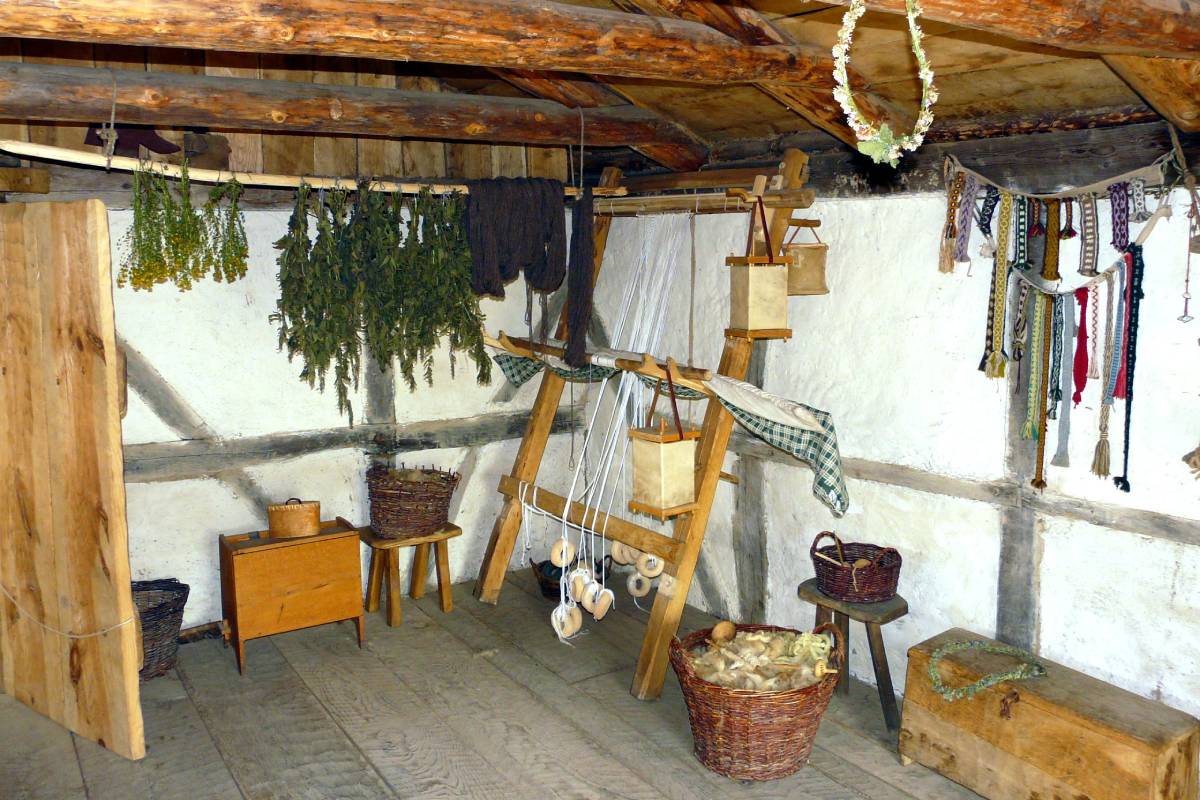
Interior of a reconstructed Viking house at Foteviken Museum, Sweden. Homes likely included basic sanitation tools and natural materials for hygiene. Photo: Ökologix
Toilets and toilet paper
Sadly, what was a reality for people in Viking societies is also a reality nowadays for a huge swathe of the world: there were no toilets.
When the call of nature occurred, the best place to relieve oneself was often outside. This could literally be squatting near some bushes or behind a tree.
To answer longer calls of nature, people in most households used a pit latrine. This was a simple pit—little more than a hole in the ground, really—where people could relieve themselves.
A household's pit latrine may have been well away from the house, meaning that, especially in the winter months, answering nature's call could involve a cold, often uncomfortable trip.
Yet it wasn't all so barbaric. In Viking-era settlements, for example, Jórvík (modern-day York in England), remnants of rudimentary toilet seats were found in latrines with wooden or stone seats. These were even serviced by extremely basic sewerage systems.
To clean oneself, the rich might have used a bit of cloth, while those less fortunate relied on nature's best biodegradable toilet paper: leaves or hay.
Refuse reused
Rather than let all this stinking heap of mess go to waste, people in Viking societies were surprisingly practical. They used this human refuse for fertilizer to ensure the richness and growth of agricultural products.
Should there be any pets or livestock nearby, their refuse was also an extra source of fertilizer.
A large pile of excrement sitting around near human habitation could also present hygienic issues. This may have contributed to parasites, like tapeworms, that have been archeologically uncovered in Viking-era excrement.
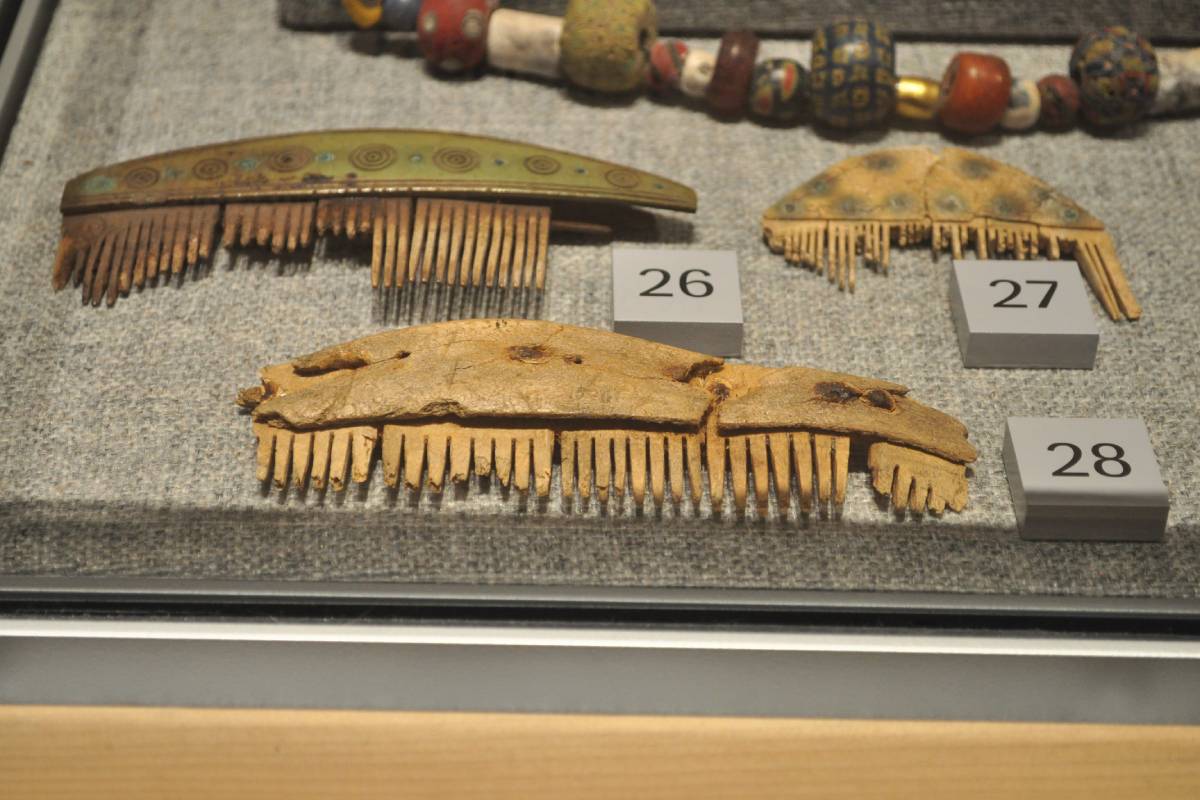
Bone and horn combs, along with glass and amber beads, from Viking Age Sweden and Norway. Photo: Joe Mabel
Washing and grooming
Hollywood loves a good depiction of a Viking, armed to the teeth, leaping off a longship. More than likely in this depiction, the said Viking will be, well, less than sparkling clean.
So many television shows, movies, comics, and books have presented the medieval era as a time before the invention of washing.
Despite this common stereotype, people in Viking societies did wash themselves regularly too. In fact, the Old Norse word for our Saturday, the sixth day of the week, was Laugardagr.
This was a combination of two words, "bathe" (laug) and "day" (dag), meaning that an entire day was devoted to jumping in a lake or stream and bathing oneself.
As Barbara Kiełczawa writes in her 2018 book Short History of Thermal Healing Bathing, it was people from Viking societies who discovered the joys of a good thermal bath when they settled in Iceland in the late ninth century CE.
Sadly, though, for all you clean freaks out there, Viking societies did not have running water and thus no showers.
Part of why the early medieval period is traditionally seen as "backward" and "barbaric" is that Viking societies did not inherit or adopt the Roman tradition of bathing and baths.
After a good wash, other cleaning products were used, including tweezers, combs, and even ear picks. People in Viking societies were truly no different from us in that they wanted to look attractive, and they managed the best they could.
Combs were especially important due to facial hair being very much in mode for men and women often having long hair that suited elaborate hairstyles.
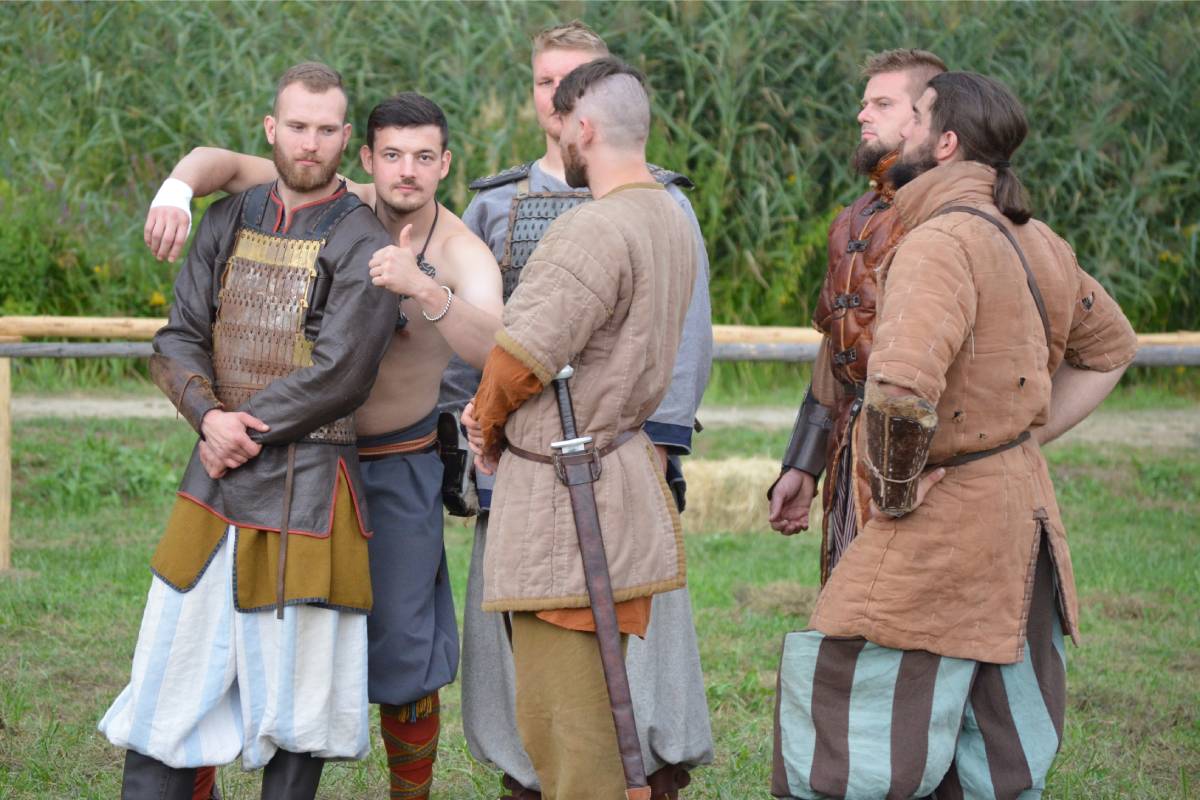
Reenactors portraying Rus and Varangian warriors in the Beskids. Ibn Fadlan’s famous account described the hygiene practices of such groups. Photo: Silar (CC BY-SA 4.0)
"The filthiest": One man's perspective
Okay, so people in Viking societies may indeed have been a lot cleaner than we probably give them credit for. They operated in an era before showers, hot running water, and the widespread adoption of shampoo (at least in Northern Europe).
Despite this somewhat hygienic redemption, we have a scathing view of their uncleanliness thanks to a contemporary traveler.
The 10th-century CE Abbasid diplomat, ethnographer, and traveler Ibn Fadlan wrote his personal accounts of interactions with people from Viking societies throughout what is now Eastern Europe and Russia.
As T.J. Hraundal writes in his chapter in the 2023 book Muslims on the Volga in the Viking Age: In the Footsteps of Ibn Fadlan (available on Amazon here), Fadlan had a mixture of emotions when it came to the Rus.
Whilst he did praise them, he also viewed some of them as downright disgusting.
According to Fadlan:
"They are the filthiest of all Allah's creatures: they do not purify themselves after excreting or urinating or wash themselves when in a state of ritual impurity after coitus and do not even wash their hands after food." [Page 241]
This account helped inspire the author Michael Crichton to write a book about Fadlan's encounters with the Rus, which was adapted into a film—The 13th Warrior—in 1999.
Whether indeed people from Viking societies were truly "the filthiest," we will never truly know, but they did have a surprising amount of personal hygiene and sanitation... just clearly not up to Ibn Fadlan's standards, though.
The Irish Times recently published a discussion on the cleanliness of Vikings compared to the ancient Irish population available to read here.
We get to provide readers with original coverage thanks to our loyal supporters. Do you enjoy our work? You can become a PATRON here or via our Patreon page. You'll get access to exclusive content and early access.
Feel free to reach out to discuss potential stories that may be in the public interest. You can reach us via email at [email protected] with the understanding that the information you provide might be used in our reporting and stories.