


"Every morning, a slave-girl brings a basin of water to her master. He washes his face and hair in it and then combs his hair with a comb which he has in the basin. Then he blows his nose and spits in the water. When he has finished, she carries the basin to the next man, who does the same."
These are the words not of a Viking ruler, chieftain, or skaldic bard but of the 10th-century Arab diplomat, traveler, and proto-ethnographer Ibn Fadlan.
This rather graphic description of grooming habits is taken from his seminal work, Risala (with an English translation akin to Travels), describing his travel recollections, including encounters with the Rus living on the Volga River.
Thanks to popular culture, and especially movies like Monty Python and the Holy Grail, we moderns tend to dismiss the people of the early medieval period, especially from Europe, as dirty and unclean, due to a lack of modern sanitation, hygienic practices, and running water.
However, this description by Fadlan is a firsthand account of how grooming and hygiene were interlinked with Viking identity.
Of particular interest in this historical anecdote is the use of a comb. Now, grooming, hygiene, and style are not necessarily the first things one thinks of when there is a mention of Vikings, nor the early medieval period.
However, the rather mundane-seeming comb can help to explain some of the lesser-known aspects of the society and culture of Viking societies.
Let us now unravel some of the historical stereotypes about cleanliness, hygiene, and style, and get to the root of what combs can tell us about people from Viking societies.
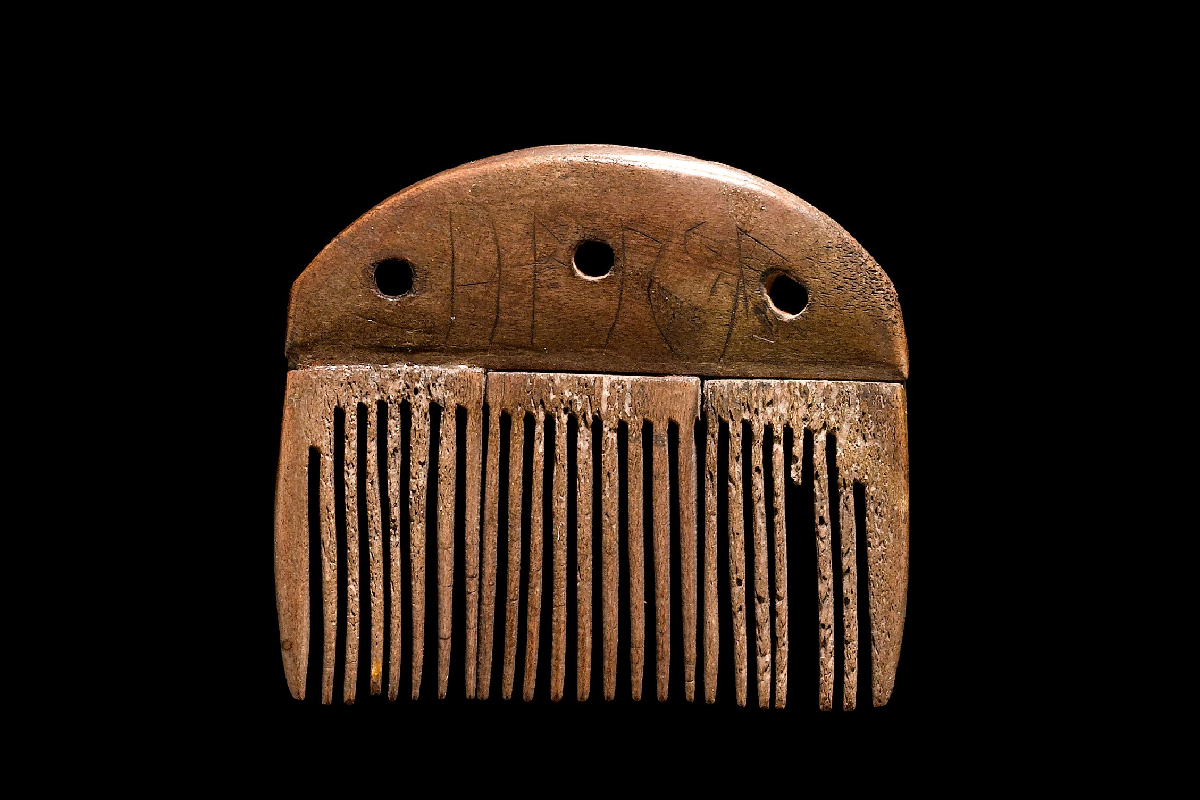
The Vimose "harja" comb is a Roman Iron Age bone comb from Denmark that shows combs as personal items, not just simple tools. Photo: Nationalmuseet (CC BY-SA 3.0)
A rich archeological record
Having read what our medieval friend Ibn Fadlan thought about the grooming habits and practices of people from Viking societies, it is time to get our hands dirty.
Combs have been uncovered from a range of archeological digs spanning the former Viking world, from Dublin in the west up to the Orkney Islands and as far afield as Staraya Ladoga in what is now Russia.
A much earlier Scandinavian example also exists. A bone comb from Vimose in Denmark bears runes with the word "harja." The find predates the Viking Age by several centuries, but it suggests that names on everyday objects had an older tradition in the region.
Many Viking Age settlements appear to have had artisans who fashioned combs, often from animal materials like antlers from either deer or, in the frozen north, reindeer. These were durable and yet malleable enough to shape and fashion.
Recent research has linked comb materials to long-distance trade. A University of York-led study that examined Viking Age combs from Hedeby (present day Haithabu) reported that most were made from reindeer antler, which suggests import from northern Scandinavia into this major trading town during the 9th century.
Where antlers were not available, bones from livestock, especially cows or horses, could be used as a substitute, but these were more brittle and could break easily.
For those rich and powerful, ivory, specifically from the tusks of walruses, could be made into a comb, whilst for those less fortunate, combs were fashioned out of wood.
As Steven P. Ashby writes in his 2014 book, A Viking Way of Life (available on Amazon here), Viking Age combs were fashioned from a wide variety of animal products, including "...the long bones of horses... tortoiseshell... or from the ivory of elephant or walrus."
Whatever the composition of the comb, it was fastened and secured with either iron or bronze rivets.
The discovery of these combs, in a wide range of Viking-era settlements, towns, and villages, underscores the craft specialization and interlinked economic networks that were features of the Viking world.
The social importance of combs
Having read a firsthand early medieval account of Viking grooming and discovered what the archeological record can tell us, it is time to delve into what insights a Viking comb can tell us about the people who used them.
The widespread discovery of combs or comb fragments suggests that, despite what Ibn Fadlan described, grooming was a far more common practice for many people in Viking societies than what we moderns assume was the case.
These combs were used to groom hair or beards, which was particularly important to get rid of nasty critters like lice or to remove the dirt from a hard day's work.
Removal of lice was particularly important when taking long voyages to some of the more remote settlements of the Viking world, like L'Anse aux Meadows, or down the river systems of Eastern Europe to the Black Sea and Constantinople.
Whilst we do not think of combs as great pieces of art, some in the Viking world were. Far from its mundane function, a comb could be decorated to signal societal status, age, gender, or wealth.
Finely decorated combs, adhering to the artistic styles of Viking art, or ones embedded with ivory or other precious commodities, could signify that the owner had a great amount of power or wealth to acquire such an item.
Finally, the discovery of so many combs suggests the importance that people in Viking societies placed upon physical appearance. Looking presentable and hygienic was linked to respectability, then as now, and thus social belonging and honor.
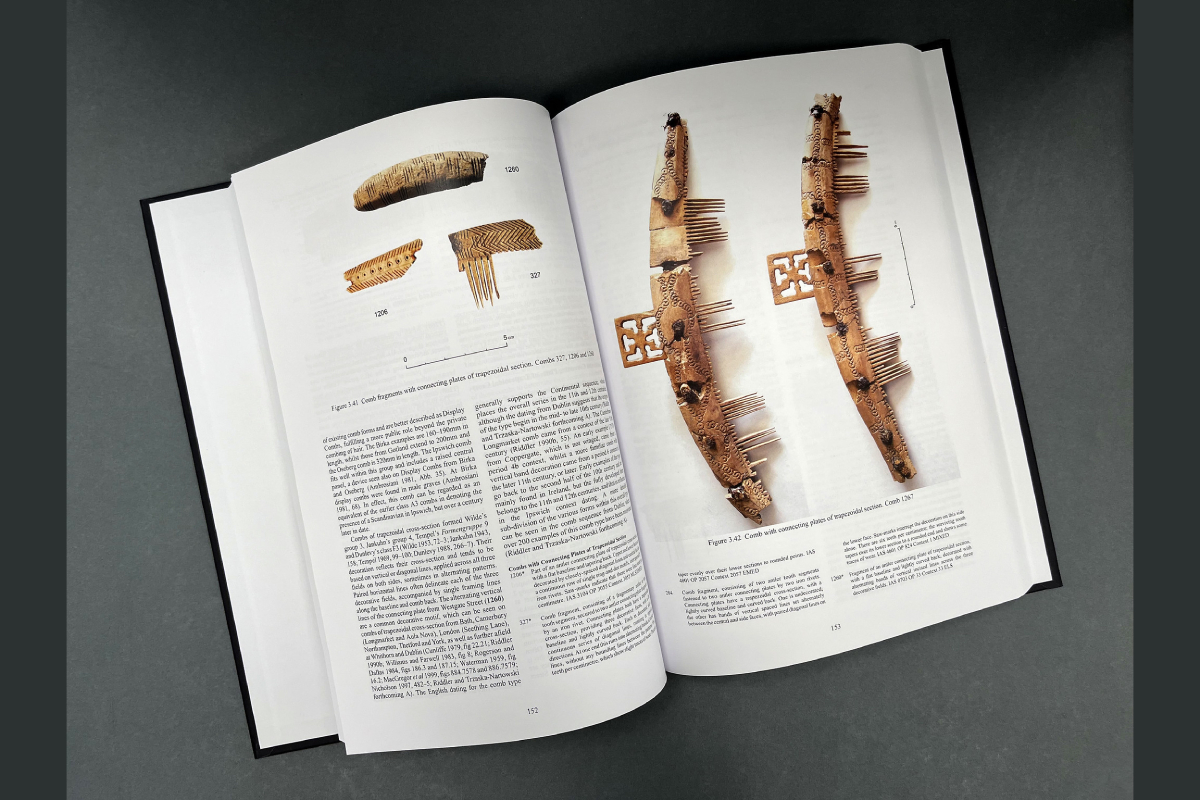
Decorated combs from England, as published in "An Early Medieval Craft: Antler and Bone Working from Ipswich." Photo: Suffolk County Council Archaeological Service
Can't untangle cultural differences
Despite the presence of many combs discovered throughout the former Viking world, and their role in shaping identity and status as much as beards and hair, we leave the final word to Ibn Fadlan.
Having witnessed the grooming and hygienic standards of people from Viking societies, we turn to a later section of his Risala where he decries them as "the filthiest of God's creatures."
Proof that, despite being armed with combs and a concern for appearance, the Rus failed to live up to Ibn Fadlan's high standards. His scathing judgment reminds us that not even the finest comb can untangle cultural differences.
For more information on what Viking combs can tell us about towns in the Danelaw, see Smithsonian Magazine's coverage of the Ipswich comb finds from Suffolk, England.
We get to provide readers with original coverage thanks to our loyal supporters. Do you enjoy our work? You can become a PATRON here or via our Patreon page. You'll get access to exclusive content and early access.
Feel free to reach out to discuss potential stories that may be in the public interest. You can reach us via email at [email protected] with the understanding that the information you provide might be used in our reporting and stories.