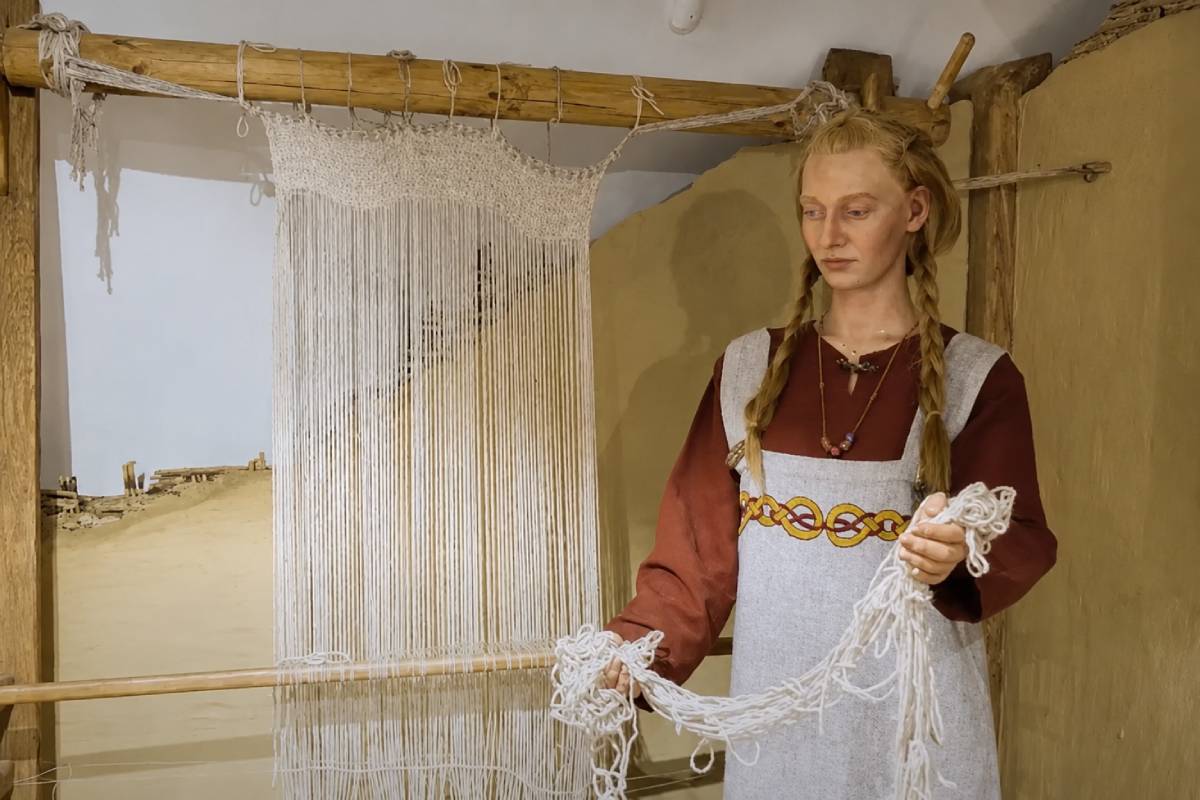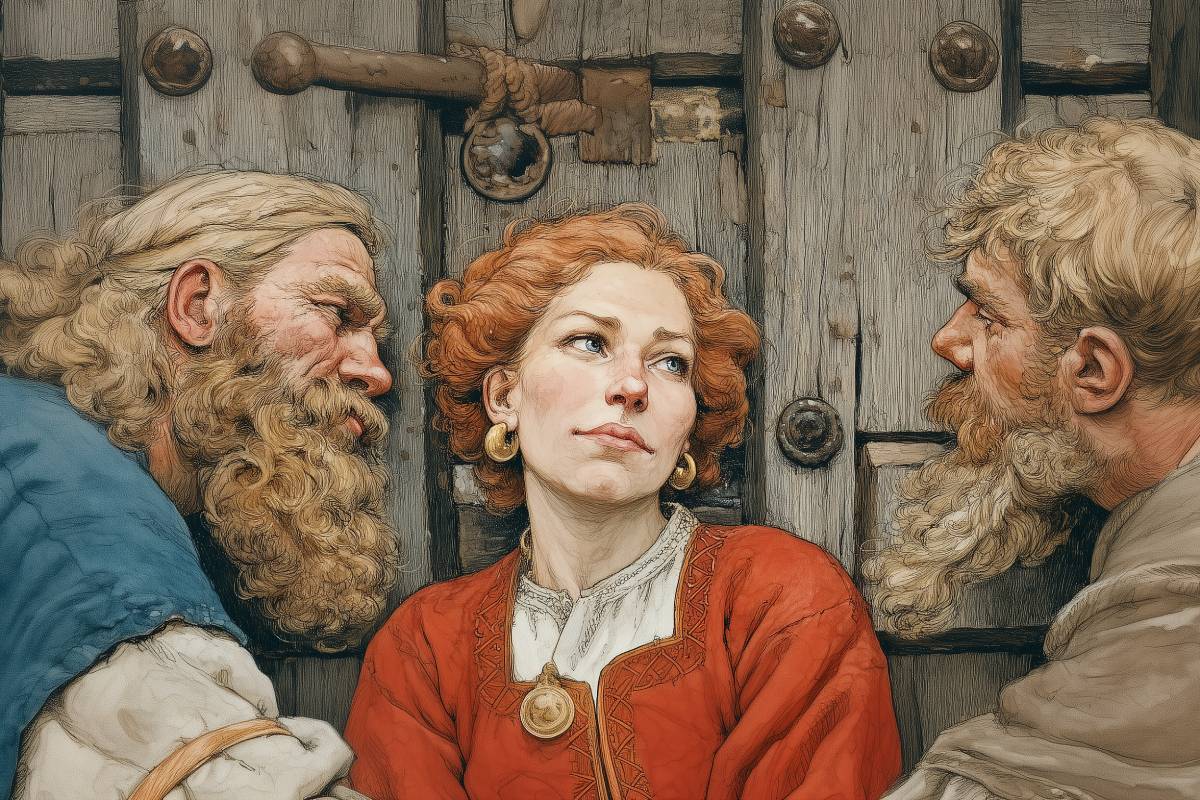


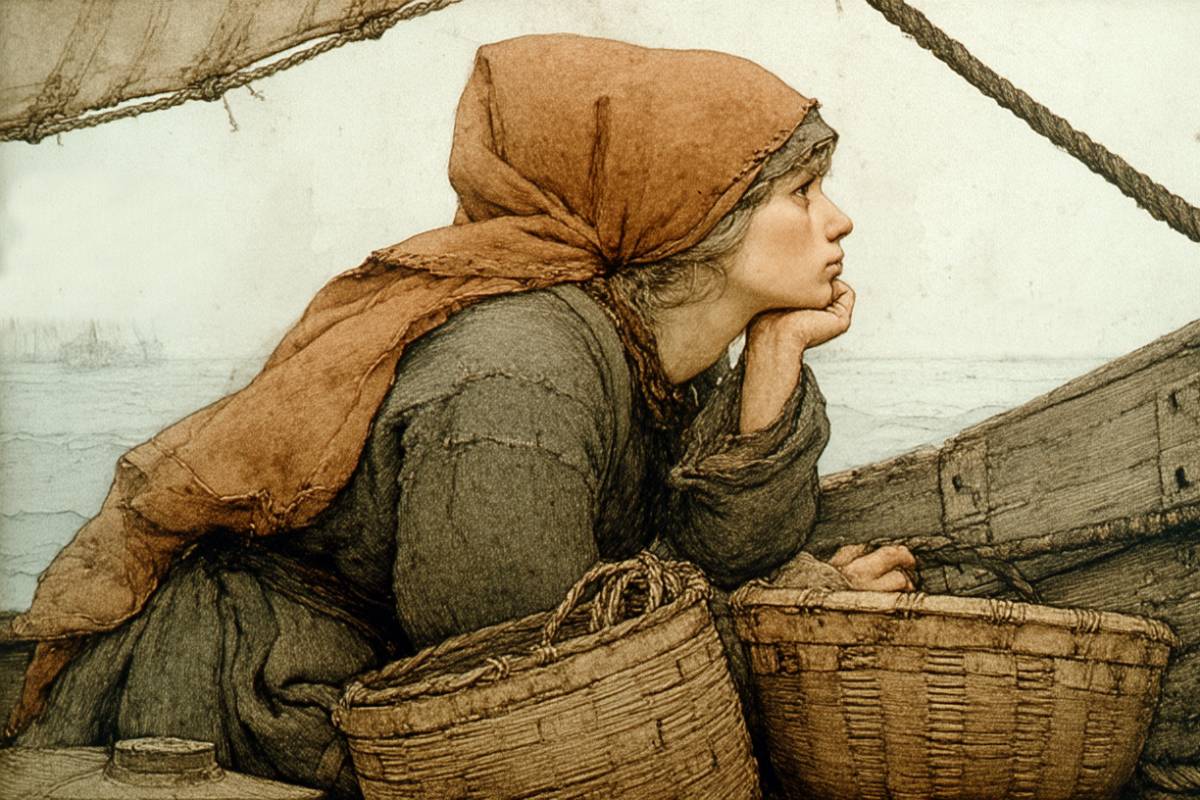
Archeological discoveries and literary analysis have proved that women were not, as previously assumed, left behind at home but were active members in the production and trade of key Viking trading goods.
A traditional static view
For so long, the traditional history of Viking trading voyages was very much a man's affair. Like all early medieval societies, Viking societies were deeply patriarchal and had clearly defined gender roles.
Histories of the Viking Age, right up until the late 20th century, relegated women to the domestic sphere and thus passive bystanders in the bustling trade and commerce that underpinned vast networks that connected Scandinavia to the wider world. Yet modern technology and analysis have proved that this assumption is factually incorrect.
As Judith Jesch notes in her seminal 1991 book, Women in the Viking Age (available on Amazon here), the traditional "picture of women in the Viking Age is very often a static one," but "the literary sources suggest that women did go on... these expeditions" with "the archeological evidence... even clearer" still.
The first evidence of female involvement in Viking trading voyages lies buried in the graves at Birka, Sweden.

Birka's famous Bj 581 burial included weights and imported silver, showing that female graves could contain trade-related items. Illustration: Hjalmar Stolpe (1841–1905)
Graves delivering the archeological goods
For archeologists concerned with the Viking Age, what lies beneath can often reveal metaphorical as well as literal gold. Grave goods provide some of the most direct evidence that women took part in Viking trading voyages, and the analysis of several women's burials has uncovered items relating to commerce and trade.
At the UNESCO World Heritage-listed site of Birka, Sweden, which was once a Viking-era bustling trading hub, more than 3,000 grave sites have been uncovered, the majority of which are female. Many of these graves contained items associated with mercantile trade, including coins, weights, scales, and textiles from abroad.
In fact, as Unn Pedersen writes in her chapter in the 2011 book The Hidden Lives of Viking Women: Archaeological and Historical Perspectives (available on Amazon here), "32% of the graves with weights from Birka can be estimated as women's graves."
This suggests that women not only took part in commerce but, with the discovery of foreign goods and textiles, were likely to have joined trading ventures abroad.
Across the border in Norway, evidence of women's role in trading activities was uncovered with the Oseberg ship burial. Whilst modern focus is on the ceremonial burial of two high-status women, the wealth of grave goods uncovered helps highlight how female elites in Viking societies were interconnected with international trade routes.
The finds included luxury textiles such as silk from the Byzantine Empire, the oldest surviving storytelling tapestries in Scandinavia, as well as goods from the British Isles, including the famous "Buddha" bucket.
Such items might have been buried alongside the women as gifts of tribute, or perhaps they spoke to their role as patrons of Viking commercial expeditions.
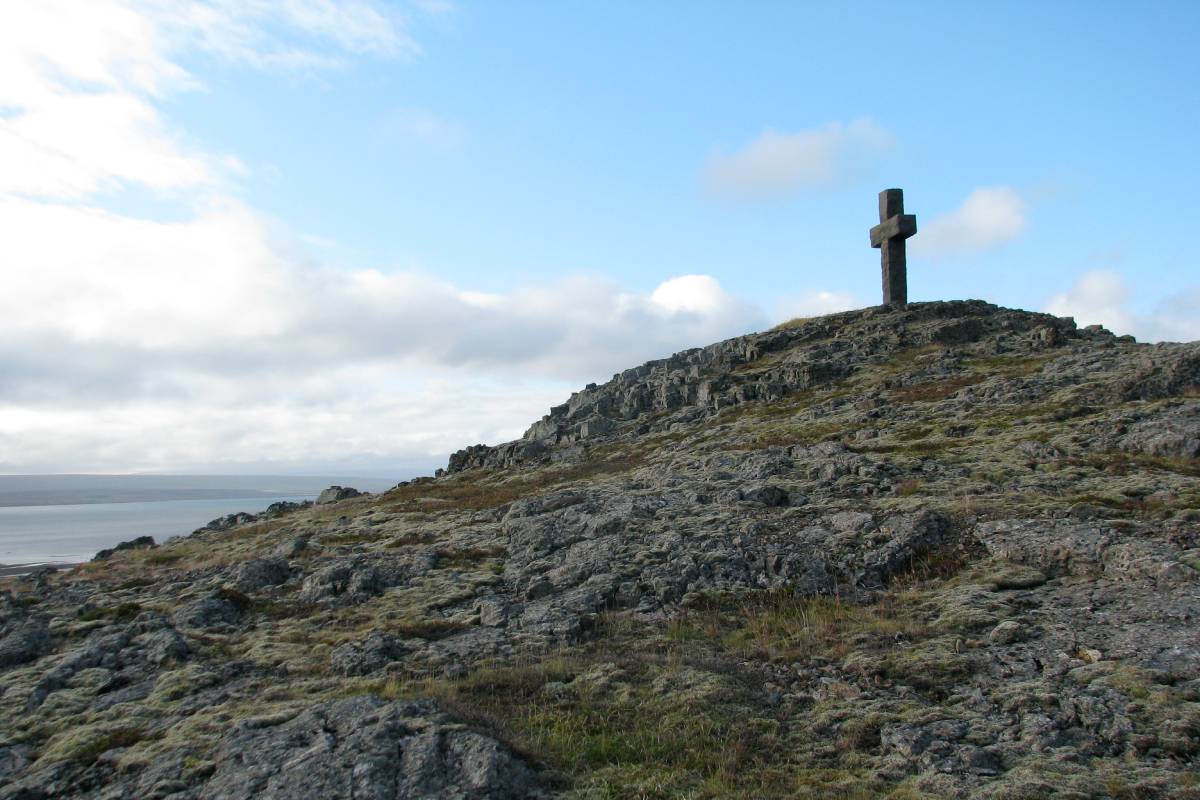
This memorial at Krosshólaborg commemorates Aud the Deep-Minded, who organized a voyage to Iceland and claimed land there. Photo: Bromr (CC BY-SA 3.0)
Literary evidence
The next key to unlocking the hidden history of women's role in Viking trading voyages can be found not buried beneath but inscribed on the pages of the Norse sagas.
Whilst many of these sagas were first written down centuries after the end of the Viking Age (c. 750–1100 CE), often in 13th-century Iceland by wordsmiths like Snorri Sturluson, they have helped preserve a collective memory of women's active roles in trading ventures.
Turning to the Laxdale Saga (Laxdæla saga), we find the bold character of Aud the Deep-Minded (Auðr djúpúðga). Following the death of her husband and son, she organized a voyage to Iceland, where she established herself as a landowning elite and distributed land.
This goes against the assumed role of a woman as a mere keeper of the domestic sphere, and we can assume that there were many real-life Viking women, like Aud, who traveled the seas for commerce, migration, and trade.
Likewise, in the Saga of Erik the Red (Eiríks saga rauða), we have female crew members like Hækja and Freydis, who not only accompany the Viking voyages to Vinland but also participate in trade and even combat with the Indigenous population, the famed Skrælings of the sagas.
Finally, whilst not a saga, the travel accounts of the 10th-century diplomat Ibn Fadlan certainly read like one.
In his descriptions of Viking societies on the Volga River, he notes the presence of women in trading camps, who were part of trading groups that utilized the many river systems of Eastern Europe to connect the economies of the Viking heartland in Scandinavia with the Byzantine Empire and Islamic world.
Active not absent
Despite being relegated to passive bystanders, looking after hearth and home whilst the men undertook lucrative trading voyages, in many traditional histories we now know that women in Viking societies were anything but.
Women were active members of trading expeditions, as highlighted by a wealth of archeological and literary evidence. It is time to correct this historical wrong and appreciate the important and active role that women played in underpinning Viking economic expansion throughout the early medieval period.
The National Museum of Denmark has more information on women in the Viking Age here.
We get to provide readers with original coverage thanks to our loyal supporters. Do you enjoy our work? You can become a PATRON here or via our Patreon page. You'll get access to exclusive content and early access.
Feel free to reach out to discuss potential stories that may be in the public interest. You can reach us via email at [email protected] with the understanding that the information you provide might be used in our reporting and stories.