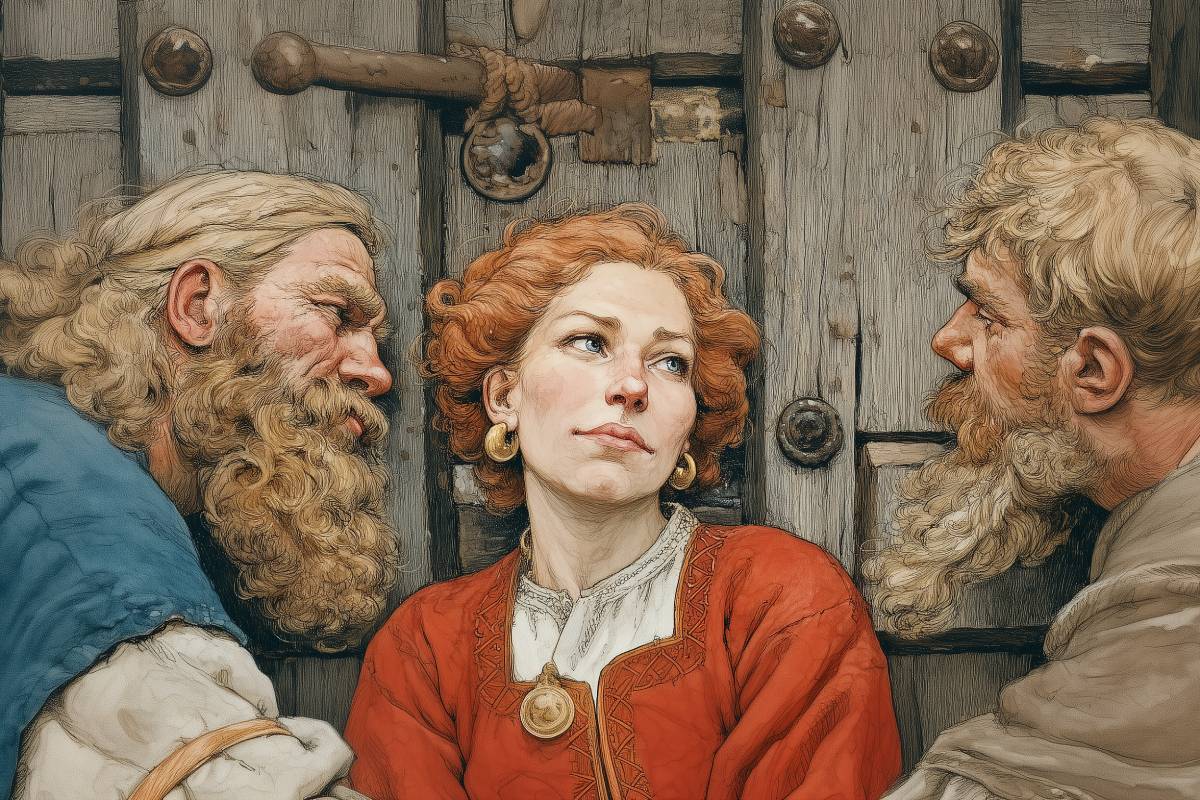


The modern languages of Danish, Norwegian, and Swedish are said to be mutually intelligible – that is, speakers of one can understand another.
However, do not commit the grave faux pas of assuming there is only some linguistic overlap; they are more or less the same language.
Say this to a Scandinavian, and you will soon be pelted with kanelbolle, skis, or potatoes.
Jokes aside, the origins of the modern Scandinavian languages can be traced back to the early medieval period when, you guessed it, Vikings roamed.
The first period of the Nordic Iron Age (c. 500 BCE. – 800 CE) saw societies develop in Scandinavia, where the inhabitants spoke North Germanic languages, which were considered mutually intelligible with the other Germanic languages further south and west.
As Michael P. Barnes and Anthony Faulkes wrote in their seminal 1999 tome, A New Introduction to Old Norse, it was during the next stage that this North Germanic dialect slowly transformed into the Proto-Norse language.
This Proto-Norse evolved over the centuries, and by the time of the first raid on Lindisfarne – which for so long was the traditional start of the Viking Age – this language had evolved and morphed into what we call Old Norse.
This was a language spoken from about the 8th century to the latter half of the 14th century. It was the direct ancestor of the three modern Scandinavian languages, as well as Icelandic.
Language and literacy
As the Viking expansion began in the late 8th century onwards, people from Viking societies raided, traded, and settled in a vast swathe of the northern hemisphere – from the shores of what is now Canada all the way to the Caucasus, from North Africa to Iceland, and seemingly everywhere in between.
Old Norse became the lingua franca of any location that had a Viking presence and has influenced the modern languages of English, French, and, to a lesser extent, Dutch and Flemish.
Bringing their language with them, people from Viking societies soon encountered communities that were much more literate than theirs.
Traders and raiders brought back books and scholars (by force or persuasion), which added to the region's literacy.
Concurrently, the introduction of Christianity – which peaked with the widespread conversion of Scandinavia by about the late 11th century – saw monastic schools and chroniclers contribute to the literature.
The culmination of this, by the 13th century, was the production of the Old Norse sagas, a great place to start your Old Norse education.

The 13th-century Codex Regius, written in Iceland, is a primary source of Norse sagas and an important resource for Old Norse studies. Source: Public domain
Start with the Norse Sagas
Whilst people in Viking societies often get a bad rap for being destroyers and not creators, they left us a rich tapestry of literature.
The Norse sagas – mostly compiled in the 13th century in Iceland but featuring stories, myths, legends, and events from the Viking Age – are a great place to start for your Old Norse education.
Most of the sagas have been translated into a wide array of languages, but many of the names of people and locations have been kept in their original form.
As Heather O'Donoghue writes in her 2004 book, Old Norse-Icelandic Literature: A Short Introduction, the sagas are a great way to access Old Norse as you can try to understand a little of the culture, history, and geography in which this language was spoken daily.
Having devoured all the sagas – numbered at around 100 – it might be worth taking your knowledge to the next level.
Some universities offer Old Norse or Scandinavian studies programs, but these are mostly found in the Northern Hemisphere, including the University of Edinburgh, the University of Iceland (no surprises there), and Harvard University.
Should you not want to delve into an entire university course, each of these universities has a wealth of resources related to Old Norse, including reading lists and online lectures that can help take your Old Norse language skills from zero to hero.

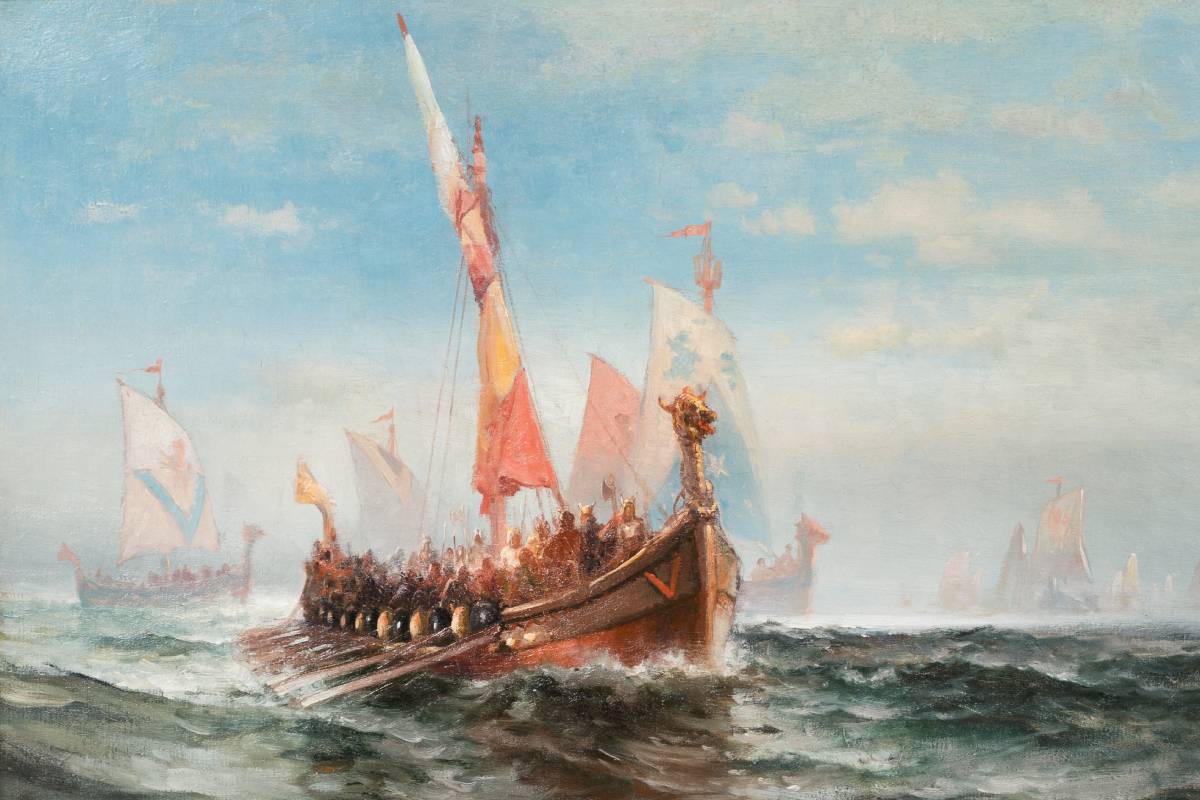
Advanced ship design and innovative navigation let the Vikings explore new lands and establish trade routes across the known world. Source: Rolf E. Staerk / Shutterstock
The technological edge
Despite a centuries-long historical smear campaign – mostly by Christian monks who suffered at the hands of the Vikings – people in Viking societies actually possessed some of the most sophisticated technology of their time.
Their maritime and nautical technology – be it the ships they sailed or how they navigated using crystals – allowed them to ply the open seas, rivers, and oceans from (what is now) Canada to (what was then) Constantinople.
Like the Vikings, you should seize the opportunity that technology offers. By jumping on the internet, you can find websites like Learn Norse.
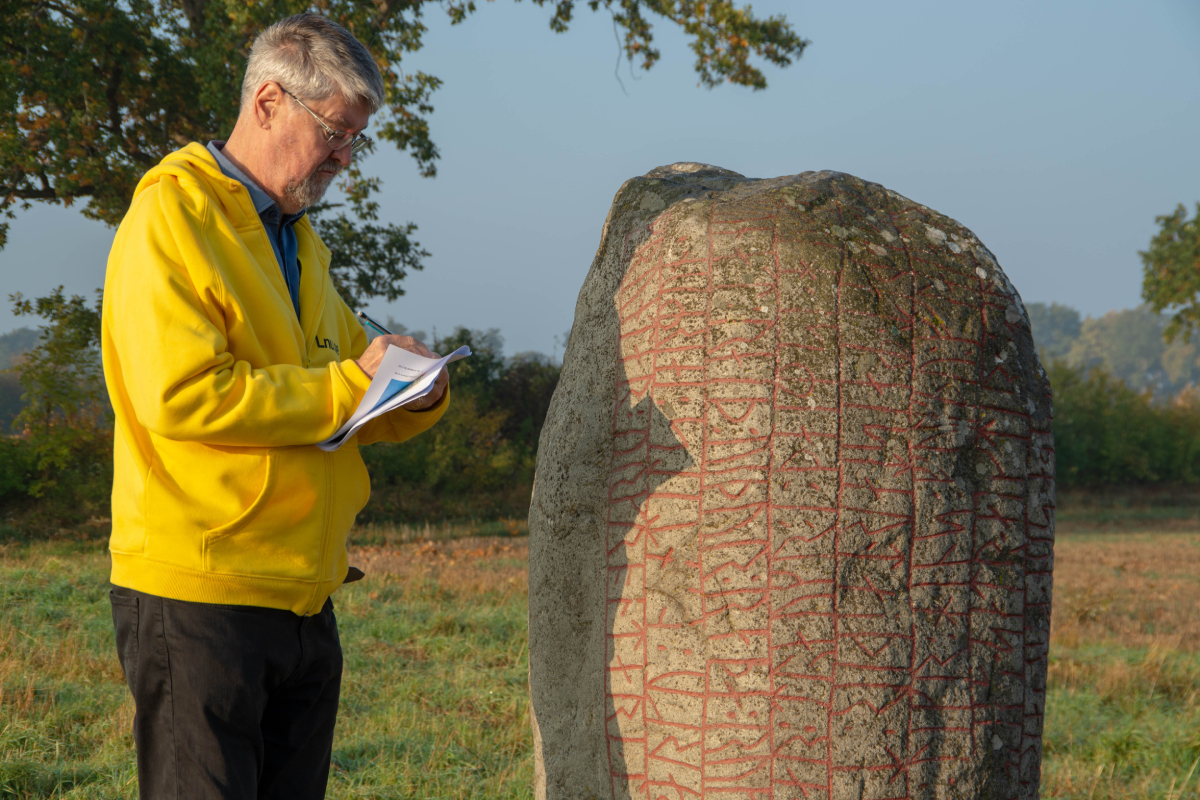
Here, you can find an online Old Norse dictionary, videos, and even information on the runic alphabet.
Another great website is Norse Mythology for Smart People (which, as consumers of The Viking Herald, you naturally are!), which has a wide range of information on the history and evolution of Old Norse as well as a great reading list of easily accessible books to help you learn.
There are also several apps that can teach you basic Old Norse.
Two of the best are Learn Old Norse – which offers a user-friendly interface but lacks advanced content, making it great for beginners – and LP Old Norse, featuring 335 levels to ensure you will become a master of Old Norse nouns, pronouns, verbs, and vocabulary!
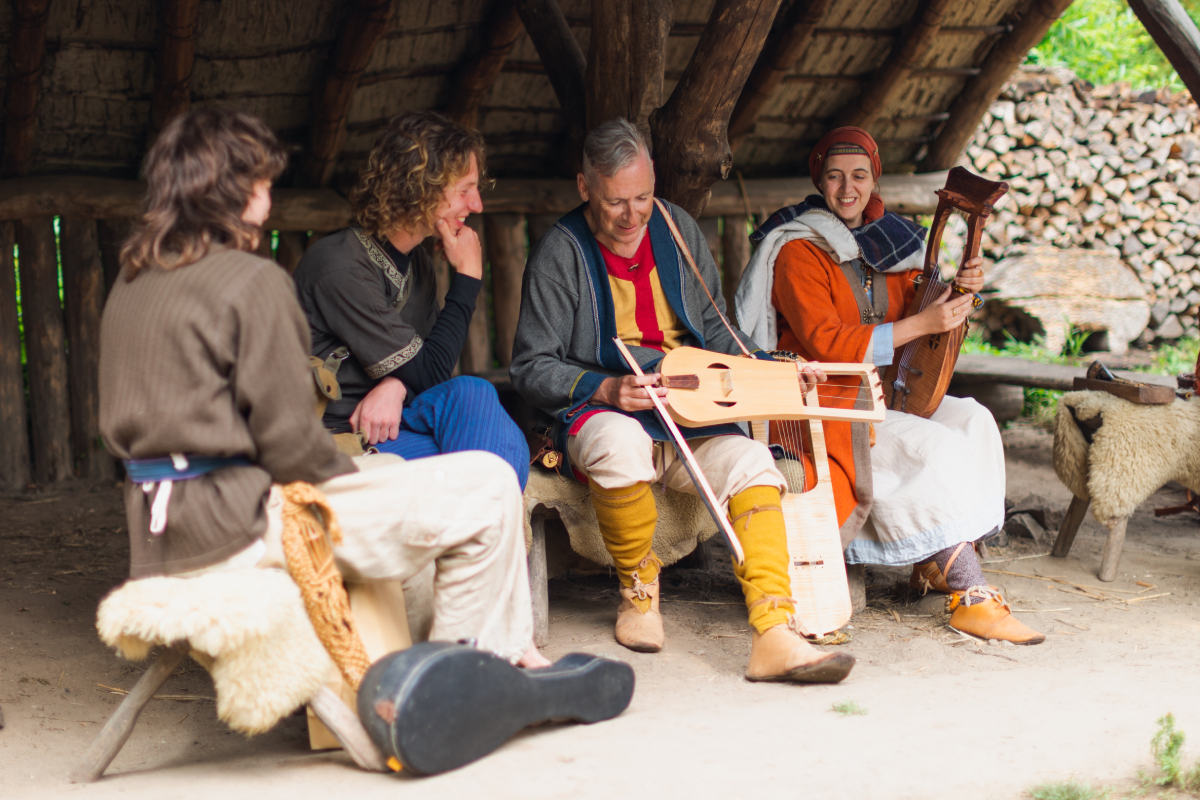
Attending Viking-themed festivals around the world is a great way to practice Old Norse and immerse yourself in Viking culture. Source: The Eindhoven Viking Festival / preHistorisch Dorp
Cultural associations and online communities
Joining a cultural club or association is a great way to brush up on your Old Norse skills and socialize.
This can be done from the comfort of your own home by searching for local Facebook groups or other online social communities that focus on either Scandinavian studies or, more specifically, Old Norse.
For those wanting an in-person experience, there are several cultural associations that may offer some teaching of Old Norse.
One of the best examples, for our American and Canadian readers, is the Sons of Norway – which has a mission to preserve and promote the culture of Norway and other Nordic countries.
Don't let the name put you off; the organization is not sexist – all are welcome – and with over 400 associations in North America, this is a fantastic way to learn and make friends.
Finally, when you have brushed up on enough Old Norse to boldly adventure out into the wider (Viking) world, consider attending a Viking-themed festival.
Here, you can meet like-minded people and practice your Old Norse language skills.
Whilst the Nordic region has a horde of them every summer, Viking-themed festivals take place as far afield as California, Mexico, New Zealand, Poland, and Spain!
So, what are you waiting for? Your Old Norse education saga starts now!
For more information on how Old Norse has influenced geography, read an article in Archaeology Magazine here.
We get to provide readers with original coverage thanks to our loyal supporters. Do you enjoy our work? You can become a PATRON here or via our Patreon page. You'll get access to exclusive content and early access.
Feel free to reach out to discuss potential stories that may be in the public interest. You can reach us via email at [email protected] with the understanding that the information you provide might be used in our reporting and stories.