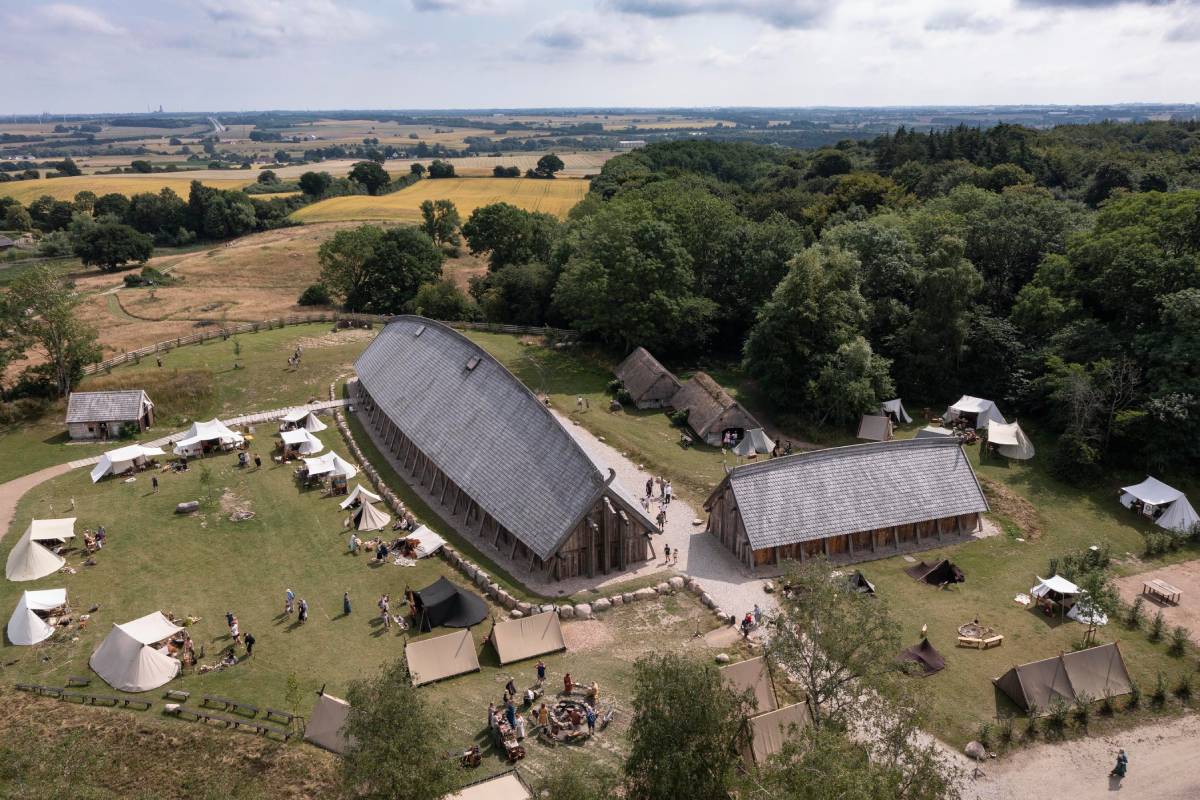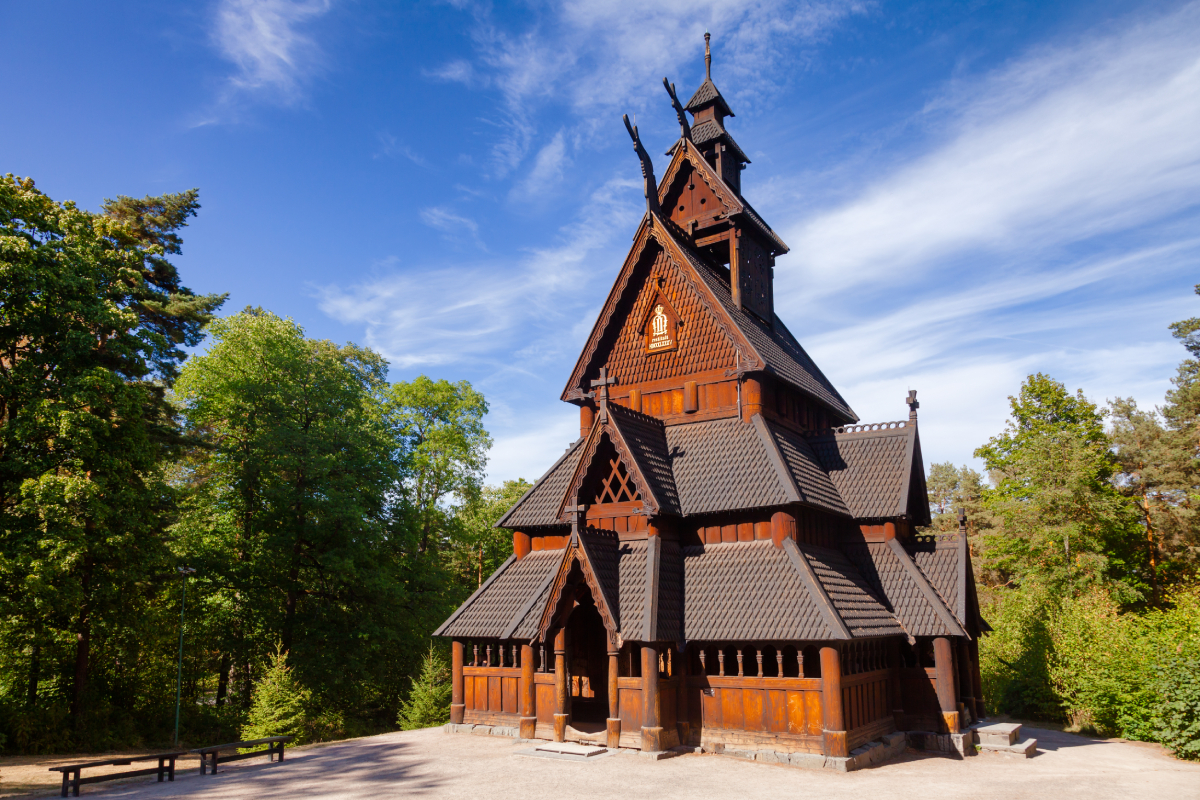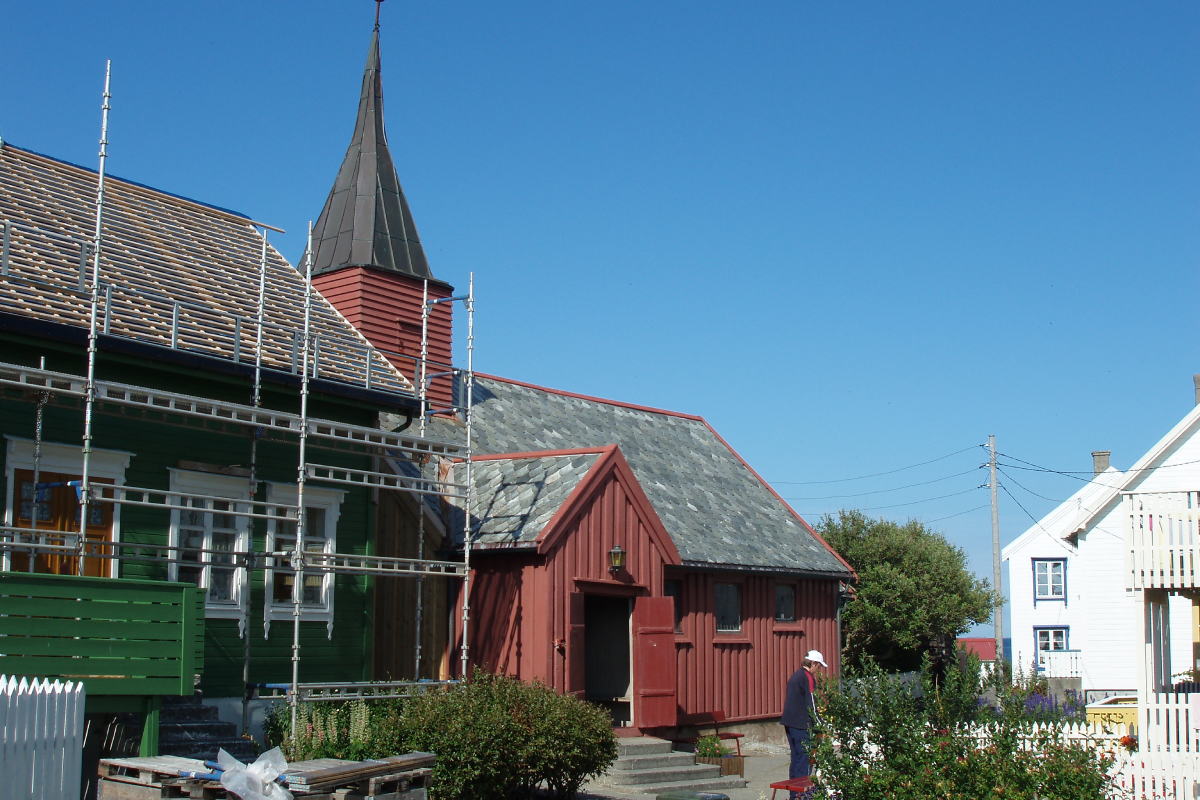


The Viking architectural revival, which saw old medieval Viking designs become all the architectural rage in the 19th century throughout Scandinavia, was one of the most striking and aesthetically pleasing aspects of this era of romantic Northern European nationalism.
Everything old is new
In his seminal book, Age of Revolutions (available to buy on Amazon, here), Eric Hobsbawm - famed as much for his detailed historical analysis as for his longevity and Communist leanings - states that the true beginning of the modern "world" started with the triumph and trauma of the French Revolution.
People throughout Europe, with the help of Napoleon's Grande Armée spreading ideas of liberté, égalité, and fraternité, threw off the shackles of medieval superstition and subordination.
Following the Napoleonic Wars, Denmark-Norway and Sweden found themselves on opposite sides.
In the subsequent peace agreements, Sweden, having aligned with the anti-Bonapartist allies and invited a Napoleonic general to establish a royal dynasty, was awarded Norway, previously under Danish rule.
This shift sparked a brief conflict, leading to Norway establishing its own parliament and constitution, though it remained nominally under Swedish control.
During this period, a wave of nationalism in Denmark, Sweden, and Norway reignited interest in folk art, crafts, and histories.
There was a particular focus on the early medieval era, a time when people from these regions had extensive influence across the Western Hemisphere.
This resurgence of interest was most notable in Norway, a nation that had oscillated between Danish and Swedish control since the early 15th century, as it sought inspiration from its past to forge a distinct national identity.
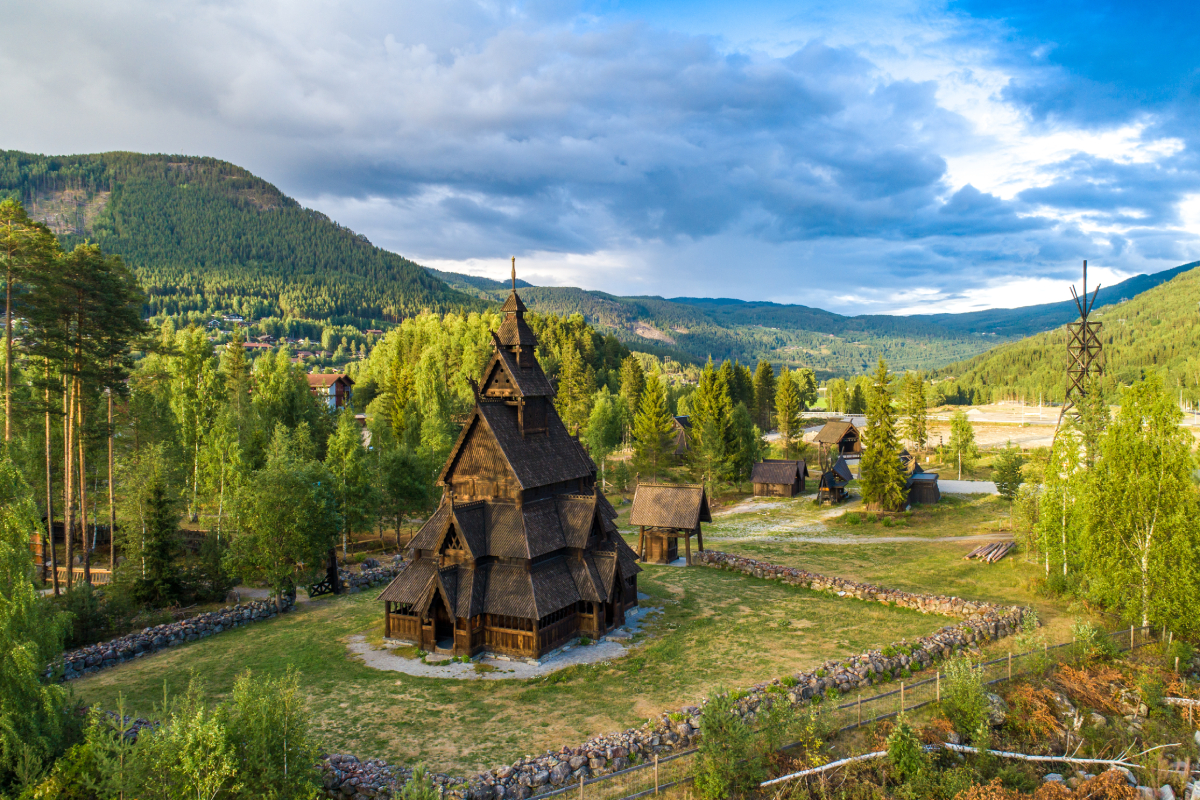
The old church in Gol, Norway, from approximately 1200, became a symbol of heritage preservation and the Romantic movement's reverence for history as it was reconstructed and relocated to Bygdøy in 1884. Photo: Giedrius Akelis / Shutterstock
The emergence of the term Viking
By the mid-19th century, the rediscovery of Scandinavia's once-glorious Viking past was not particularly new.
The invention of the printing press in the mid-15th century facilitated the spread of earlier medieval histories and sagas.
As printing technology advanced and literacy rates increased, works like the Edda Islandorum, a compilation of two 13th-century Icelandic works based on Norse mythology, which had originally been published two centuries earlier, soon became widespread.
During the 19th century, there was an insatiable literary demand in all three Scandinavian countries for modern publications about histories and works from the earlier medieval period.
In fact, the term "Viking" originated during this time, coined to describe the warriors, traders, and raiders who had extended their influence far beyond their Scandinavian homeland.
From Richard Wagner's epic operas, heavily influenced by Norse mythology, to the discovery of the Oseberg Viking ship in 1867, the mid-19th century captured and captivated the popular imagination with Scandinavia's Viking past.
It was only a matter of time before this fascination influenced architecture.
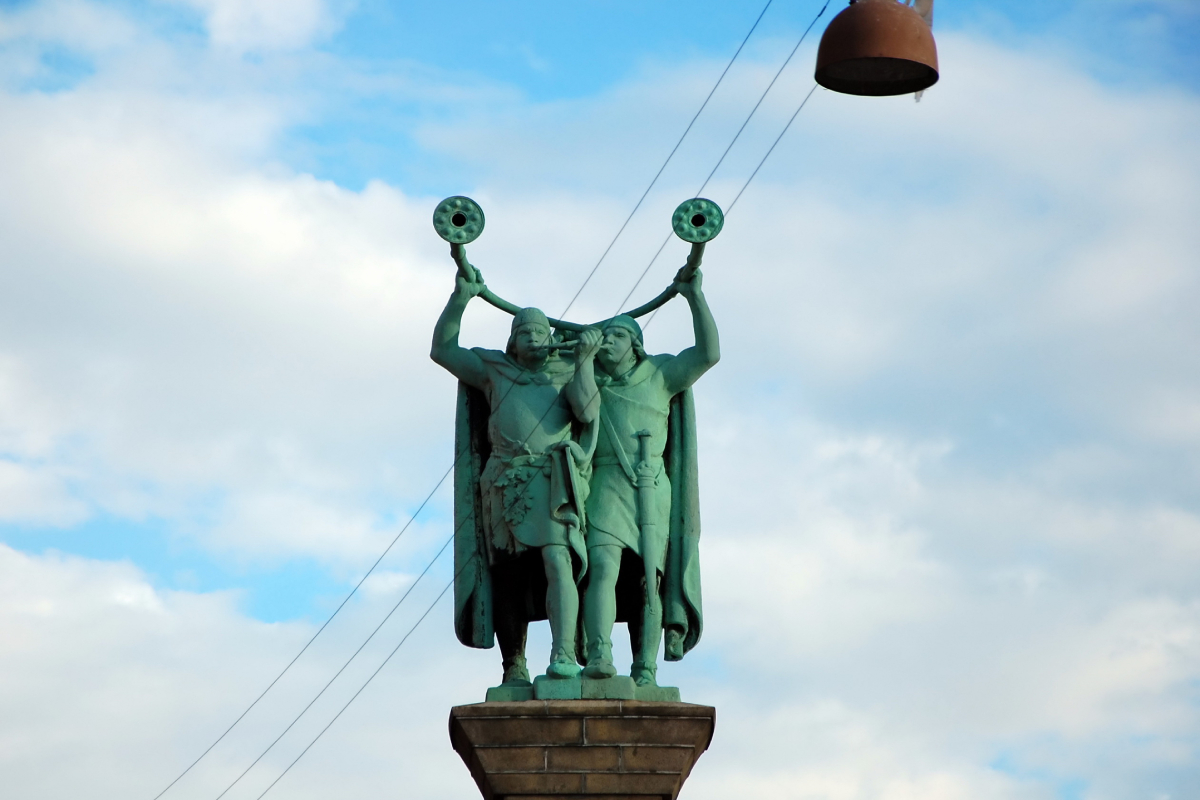
The Lur statue in Copenhagen features two Viking figures blowing a Lur, a long-curved tube traditionally used for signaling, and stands as a symbol of national defense. Photo: Lisa-Lisa / Shutterstock
Bustling cities and Viking influence
Throughout the latter half of the 19th century, there was a revival of Viking-inspired architecture across Scandinavia.
The first half of the century had seen a reawakening of interest in the region's early medieval history, with Vikings playing a prominent role.
This revival was further fueled by discoveries, such as the Oseberg Ship, a magnificent remnant of the region's Viking past, made possible by the advancing technology of emerging sciences like archaeology.
As the bustling capital cities of Copenhagen, Kristiania (as Oslo was known before the mid-1920s), and Stockholm expanded, there were ample opportunities for the construction of buildings and houses with Viking motifs.
The stave church, a striking symbol of the synthesis of Christianity and Paganism and once common in lands where Vikings roamed, became an inspiration for many structures up until the early 20th century.
Some of the finest examples, in this author's opinion, are found in the Oslo neighborhood of Briskeby.
Further east in Sweden, particularly around the west coast city of Gothenburg and in the leafy outer suburbs of Copenhagen, many spacious villas were constructed, imitating recent designs found on newly unearthed Viking ships.
Wooden carvings on the roof or frame often featured drakkar (dragons) copied directly from the intricate designs of Viking ships.
Viking influence was not limited to houses alone. The new streets and roads where these houses and buildings were often constructed took direct inspiration from the Viking era.
In Oslo, you can still walk down roads dedicated to Thor and Odin (Tors Gate, Odins Gate), while in Stockholm, you can stroll along streets dedicated to Balder or Idunn (Baldargatan, Idunnsgatan) or find yourself on Vahalla Way (Valhallavägen).

"Loki's Punishment," a 1923 sculpture by Ida Matton, resides at Stockholm City Hall, depicting the ongoing torment of Loki by two venomous serpents. Photo: Hedning / Wikimedia Commons (CC BY-SA 3.0)
Viking lore and legend into the 20th century
However, some of the most striking Viking motifs are found on the many statues and public buildings that make these three Scandinavian capitals some of the coolest cities in the world, both architecturally and literally.
The Oslo Town Hall (Rådhus) took more than half a century from inspiration to construction.
Originally conceived in 1906, it wasn't unveiled until 1950, delayed by the effects of the Great Depression and the Nazi occupation of Norway.
Dominating the view facing the Oslo fjord is a sculpture on horseback of Harald Hardrada, the greatest Viking warrior Norway produced.
In Stockholm, several statues inspired by Norse mythology were constructed throughout the city. Perhaps the most notable is a 1923 sculpture titled Lokis straff (Loki's Punishment).
Located at the base of Stockholm's stunning City Hall, this piece depicts Loki being tormented by two giant poisonous snakes for all eternity.
This statue is among other famous depictions of Norse gods, including Freyja, Thor, and Odin, situated nearby at the nation's National Museum, which was constructed in the mid-19th century.
Finally, for those traveling to or residing in Copenhagen, one can stand in awe at a special monument dedicated to the Vikings.
Located near the city's town hall, it features two Vikings blowing a Lur (a long-curved tube used for sounding warnings and music) atop a giant plinth.
Legend has it that when Denmark is in danger, these two Viking warriors will sound the alarm to awaken the nation's fallen Viking warriors. This monument was unveiled in 1909, thanks to donations from Russian Tsar Nicholas II.
For those interested in learning more about this topic, The Washington Post has published an article with additional information on the latest trends in Scandinavian design.
We get to provide readers with original coverage thanks to our loyal supporters. Do you enjoy our work? You can become a PATRON here or via our Patreon page. You'll get access to exclusive content and early access.
Feel free to reach out to discuss potential stories that may be in the public interest. You can reach us via email at [email protected] with the understanding that the information you provide might be used in our reporting and stories.