

Word of warning: if you're from Oslo, look away now. In this writer's humble opinion, Bergen, Norway's second-largest city, trumps its bigger brother in beauty and charm.
Sure, Oslo is the nation's economic and political center, but Bergen is the center of its tourism industry and one of the true gems of Northern Europe.
Despite constant rumblings about being overlooked and looked down upon by inhabitants of Norway's capital, Bergeners are proud of their city's long and cultured history.
To appreciate Bergen's historical prominence, one must look to the medieval period when it was an important trading city within the Hanseatic League.
This role made Bergen a cosmopolitan and bustling entrepôt. In contrast, Oslo, then a provincial backwater, played a secondary role.
Founded in the mid-11th century at the peak of the Viking Age, the city was Norway's capital until the 13th century, when it ceded this status to its eastern neighbor.
It had a second wind, initially as a bustling economic hub of the North Sea and then as a center of culture, food, and tourism.
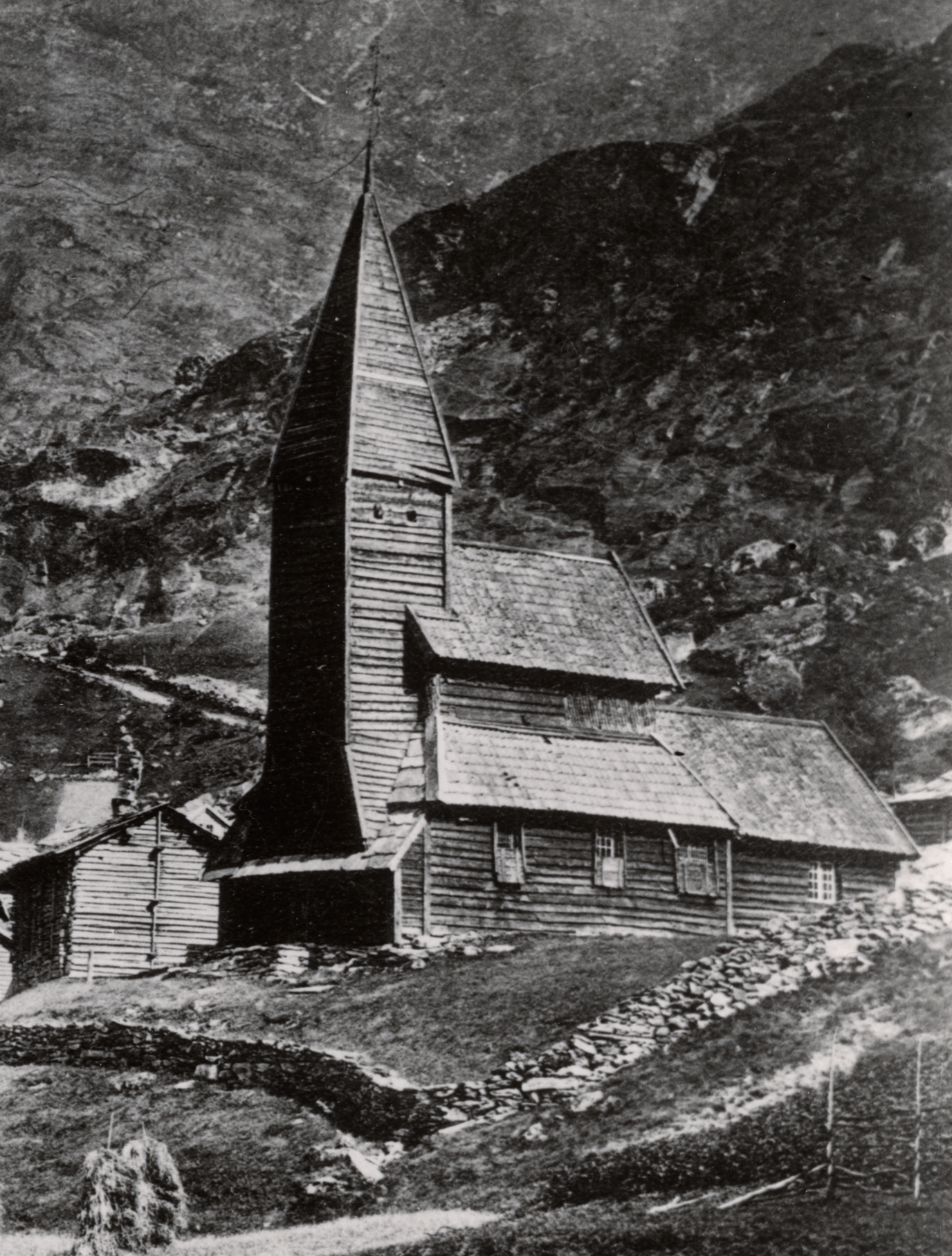
It was in the glowing embers of the Viking Age, around 1150, that a small village, Fortun, about a three-hour drive from Bergen today (days of travel back then), decided to construct a church.
Despite its distance from Bergen, the church would become intertwined with a dark period of the city's history. First, though, we must look back to its original construction.
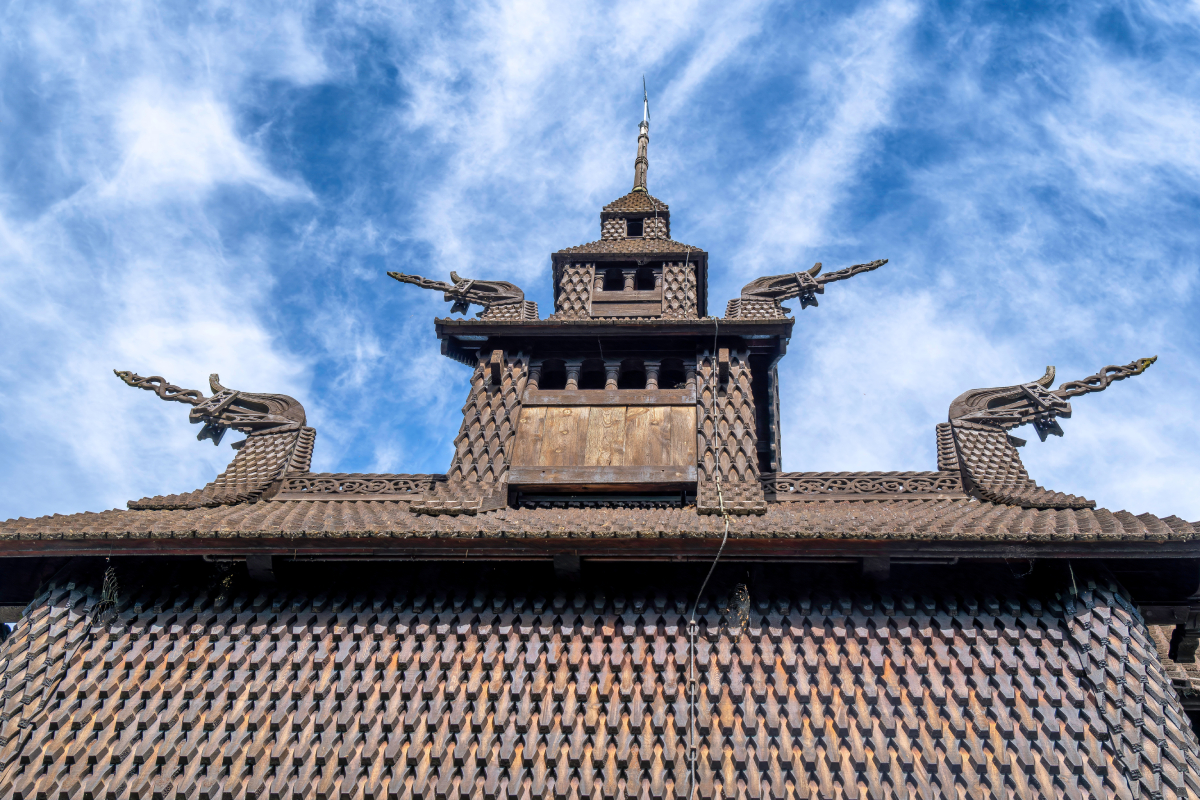
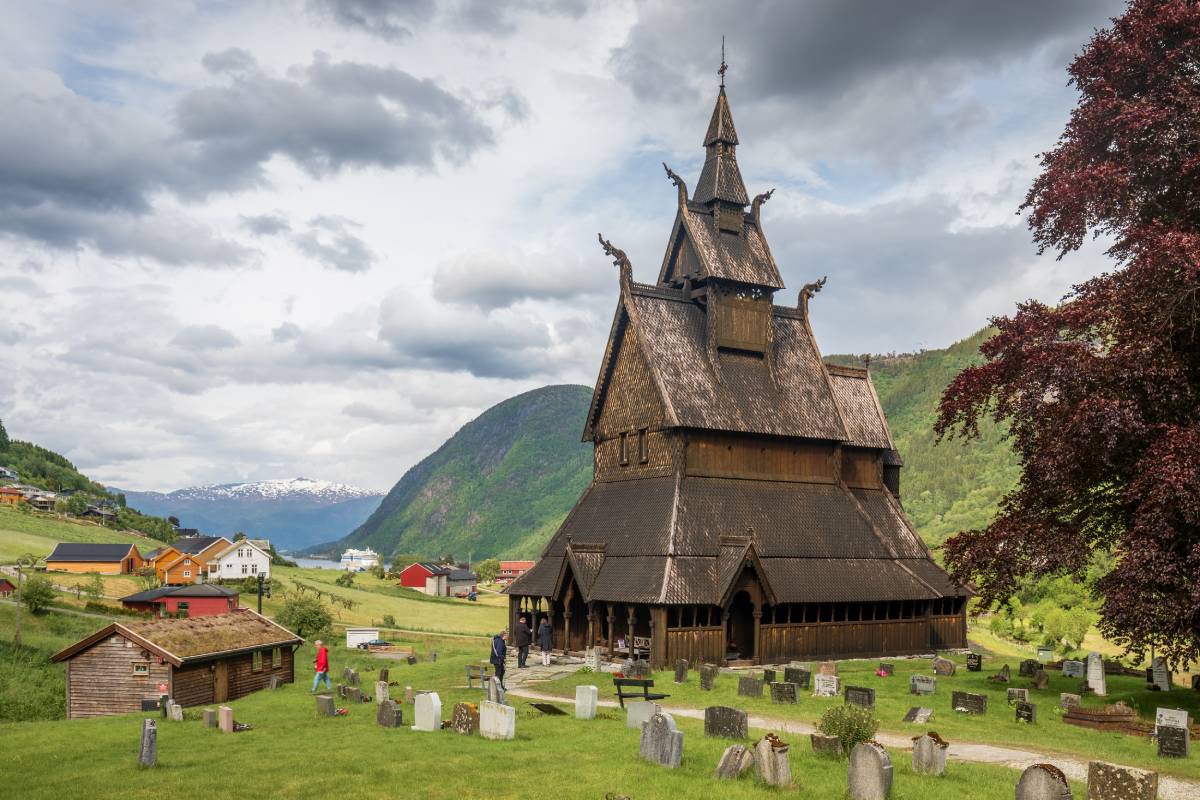
Fantoft Stave Church features an intricately carved exterior, with dragon head details on the roof ridges designed to ward off evil spirits. Photo: Frank Bach / Shutterstock
Fantoft Stave Church
Lying at the inner eastern end of the Sognefjord is the village of Fortun.
Due to its bucolic location, the village nowadays sees a steady stream of tourists pass through every summer to take in the majestic scenery of Norway's western fjord country.
Back in 1150, however, this village was about as remote a part of Europe as one could find.
Yet, despite its seeming isolation, it was not totally closed to the outside world.
By that period, Christianity had cemented itself as the dominant religion in the newly formed nation, and there was a need to construct a church in the village of Fortun.
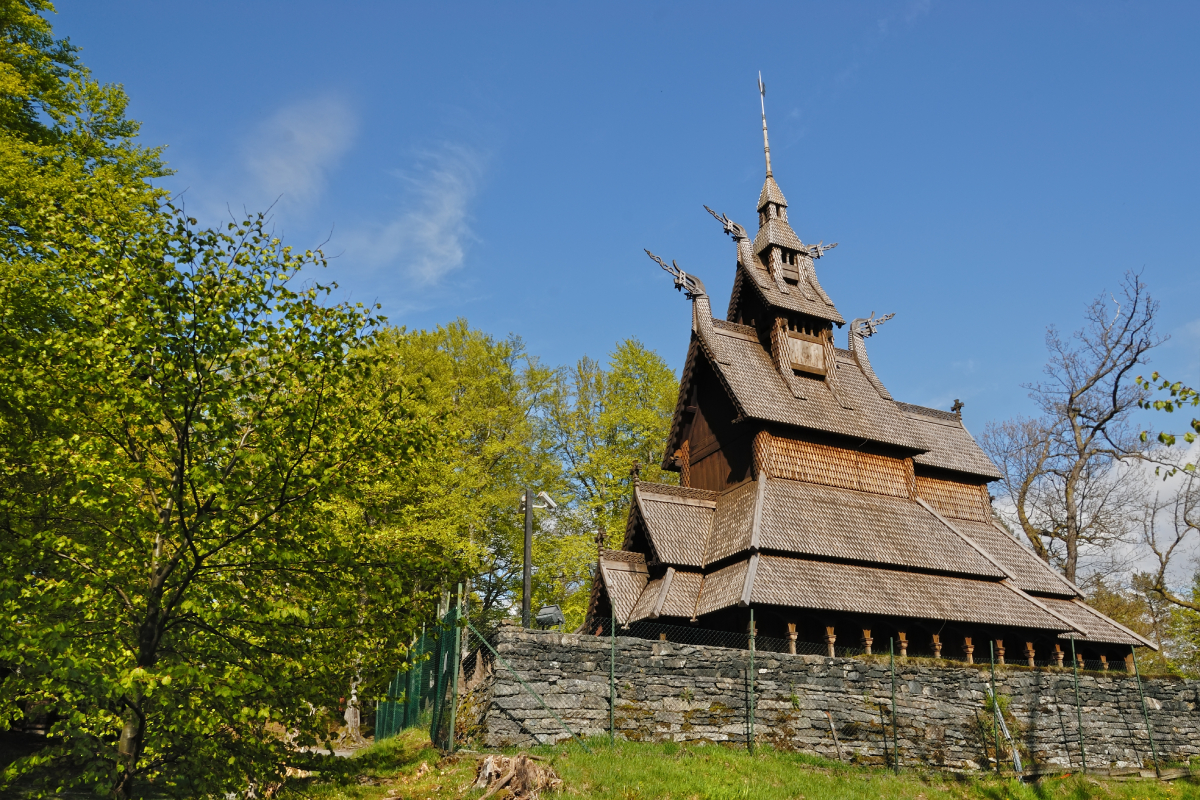
The villagers constructed one of the most remarkable pieces of medieval architecture in this region of Norway, the Fantoft Stave Church.
The unique construction method, where wooden pillars (staves) form the main structural framework, is believed to have developed from generations of Viking shipbuilding techniques.
Like other stave churches, Fantoft is multi-tiered with pitched gables and smaller roofs seemingly descending from a main tower.
Despite Christianity's predominance in Norway during this period, there are small reminders of its proud pagan past.
There are several carved wooden dragon heads – similar to those that once adorned the front of a Viking ship – which were said to ward off evil spirits.
Numerous runic inscriptions and patterns are found throughout the church, which suggests that it is a synthesis of pagan and Christian artistic influences.
In fact, the church can be viewed as a strong reminder of the village's pagan cultural legacy and heritage despite its (relatively) newfound Christian beliefs.
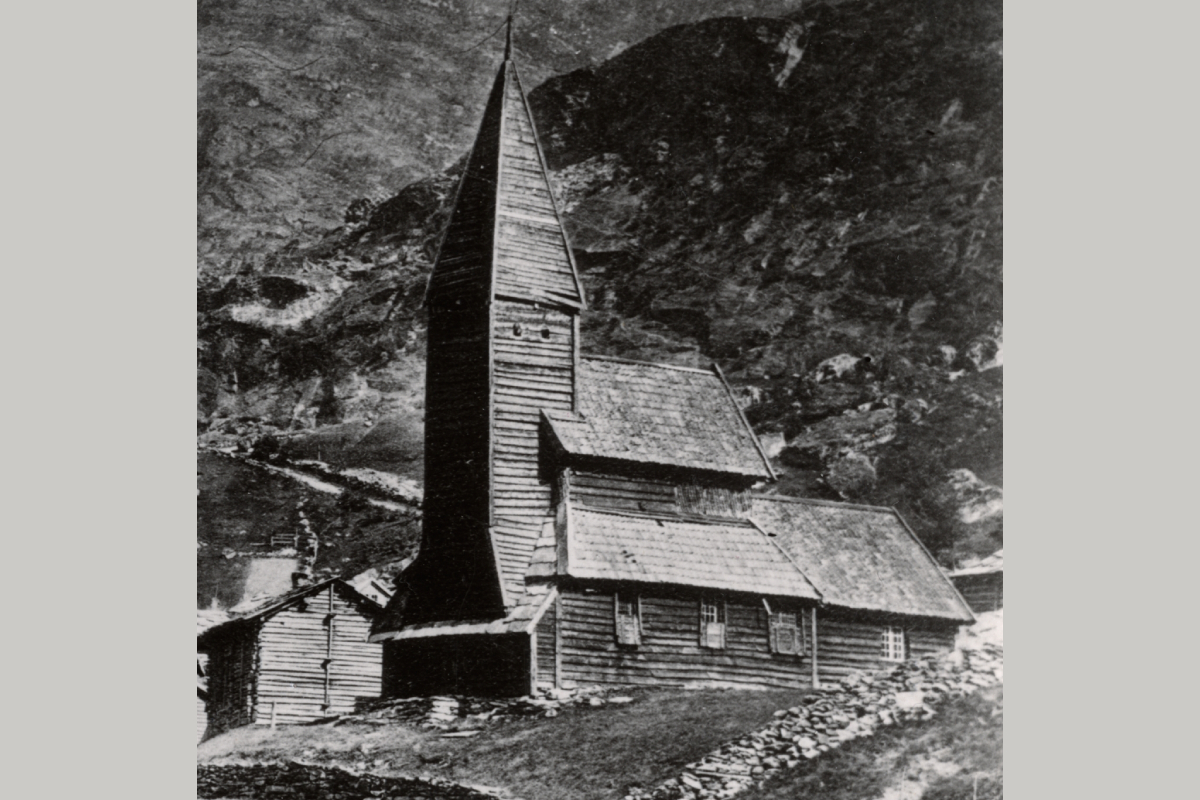
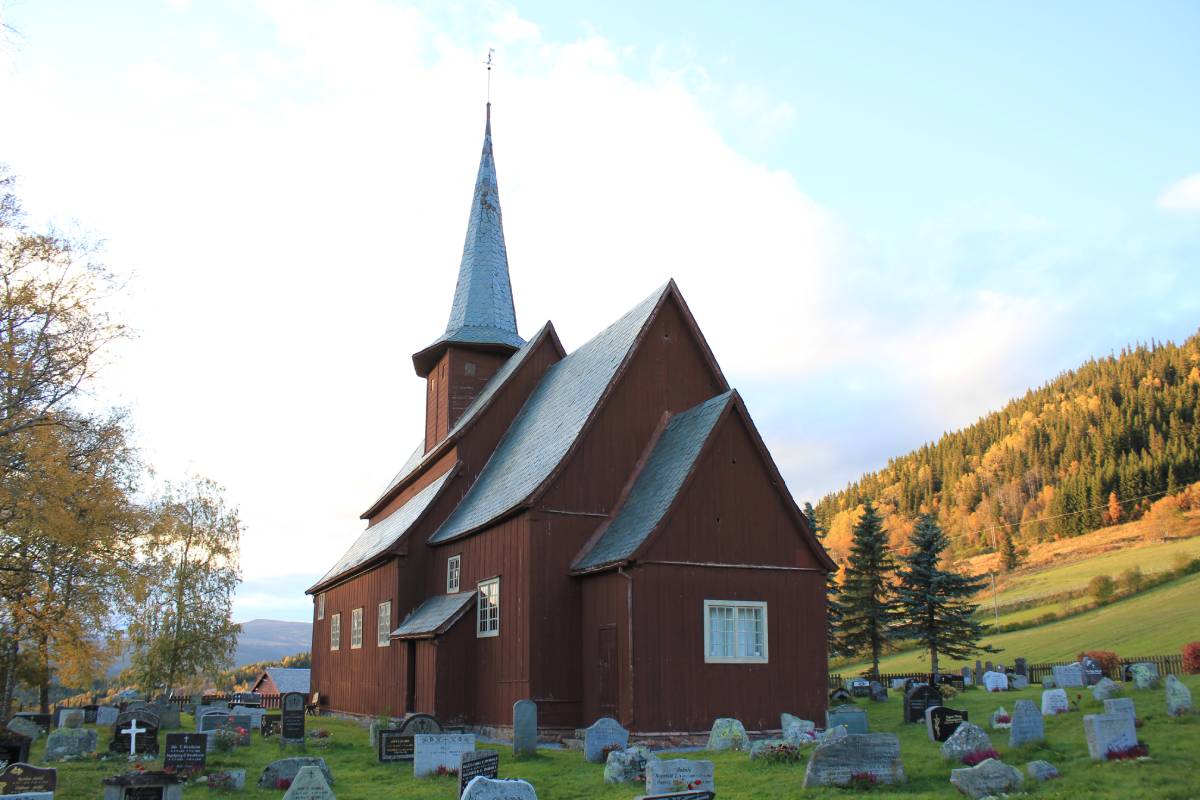
Depicted in this 1873 photograph, Fantoft Stave Church stands in Fortun a decade before its relocation to Bergen in 1883. Photo: Kristian Bjerknes / Public domain
Demise, relocation, and rebirth
The Fantoft Stave Church, from its construction in the medieval period, was the center of cultural, religious, and spiritual life for the village of Fortun for centuries.
Countless births, deaths, and marriages were celebrated here, yet by the mid-19th century, the church was down on its luck.
Despite the brilliance of the stave construction method, the church was falling apart, and there was talk of tearing down this parish church.
Enter the philanthropist Fredrik Georg Gade. Born into a prominent Bergen family, he followed familial footsteps into business and soon became a wealthy merchant.
Upon hearing of the dire state of the Fortun Stave Church – and plans for it to be demolished, like so many other stave churches at the time – he decided to purchase the church to protect it.
He then oversaw the meticulous disassembly and transportation of the church from Fortun to the now Bergen neighborhood of Fantoft.
Here, it was carefully reconstructed so that this medieval slice of Fortun could breathe new life into Bergen.
The villagers were not left empty-handed, as a new parish church was constructed in Fortun so they could continue to celebrate and worship during cultural and religious festivities.
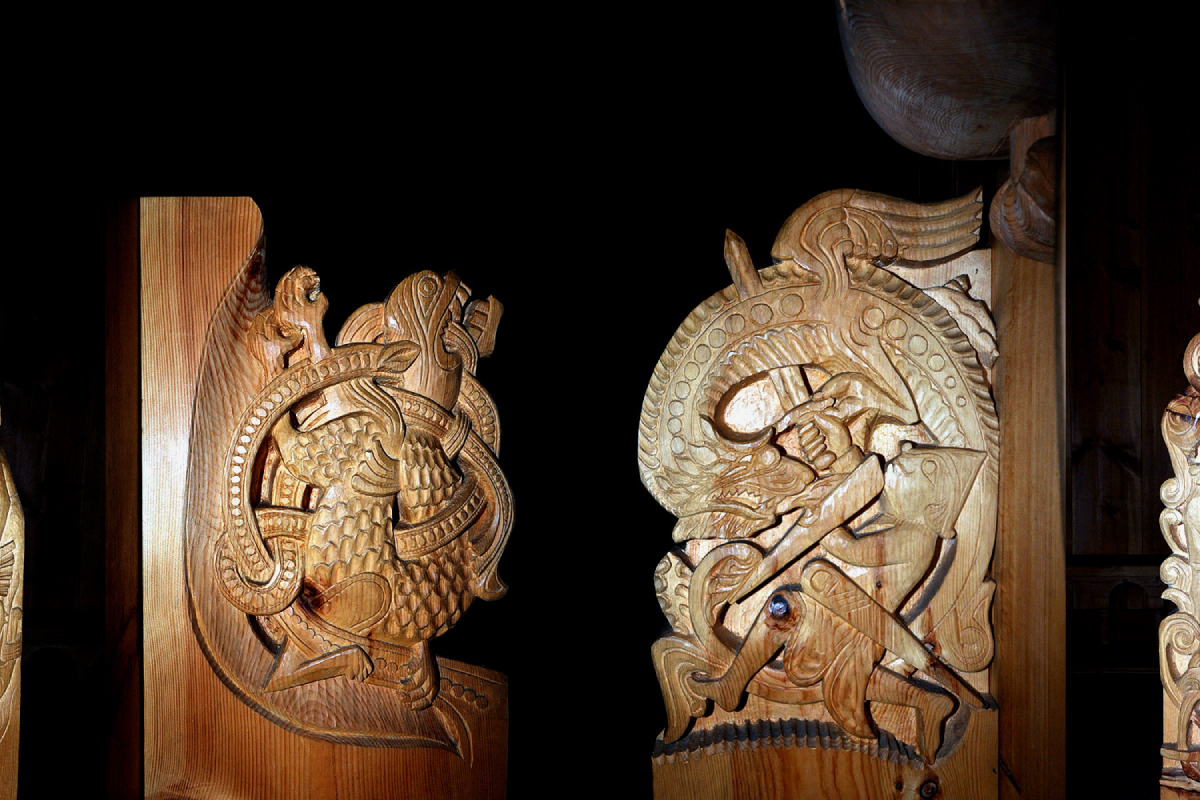
The Sigurd saga, a famous Norse legend, is prominently depicted in the detailed woodwork of the new Fantoft Stave Church. Photo: Micha L. Rieser / Public domain dedication
A dark chapter, darker metal
Thanks to the cultural heritage of Fredrik Georg Gade, this medieval slice of Norway's history became a popular attraction in Bergen, adding to the city's rich cultural tapestry.
Yet by the early 1990s, a new cultural phenomenon was sweeping Bergen as well as the nation at large.
This was the birth of the Norwegian black metal scene.
A new wave of Norwegian musicians emerged from the heavy metal scene in the 1980s and began to push artistic, cultural, and musical boundaries.
A core group of men gathered at a record store called Helvete (Hell) in Oslo and, in subsequent interviews, voiced misogynistic, anti-Christian, and Satanic views.
They were often quick to draw parallels with a Satanic cult that possessed medieval weaponry and aimed to spread "terror."
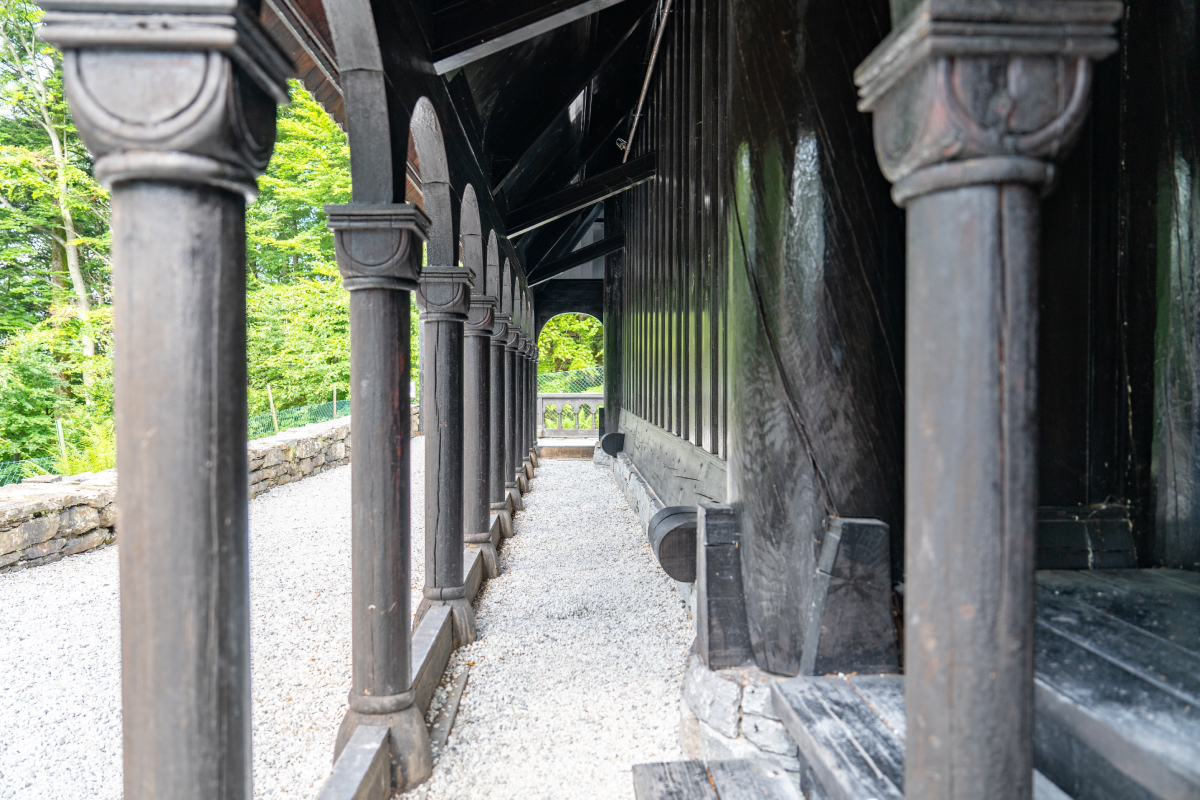
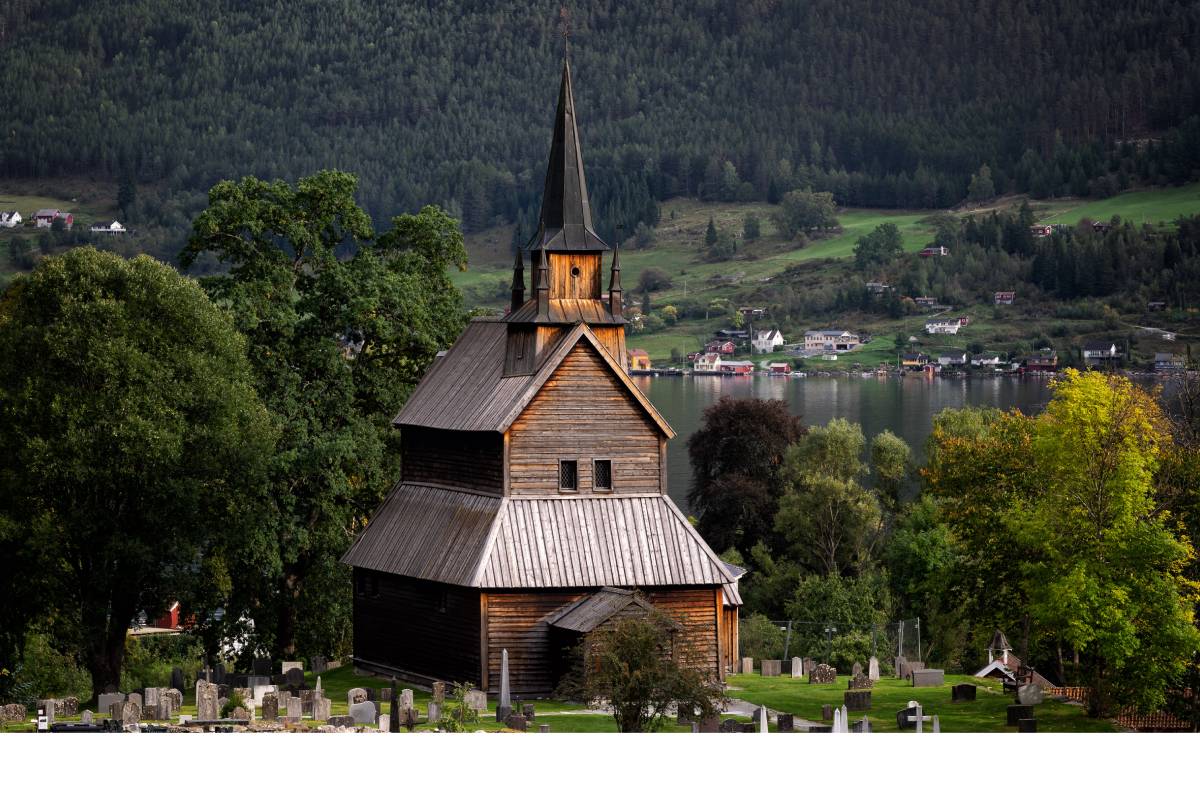
The most recent reconstruction of Fantoft Stave Church was completed in 1997, with efforts made to faithfully replicate its original medieval appearance using traditional building techniques. Photo: inge-klikt / Shutterstock
A terror campaign
Part of this terror campaign shocked the nation when, in 1992, members of the Norwegian black metal scene, particularly those core members who met at Helvete, launched a series of arson attacks on Christian churches.
The first and most prominent of these attacks was on the Fantoft Stave Church, which was burnt to the ground in June 1992.
In the next four years, more than 50 attacks on churches swept the nation, committed by members of the black metal scene or their fans.
The man most believed responsible was Varg Vikernes, a musician in the black metal band Burzum.
Though not charged with its destruction, he was found guilty of similar arson attacks on churches throughout Norway.
Following Fantoft's tragic demise, Vikernes went on to stab a music rival to death in 1993 and was charged with murder.
An EP circulated from March 1993 featured a photo of the charred remains of the Fantoft Stave Church. The album was grimly and sardonically titled Aske (Ashes).
Back from the black
Following its torching in 1992, the Fantoft Stave Church has risen like a phoenix. Not for the first time in its history, it had to be reassembled and rebuilt.
However, since 1997, the church has been protected by a security fence. Let's hope this "new" version of the church lasts as long as the original, which stood for over eight centuries.
The church, built in an era of Christian and pagan cultural synthesis, has now become a symbol of Norway's proud pagan past.
If you find yourself in Norway's second city, make sure a visit to the Fantoft Stave Church is number one on your "must-see" list.
An article by The Guardian on the violent history of early Norwegian black metal, including more on the destruction of the Fantoft Stave Church, can be read here.
We get to provide readers with original coverage thanks to our loyal supporters. Do you enjoy our work? You can become a PATRON here or via our Patreon page. You'll get access to exclusive content and early access.
Feel free to reach out to discuss potential stories that may be in the public interest. You can reach us via email at [email protected] with the understanding that the information you provide might be used in our reporting and stories.