

The Danish museums organization ROMU has announced the discovery of "extremely rare" fragments of a Norse helmet in Lejre, Denmark.
The helmet is thought to have belonged to a 7th–8th-century ruler from Gammel Lejre, or "Old Lejre," an influential center of power in the period leading up to the Viking Age.
A perfect match
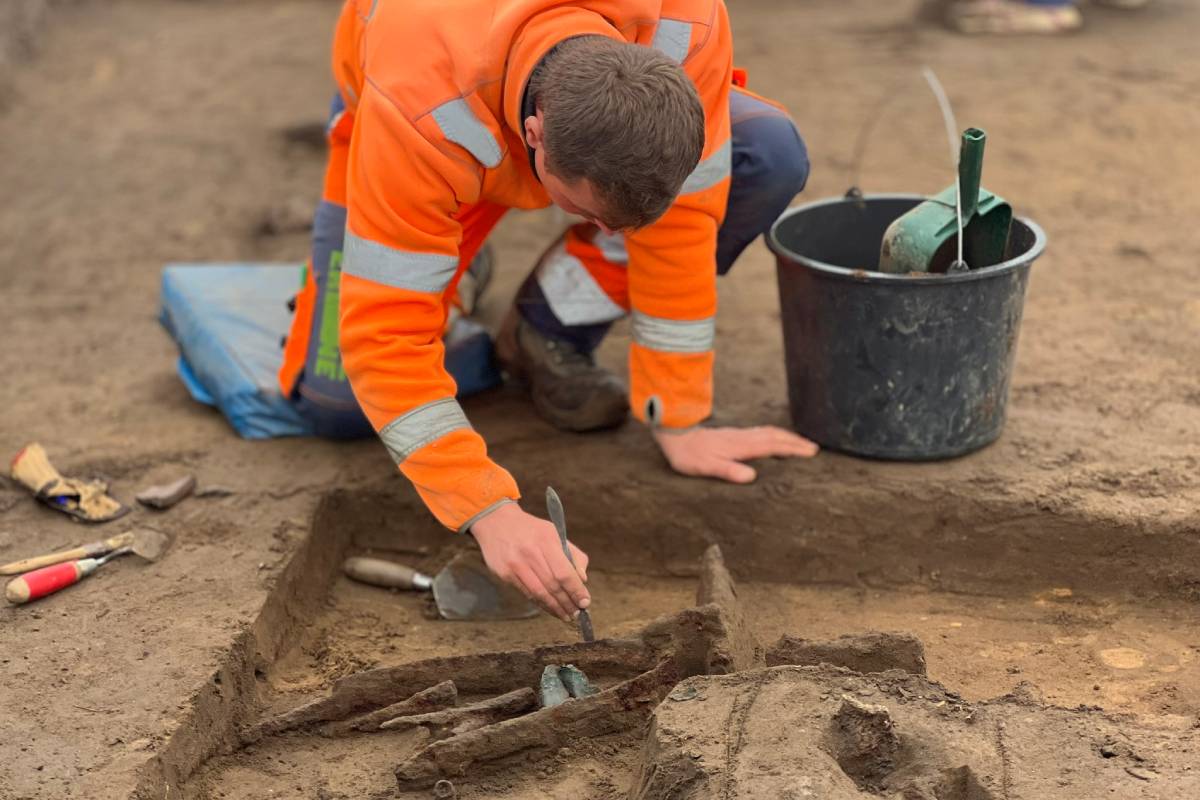
The two fragments were found in spring 2024 by metal detectorists in the same field at the Lillebro site, near Lejre.
After the fragments had been retrieved, it was discovered that, remarkably, the pieces fit perfectly together like two parts of a puzzle – they belonged to the same helmet.
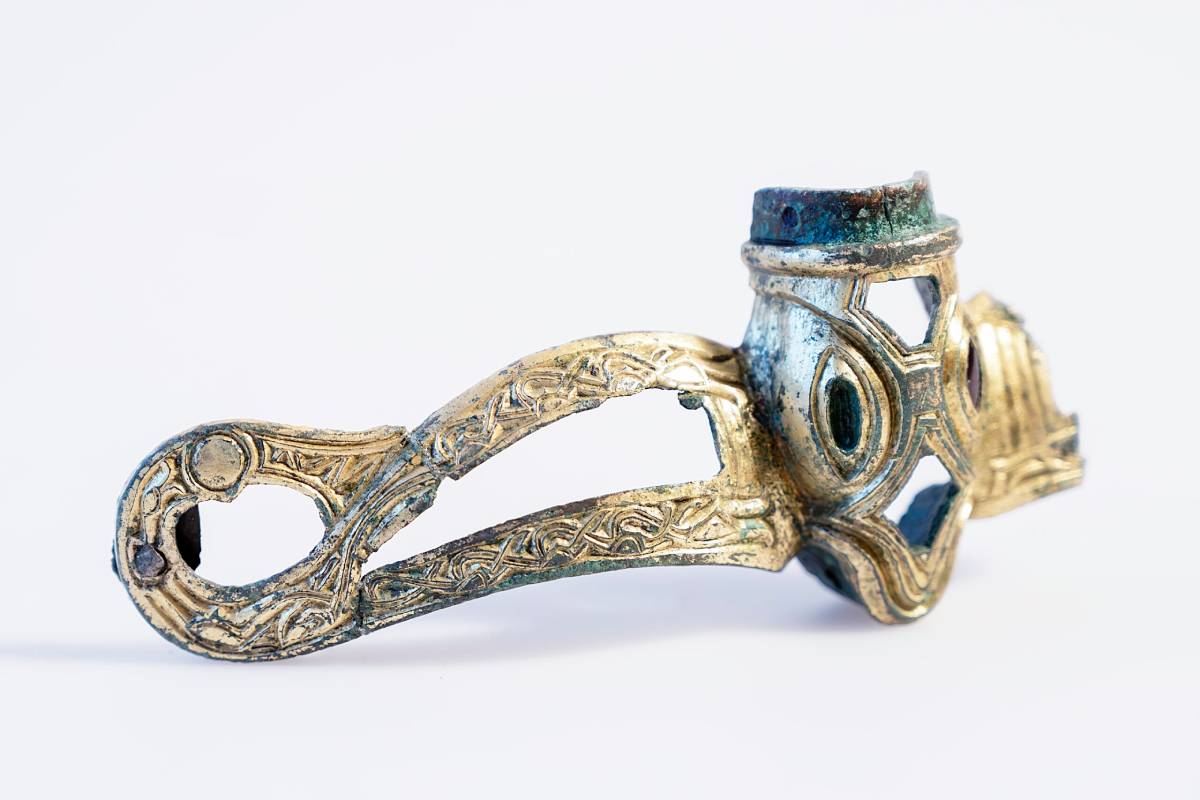
Together, the two bronze fragments form most of the brow ridge of the helmet. Analysis has revealed gold plating and highly intricate carvings.
As ROMU's archeological director, Julie Nielsen pointed out in a press release, this is a notable find.
"In itself, finding helmet parts is a rare thing in Denmark," Nielsen stated.
"This piece comes from what must have been one of Scandinavia's most magnificent helmets. The bronze fragment is gilded. It is also decorated with a red gemstone – a garnet."
"The gold, the ornamentation, and the garnet show the splendor of the helmet."

Lejre, home to a Viking-era stone ship, was once a powerful Scandinavian center linked to early Norse rulers and warrior elites. Source: tomtsya / Shutterstock
Echoes of Uppsala and Beowulf
Like both Copenhagen and Roskilde, Gammel Lejre is situated on the island of Zealand in eastern Denmark.
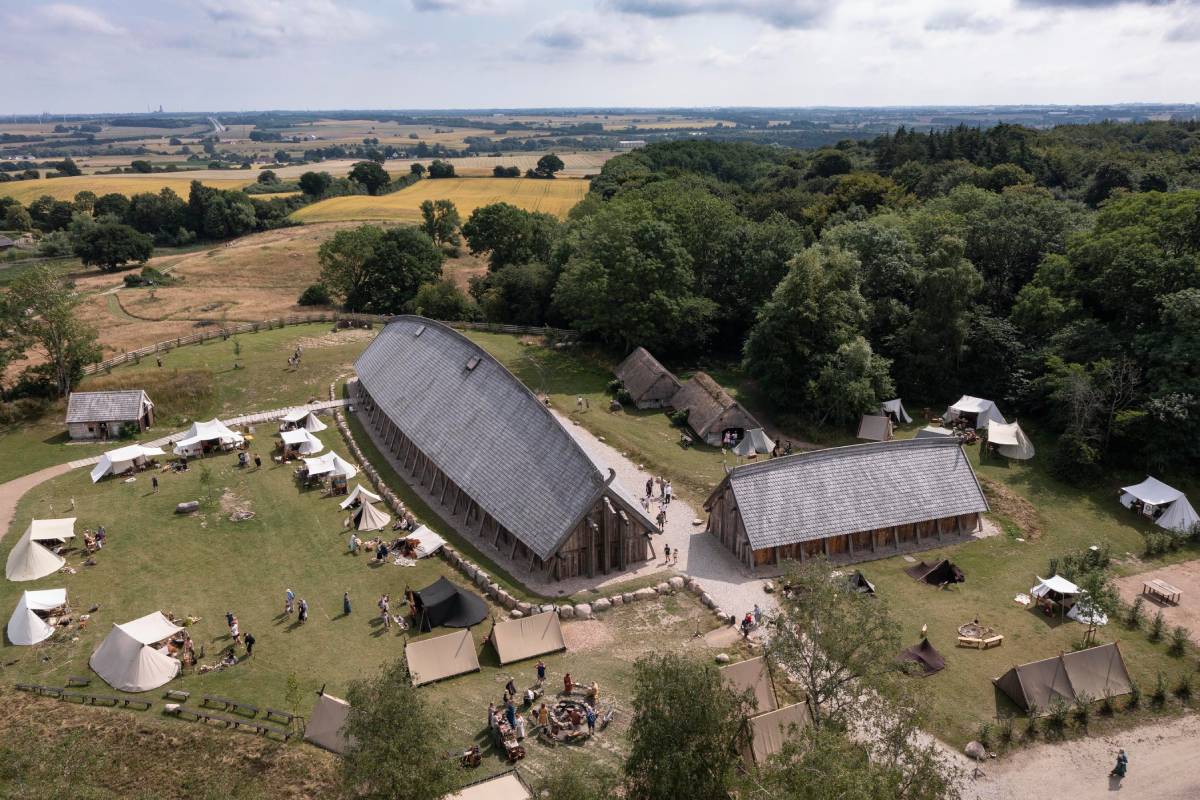
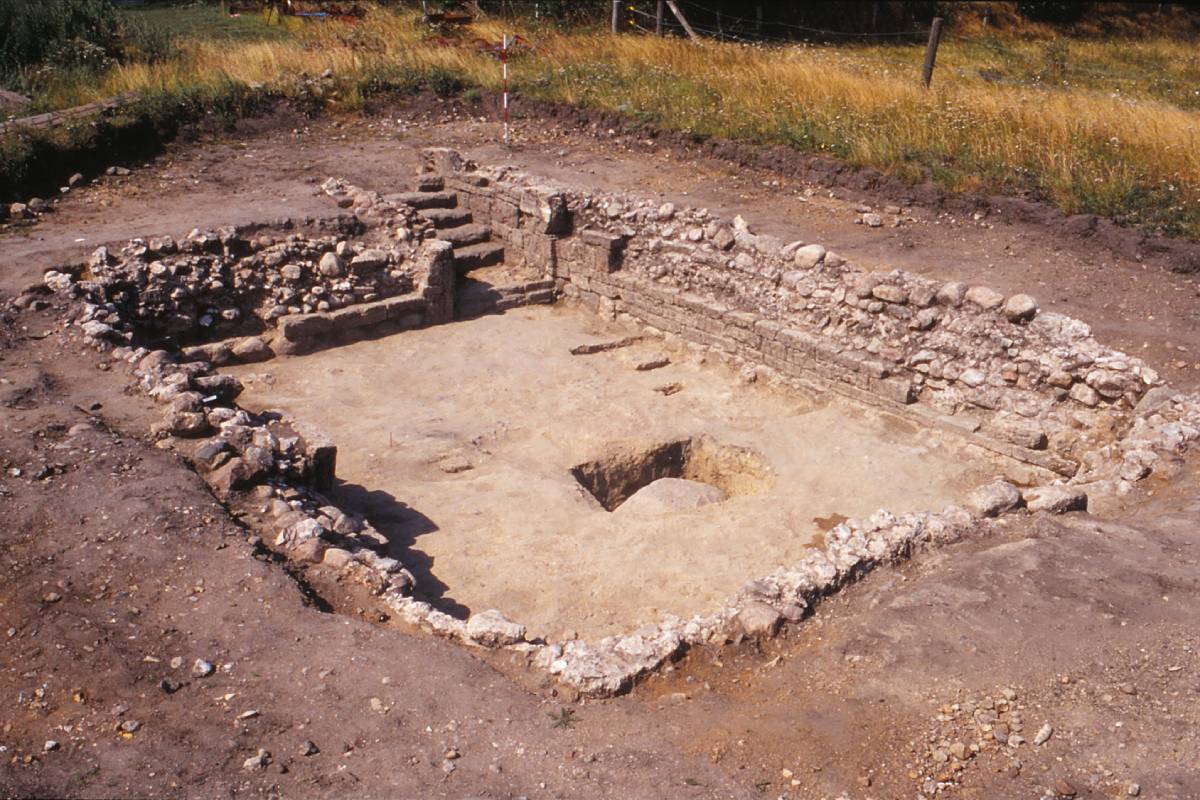
The archeologist Tom Christensen uncovered the remains of two halls constructed at Gammel Lejre – one from the mid-seventh-century Migration Period and the other from the ninth-century Viking Age.
As detailed in the book Viking Dynasties, a recent research project has posited that Gammel Lejre was the center of a powerful kingdom whose influence rivaled that of Gamla Uppsala in Sweden.
It has also been suggested that the great hall was the inspiration for the hall of King Hrothgar in the Old English epic poem Beowulf.
The fragments of the helmet have been dated to somewhere between 650 and 750 CE, the later Germanic Iron Age.
Nielsen believes the impressive details and materials suggest that its owner was a powerful member of the ruling class.
"The deep red garnet has long been associated with strength. The detailed ornamentation on the helmet tells a story – a narrative – about the enormous power of the person who owned and wore it," Nielsen added.
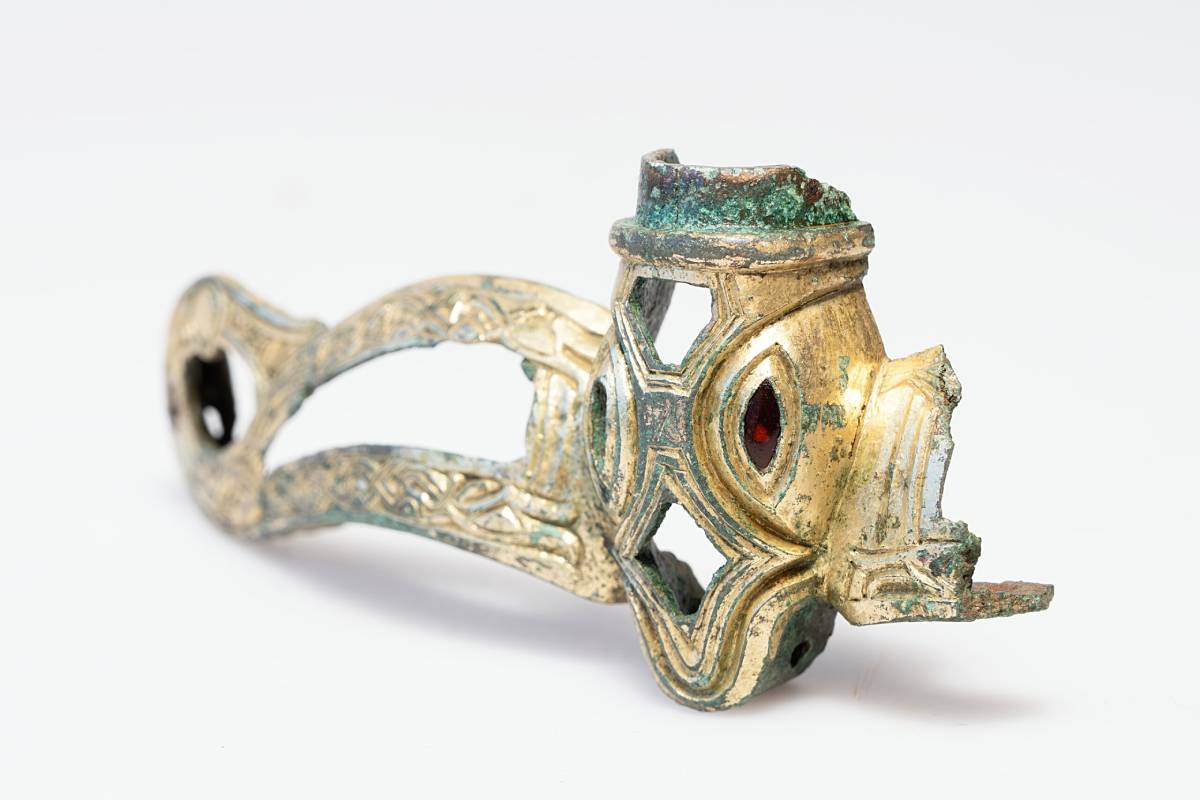
Lejre Museum will open its exhibition of Norse helmet fragments on February 17, preceded by a special lecture on February 11. Source: Kristian Grøndahl / ROMU
Ready for display
The two metal detectorists who found the fragments brought them to the local museum.
ROMU, an organization responsible for a total of ten museums in the municipalities of Roskilde, Lejre, and Frederikssund, asked the National Museum of Denmark to process the find on an urgent basis.
Now that the analysis has been completed, the fragments have been loaned to the Lejre Museum so that they can be put on display for the general public.
On February 11, the museum will hold a special lecture where people can also gain early access to the new exhibition.
The helmet piece will then be available for viewing in a special exhibition at the museum from February 17.
Just a short distance away from the Lejre Museum, visitors to the area can also see Sagnlandet Lejre, an open-air archeology museum that contains a reconstruction of the famous great hall.
We get to provide readers with original coverage thanks to our loyal supporters. Do you enjoy our work? You can become a PATRON here or via our Patreon page. You'll get access to exclusive content and early access.
Feel free to reach out to discuss potential stories that may be in the public interest. You can reach us via email at [email protected] with the understanding that the information you provide might be used in our reporting and stories.