

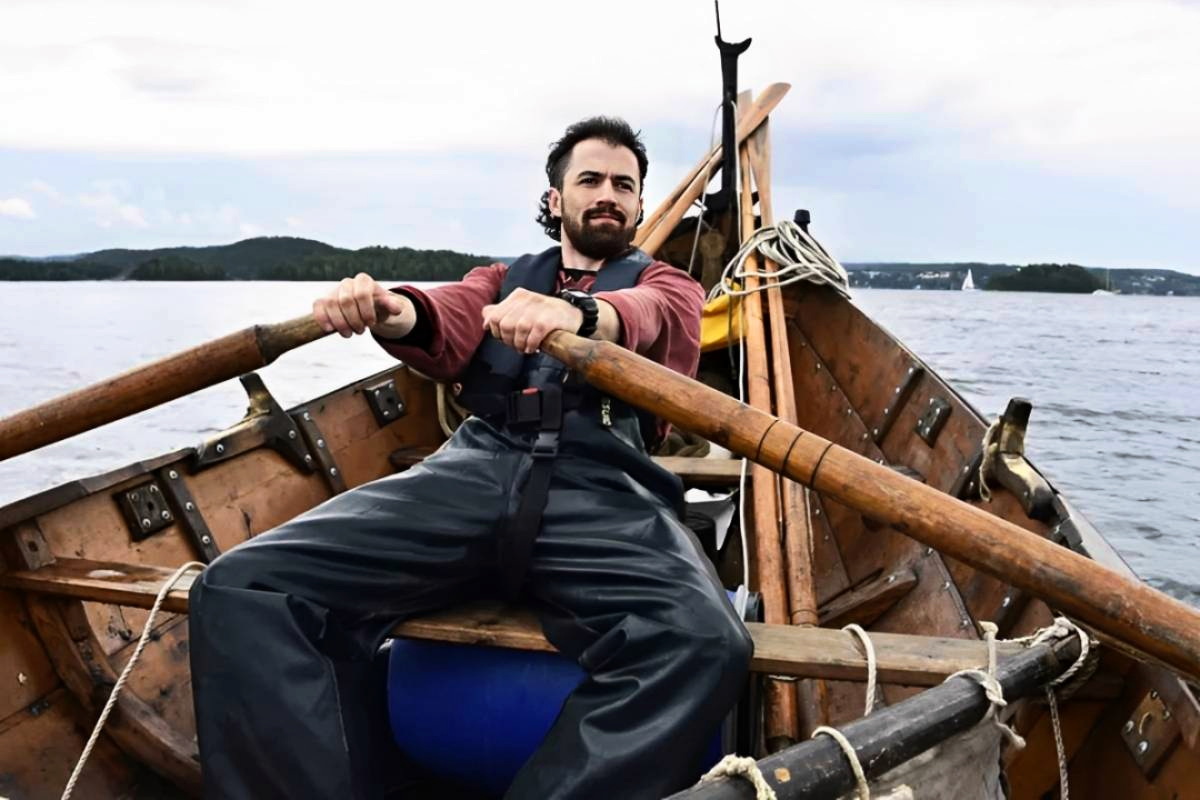
We have long known about the prowess of Viking sailors and how their tremendous skill, daring feats, and sheer audacity helped shape the history of Northern Europe and beyond.
Yet while most archeologists tend to construct their theories of the Viking world through artifacts, historical records, and laboratory analysis, Greer Jarrett has taken a more experiential approach.
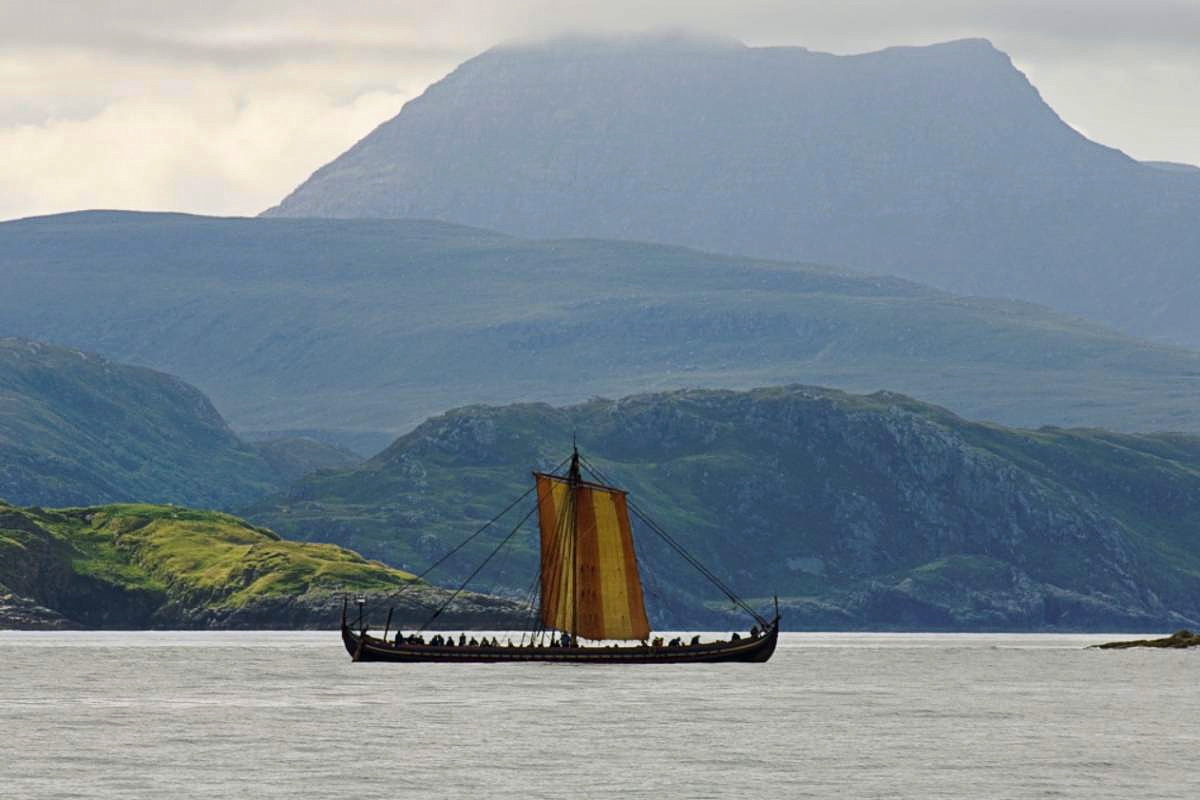
Over the last five years, Greer has completed more than 3,000 miles of sailing in square-rigged clinker boats that bear a close resemblance to Viking Age vessels.
These journeys have helped provide him with some unique insights into what it could have been like to sail in this era of adventure. The Viking Herald hears his story.
A lifelong passion
Greer Jarrett's interest in both archeology and the art of sailing stretches back many years. "There's a long history of sailing and working at sea on my father's side of the family," Greer explains to The Viking Herald.
"Then, as I was doing my bachelor's in archeology in Glasgow, I became really interested in the maritime connections across the North Atlantic in the Viking Age. I think there's such an interesting and very different set of connections at this time."
Greer began to wonder about how different the perspective of a Viking Age sailor, for whom the boat was often the prime means of transportation, may have been.
"I became really interested in how people would have thought about the sea then, especially navigation and all the more cognitive aspects of sailing," Greer continues. "I started working with ideas of how to map a kind of Viking Age worldview by looking at people who spent a lot of time at sea."
In 2020, Greer began a PhD at Lund University with a view to exploring seafaring in the Viking Age. He soon felt, however, that there was something missing in his approach.
"I had done a lot of desk-based and field-based work," he explains. "I'd visited lots of sites, done surveys, and researched the documentary records, but I still hadn't done very much sailing on Viking Age boats."
"I felt that if I was going to write anything about the experience, the practicalities, and the possibilities of seafaring, then I should have some practical knowledge too."
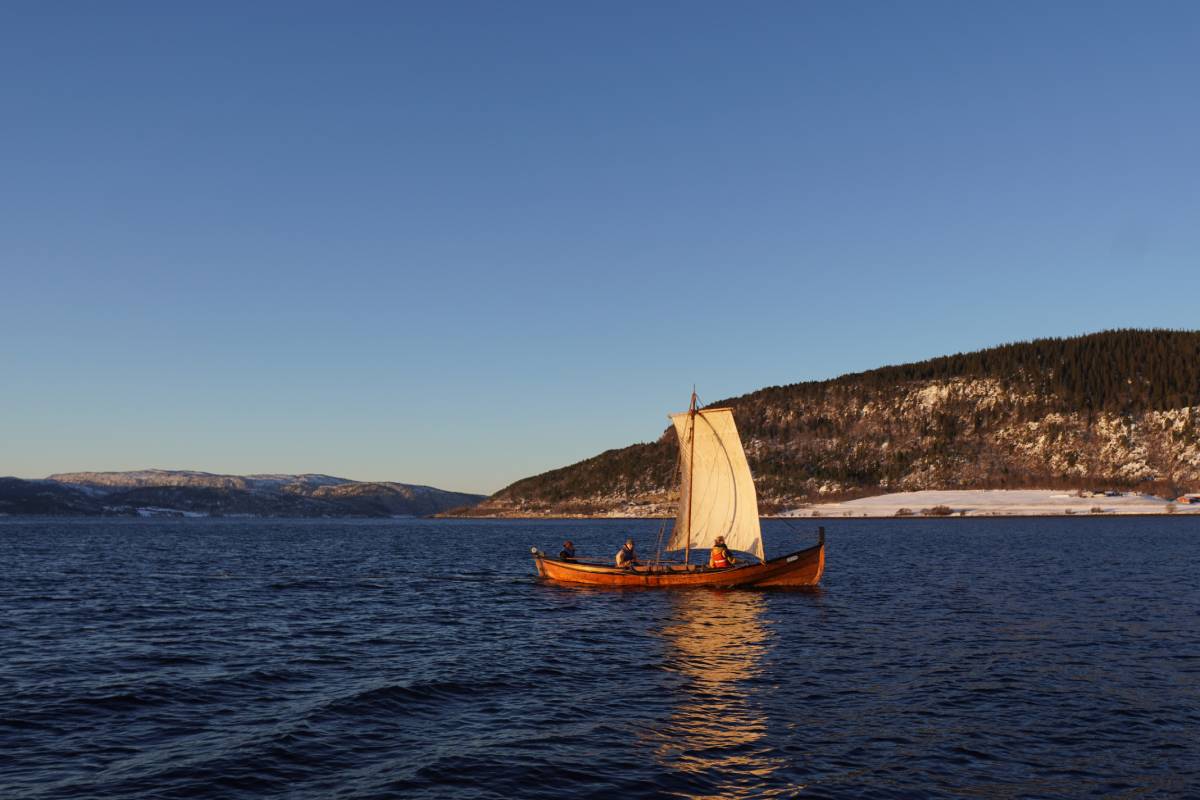
By sailing historic-style boats, Greer worked to fill gaps in our knowledge of Viking seafaring. Photo: Greer Jarrett
A hands-on approach
With the support of Lund University, Greer soon set out to gain a more intimate understanding of Viking seafaring.
"We have all of this indirect evidence for mobility in the Viking Age," Greer tells The Viking Herald.
"We know that people were arriving in the British Isles or bringing stuff back, for example. We've got archeology, DNA, and linguistics that tell us where things are coming from and where they are ending up."
"But we don't know what's in between. For me, the main research question was how we can use experimental archeology to join these dots and rebuild the routes."
Naturally, Greer has relied on many other experts in the field of Viking Age seafaring. "I spent a whole year in Norway doing fieldwork with groups who have either preserved or reconstructed clinker-built boats from the 19th and early 20th century," Greer adds.
"This is a type of open wooden fishing or trading boat used in some parts of Norway until the First World War. It's extremely similar to boats from the Viking Age, to the point that they use the same names, rigging, and materials as they did a thousand years ago."
"This was a great way for me to gain access to this kind of practical knowledge. It also meant I could look at the kind of continuities that also existed until quite recently in several parts of Scotland, like the Shetland Islands," Greer adds.
"Between 2022 and 2024, we did four big voyages of two or three weeks in different parts of Scandinavia where we tried to reconstruct parts of the trade routes."
- READ MORE: All you need to know about Viking ships
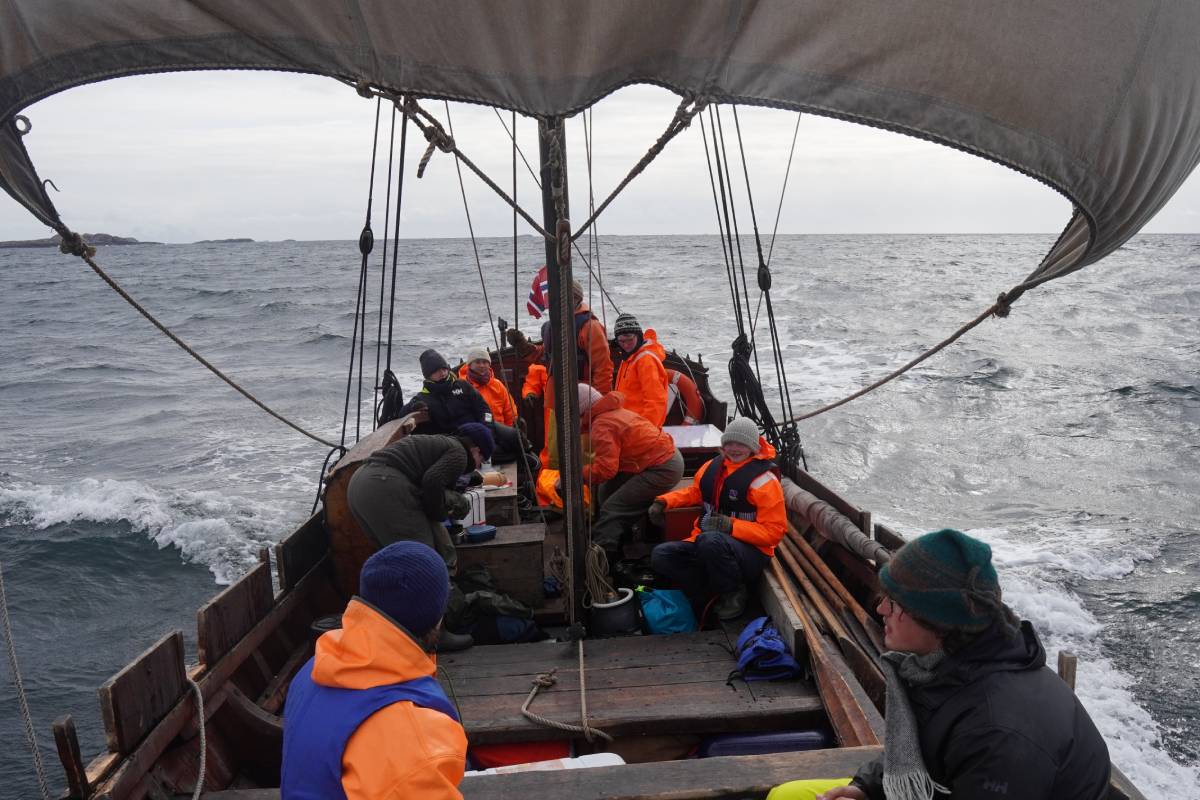
A 2022 expedition took Greer and his crew to the Arctic Circle in a traditional-style vessel. Photo: Greer Jarrett
In search of the Arctic Circle
The first of those voyages, in 2022, successfully took Greer and the rest of the crew from Trondheim in Norway to the Arctic Circle and back again in an open clinker boat.
"That was great," Greer admits. "We went up from Trondheim first, which was tough. We had 15 days of really bad weather, rain, sleet, and snow on the way up. But it also brought us together as a crew in a really good way."
"In the summertime, you get low-pressure cycles going up the west coast of Europe that bring very unstable conditions," Greer adds.
"This journey showed you can make these long journeys without too many interruptions in the spring and the autumn, when the wind is sufficient and stable enough. You just have to be able to tolerate sub-zero temperatures on board for extended periods of time."
"It was definitely cold, but we did it in shifts. There were 13 people on board, and we had two shifts for six people. This means you're sleeping in four-hour stints. It's not quite enough to sustain proper energy levels, but it's possible. It went well, we survived!"
"There have also been certain open crossings, like from the mainland over to the Lofoten Islands, which we had to attempt several times," Greer continues.
"The first time we did it, the wind died, and all we could do was row back to the mainland and wait."
"You develop a very different sense of how traveling works, because you've got to always keep in mind that the conditions might change. This means you constantly have to have two or three alternative routes in mind."
"This is why I have a bit of a big axe to grind with the typical maps you see in Viking Age books. They always show a straight arrow across the sea from one place to another, and that's just not the case at all! You have to be willing to change your goals, because if not, you're going to perish."
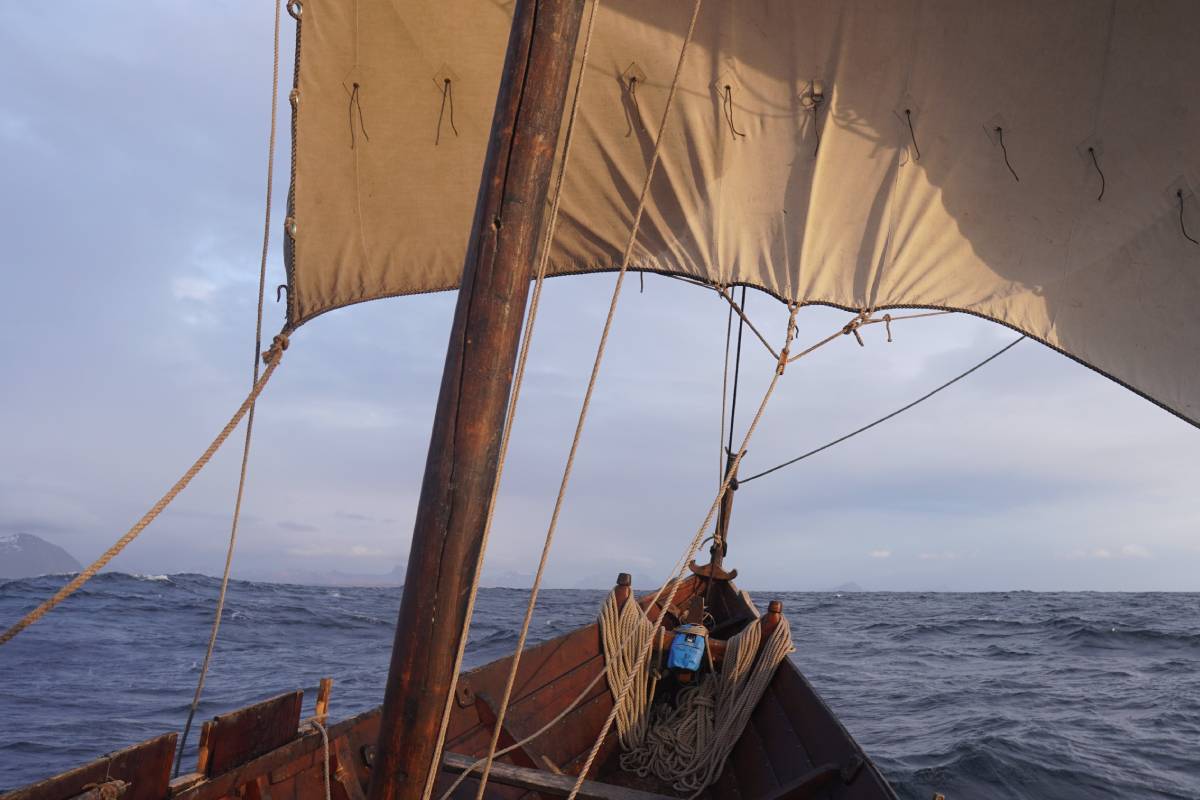
Greer's research demonstrated that Viking-style boats were lightweight, flexible, and well-suited to handling large waves. Photo: Greer Jarrett
Built for the open sea
Greer also notes that while many of us might imagine the biggest dangers came in the open seas, this was rarely the case for him and his crew.
"It was very different from doing it in a modern boat," Greer explains to The Viking Herald.
"The clinker form of Viking ships is a shell-first construction. This means you build the outside of the boat first with overlapping planks, before placing relatively flimsy frames inside that hold the boat together."
"The end result is that the boat is very, very light and very flexible. It's actually much better at handling big waves than a modern boat."
"The boats we used weighed a maximum of three tons," Greer points out. "A modern sailing boat of the same size, on the other hand, weighs anything from eight to 15 tons, depending on the design."
"Because the Viking boats are lighter, if you hold the stern and wiggle it about, you can see the whole boat moving. They really are flexible. When you're going over the waves, it's able to somehow twist longitudinally and adapt to the waves."
"The second difference is that it has a square rig. The sail is perpendicular to the direction of the hull, not parallel, like a modern sailing boat," Greer adds.
"It doesn't tip over as much, and you're mainly sailing either downwind or with the wind to some extent. It feels less tippy, and that kind of horrible feeling of everything falling over sideways just doesn't occur."
"For both those reasons, it handles the waves quite well. The main dangers have much more to do with conditions when you come close to the shore."
- READ MORE: How did Vikings make sails?
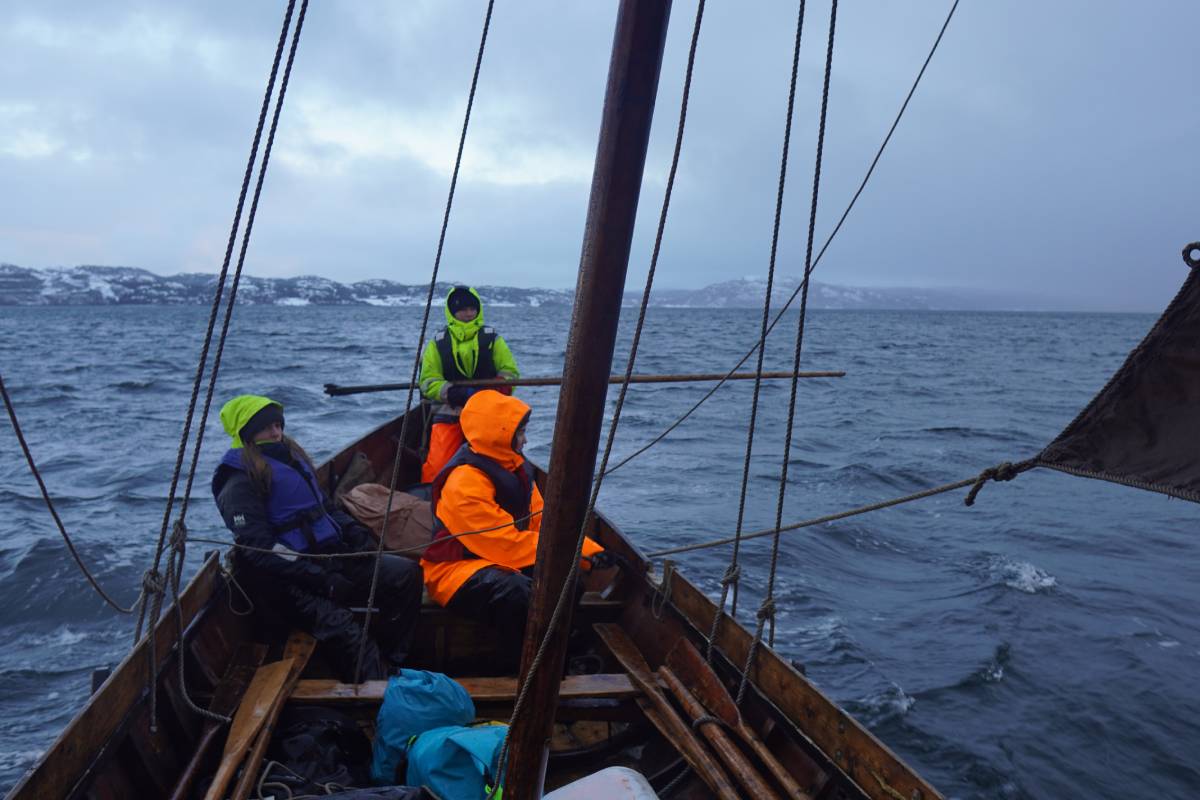
Greer's experience showed that the greatest dangers often came near land rather than on the open sea. Photo: Greer Jarrett
The importance of experience
Indeed, Greer notes that the most difficult parts of his journeys have usually come nearer land.
"When the seabed rises towards the land, all of that water is getting pushed together," he explains to The Viking Herald.
"You get much steeper waves that are also closer to each other. Then, with the Norwegian coast and also the coast of Greenland, there's a big temperature difference between the sea level and the top of the mountains."
"This creates extremely strong winds near the coast because of the difference in air temperature. You have katabatic winds that come off the mountain and shoot down into the fjords really, really fast. The wind comes almost vertically and hits you in very unpredictable ways. And that is often a problem."
"Both the west coast of Scotland and the west coast of Norway, for example, are covered in skerries and rocks that you can easily hit if you don't know they're there," Greer comments.
"From a land-based perspective, people generally assume it would make sense to follow the inner fjords and keep yourself safe from the open sea."
"But that's not necessarily true. Fjords can also be very dangerous because of the tidal currents, the aforementioned katabatic winds, and the lack of sailing room to avoid either of these."
"There are a whole bunch of dangers associated with being near land that are often ignored," Greer points out.
"The dangers of being at the open sea are also very real, of course, storms and big waves are frightening things. But these dangers are pushed to the forefront because of our modern perspective, as we sit at our desk and look at the sea and think about how scary it must be."
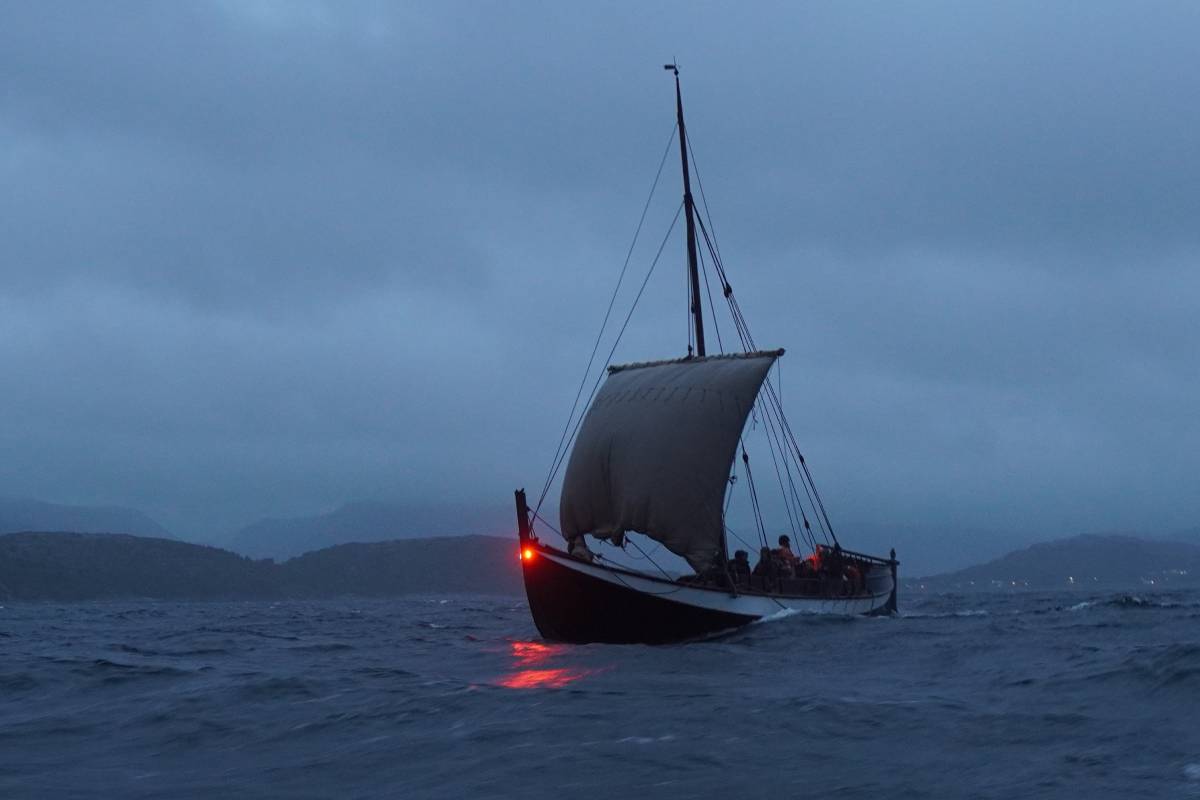
Greer's work showed that small outlying islands and headlands were vital points in Viking trade and navigation. Photo: Greer Jarrett
Central outliers
Greer's own experiences have also helped him understand how both easily recognizable landmarks and islands close to the mainland would have been central to navigation.
"Be it Scotland, the Norwegian coast, or Greenland, it's these outlying little islands or headlands along the outer coasts of these various places that are your first landfall and become really important for trade networks," Greer explains to The Viking Herald.
"This is where you get the local knowledge, and also where you figure out what the political situation is as well," Greer adds.
"We didn't have to deal with that ourselves, of course, but in the Viking Age, these were very highly militarized areas with shifting power dynamics."
"In other words, these small outlying places may look very remote or even meaningless to us today, but they were really central in the networks."
"Another classic example is Newfoundland. When the English and the French arrived in North America, Newfoundland was initially a really important spot. It's an outlier, but it gives you access to the Gulf of St. Lawrence and all the way down the Maritimes."
As Greer points out, it was often easier, and perhaps more natural, for the Vikings to navigate the sea than negotiate difficult terrain on foot.
"In Norway, there were big mountain ranges, while in Greenland, there was a big ice cap separating one side," Greer points out.
"You had thin stretches of cultivable, livable land next to big open areas of sea. In Norway, we know that places like Kaupang and Avaldsnes were really important power and trade centers. In Greenland, the eastern settlement is the main connection back to Europe."
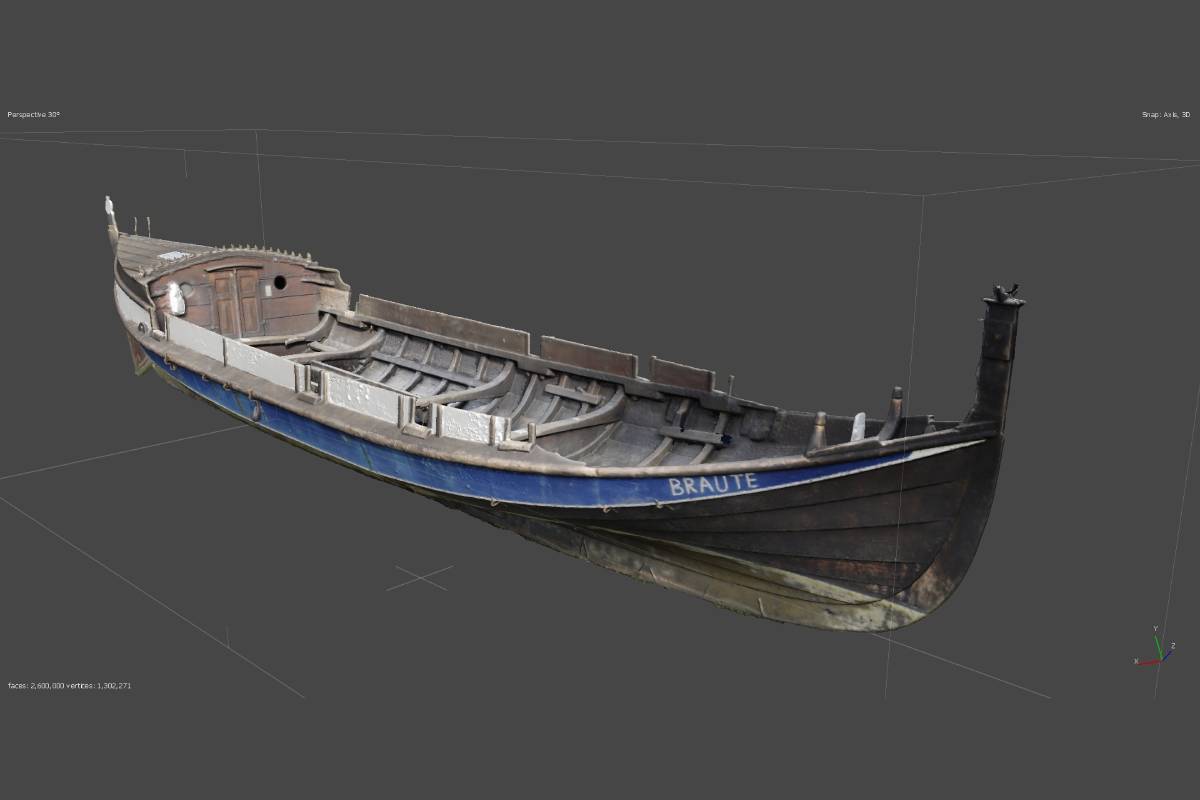
This vessel shows how Viking boatbuilding techniques influenced Nordic craft well into recent times. Photo: Greer Jarrett
Generational knowledge
Once they had established mastery of the local maritime environment, the Vikings were able to begin trading over remarkable distances, including deep into the Arctic Circle.
"A lot of the wealth being traded was in things like ivory, eiderdown, seabird eggs, walrus skins, seal skins, and reindeer antlers," Greer tells The Viking Herald.
"All these things were especially prized in the south. Even the Byzantine emperor was wearing big robes made of fur from animals captured in the North Atlantic, mainly from northern Scandinavia."
"This stuff was very perishable, which means that we rarely see it in the archeological record," Greer admits. "There has been a big question about how easy it was to get this stuff along these long trade routes into the kind of trading centers that then distribute it into mainland Europe."
"With our journeys, I think we've shown it is possible to do these routes in one go. We were able to travel from the Arctic Circle down to Bergen in a single summer."
"Another big question has been about how much knowledge you need to be able to navigate such a long stretch," Greer adds.
"Is it possible for one crew to know every single headland along the way? And I think it is. That's not something I've concluded from my own sailing work, as we did use some modern navigational equipment."
"But talking to local people and fishermen, it immediately becomes clear that their knowledge about the coastline is still really, really profound."
Expanding your comfort zone
As he reflects on his work so far, Greer is grateful for the opportunity to indulge in his passion for sailing while also contributing to our understanding of Viking Age life.
"It's an experience that is so incredibly different from working on this stuff either in the field or from a desk," Greer admits.
"The minute you step onto the boat, it opens up a whole range of different questions and possibilities. It also limits you in lots of ways, of course, but it remains a completely different way of doing research."
"For me, it's been fantastic to have long periods of time when I can be at sea and think from the sea about all of these places," Greer continues.
"It's also really tough and kind of scary at times, you're in a boat with no engine and at times you are at the mercy of some of the really roughest seas in the world. I've definitely had moments where I've felt my comfort zone physically increasing very quickly."
"At the same time, one of the big discoveries or big things that I want to emphasize with this project is that these are incredibly seaworthy ships and boats. We see that in the historical records, too."
"For example, we know that every single bishop consecrated in Norway throughout the Middle Ages made it to Greenland over a period of around 400 years."
"That's an astonishing statistic if you think that they were doing it in open boats with no navigational equipment. That must speak to how good these boats are at working with the open sea."
"Of course, we also have a lot of stories in the sagas where they come towards land, something goes terribly wrong, and they end up crashing against the shore," Greer admits.
"Obviously it can be frightening, and also very cold. But we've been out in really quite rough conditions and been completely fine. It's a nice feeling when you start thinking, oh, no, we're not actually sinking, it's going to be okay. I would say we've realized how doable it is."
We get to provide readers with original coverage thanks to our loyal supporters. Do you enjoy our work? You can become a PATRON here or via our Patreon page. You'll get access to exclusive content and early access.
Feel free to reach out to discuss potential stories that may be in the public interest. You can reach us via email at [email protected] with the understanding that the information you provide might be used in our reporting and stories.